
Sports betting calculators: how stake, odds and margin actually add up
 Available in US
31 October 2026 — checked against the Racing Industry Act 2020 (as amended on 28 June 2025) and the Department of Internal Affairs’s public statements on who may lawfully take bets from people in New Zealand.
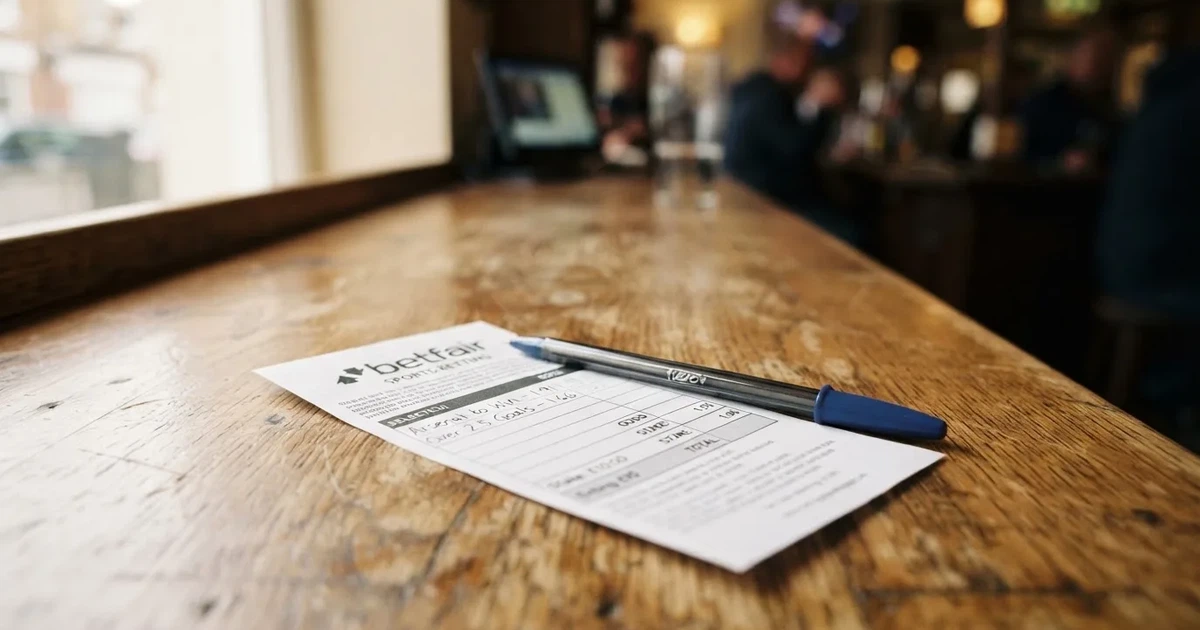
A betting calculator looks like arithmetic. It is, but it is also a window onto the only thing that makes one bet worth more than another: the margin the bookmaker has built into the odds. In New Zealand that margin sits inside every price TAB NZ and Betcha quote, because those are the only two online brands allowed to take sports and racing bets from people here, and a market with one legal supplier is not the one the rest of the world knows. Offshore brands still reach Kiwi punters, still take bets, still quote odds. Under section 74AAA of the Racing Industry Act 2020, in force since 28 June 2025, it is the operator, not the bettor, who carries the legal risk. DIA has told offshore providers serving this country to withdraw with immediate effect. That framing sets what a calculator can and cannot tell you in this market, and it is where this page starts.
Why a bettor in New Zealand opens a calculator at all
The honest answer is that a bettor in New Zealand often does not have a real choice between calculators. The picking is the bet — a win single, a multi, a same-game multi, a quinella, a Big6 — and the betting slip does the arithmetic. The calculator earns its keep in three situations the slip does not handle well: a multi with more legs than the slip displays legibly, a market where the bettor wants to see what the bookmaker’s margin is, and an offer like a free bet or a bonus where the gross return hides what the offer is actually worth.
Each of those three situations needs a different formula. A multi combines prices: each leg’s decimal odds multiply into one combined price, and the stake gets multiplied by that. A margin check sums the implied probabilities of every outcome and subtracts from one. A free-bet value multiplies the free-bet amount by (odds minus one) divided by odds and scales by the market’s payout share. They are short and worth working through once by hand before trusting any app to do them.
TAB NZ’s own bet slip covers the first case, including same-game multis, Place Extra and Mega Multi. The second and third, however, are where a calculator earns its keep. Any punter can multiply $10 by 2.10; the question is whether 2.10 on two outcomes is a fair price.
The two paths: Kiwi licensed or offshore
The landscape splits cleanly, even if the advertising around it does not. TAB and Betcha are the two online brands of TAB NZ, run under a 25-year partnership Entain signed with TAB NZ in 2023 that gives Entain a 50/50 share of gross profits, with at least $150m a year going to TAB NZ for the first five years. Entain pledged a one-off $100m payment to the racing sector. The two sites show a single betting business with two faces, not a competitive market. Every other brand a New Zealand punter meets — Sportaza, RTbet, BetNinja, Alawin, Winz.io, Rooster.bet, Rabona, BetAlright, and others beside — operates outside this regime, with licences that give no right to take bets from a person in New Zealand.
The legal difference is not a marketing one. A licensed TAB NZ account comes with a New Zealand ID check, deposit limits, time-outs, exclusion, the Problem Gambling Levy’s harm-minimisation funding, the Gambling Helpline (0800 654 655, text 8006), and DIA oversight. An offshore account comes with whatever its own licence requires, which is rarely New Zealand obligations. DIA’s published warning is explicit: overseas operators may be in jurisdictions with minimal consumer safeguards, may not return unspent credits and may not pay out large wins. New Zealand law targets the operator; the player has no published penalty for placing a bet offshore, and it is neither legal nor illegal for the punter to do so.
That is the landscape a calculator sits inside, and it changes how to read the numbers.
Site-by-site breaks, not bookmaker breaks
The comparison that follows groups each bookmaker by what the punter is actually deciding between. The leading group is the two licensed Kiwi brands, treated as one operator with two shopfronts. The reference group lists offshore brands Kiwi punters encounter, marked as not licensed in New Zealand, and reads them on the same dimensions rather than pretending they are options on equal footing. The table below shows the same split: TAB NZ brand or not licensed in New Zealand, then what the operator’s own terms state on the page’s subject.
Fundamentals: what a sports betting calculator does
A sports betting calculator is a tool that takes inputs the bettor already has and produces outputs the bettor could reach by hand, but only slowly and with errors. The three inputs every calculator needs are the stake, the odds and the type of bet; the optional inputs are a place to put a bonus or free-bet value, a way to add a commission on exchange-style products, and a way to flag each-way terms. The output is whichever of the following the bettor wants:

- Return: the amount a winning bet pays back, including the stake (return = stake × odds).
- Net profit: the amount the stake grows by on a win (profit = stake × (odds − 1)).
- Combined price: the product of every leg’s odds, used for multis.
- Implied probability: 1 ÷ odds, the share of outcomes the price suggests.
- Bookmaker margin: 1 − (sum of 1 ÷ odds across all outcomes), or 1 minus the payout share, expressed as a percentage.
- Free-bet value: the expected worth of a free bet whose stake is not paid back, scaled by the market’s payout share.
Most calculators a punter meets in an app handle the first three well and stumble on the fourth and fifth. That is because the first three require only the bet’s own data, while margin and free-bet value require the rest of the market’s data too. A “best odds calculator” is a comparator across bookmakers; a “betting system calculator” applies staking plans like Labouchere to a bankroll and is a different question altogether.
The next sections walk through the ones that matter in a market where one legal supplier sets the prices.
Stake, odds and return: the formula every bet uses
The simplest bet is a win single on one outcome: New Zealand to beat Australia at $2.10. The return is the stake multiplied by the odds. A $10 stake returns $21.00, of which $10 is the stake back and $11 is profit. Decimal odds already include the stake; American and fractional odds do not. New Zealand has run on decimal odds for years; most offshore brands offer a switch to American or fractional.
The same formula covers a multi. Take three legs at $2.10, $1.80 and $3.50, stake $10. The combined price is 2.10 × 1.80 × 3.50 = 13.23. Return on a win is $132.30, profit $122.30. Each leg must win for the multi to pay. One leg down and the whole bet is gone, which is the trade-off: a multi’s appeal is the much higher price, its risk is that each added leg is another chance to lose.
TAB NZ’s bet types follow its published rules. Win, Place, Each Way, Quinella, Exacta, Trifecta, First Four, Double, Treble, Daily Double, Running Double, Quaddie and Big6 are racing types; Multis and Same Game Multis are multi types; Place Extra lets punters back runners to finish up to 10th in selected races. Same Race Multis, Same Game Multis and one-tap Popular Multis are the everyday multis the app now surfaces. Each of them respects the same multiplication rule. Where a multis rule departs from plain multiplication is on a void leg: TAB NZ’s app allows the multi to stand with the remaining legs recalculated, rather than void the whole bet.
A each-way bet is two bets in one — a win and a place at a fraction of the win stake — and a calculator handles it as two separate wagers applied to the two payouts the place terms specify.
Margin: what the bookmaker keeps of every dollar bet
The single most important number in any market is the one a casual punter never sees. It is not the headline odds; it is the margin built into the odds. A market with two outcomes and decimal odds of 1.90 on each has implied probabilities of 1/1.90 + 1/1.90 = 0.5263 + 0.5263 = 1.0526, which sums to more than one. That excess is the margin: 5.26%. It is the share of every dollar bet that the bookmaker keeps on average across a very large number of similar bets.
The arithmetic in plain prose: a market’s payout share is the sum of 1 divided by the decimal odds of every outcome it offers. The margin is one minus that payout share, expressed as a percentage. The bookmaker always wants this margin — the lower the margin, the better the odds, the closer to a fair price.
The illustrative two-way market this page runs on is the textbook case. Decimal odds of 1.90 / 1.90 imply 0.5263 on each side, sum 1.0526, payout share 95.05%, margin about 4.95%. Round that to a 5% margin, the band a Kiwi punter will see at TAB NZ for a balanced two-way market like a tennis head-to-head late in pre-match pricing. A margin of around 5% is a typical competitor figure in a deep market. Margins climb on niche or unbalanced markets and on live betting, where information is uneven and prices move quickly; they drop on major markets like top-flight football 1X2 or on outright winner markets late in the season.
The band to remember: 2–4% margins on top-flight football 1X2, 4–6% on smaller leagues and most other sports, 6–10% on niche or live markets, sometimes more on exotic lines. A margin research names for one market is not the margin for another. A 1X2 margin is not the margin of a totals market or a handicap, and one sport’s margin is not another’s.
A punter who wants to estimate any market’s margin needs every outcome’s odds — which a three-way football match provides three of, a two-way tennis match provides two of, and a bookmaker’s listed runner field provides in full. A margin above 8% on a major market is a tell that the bookmaker is leaning hard on the recreational bettor; a margin below 3% is closer to sharp territory.
The bookmaker’s edge, in one number
The margin tells a punter what the bookmaker will, on average, keep of every dollar. Multiply it by a punter’s turnover and the result is the expected cost of betting at that margin. If the punter bets $1,000 over a month at a 5% margin, the expected cost is $50 — averaged across enough bets that the law of large numbers kicks in. No single bet costs $50; the same $50 spread across many bets does.
That is why calculators on this page describe things as averages and estimates, never guarantees. A punter can win on any single bet. The margin is the path the market walks in aggregate.
Stake limits, deposit caps and where the math hits reality
TAB NZ sets its own deposit and stake limits under section 76 of the Racing Industry Act 2020. The punter can lower them in the app at any time and raise them only after a cooling-off. Offshore brands set their own limits too, often higher than TAB NZ’s and usually as a flat ceiling per bet, not per market.
Deposit limits matter more than stake limits for bankroll management, because they are what stops an impulse run. A punter who sets a $200 weekly deposit limit on TAB NZ’s app cannot deposit a thousand dollars the morning after a loss. Offshore brands also offer deposit caps, but enforcement sits with the operator; a New Zealand-licensed product has the regulator behind the cooling-off requirement. The arithmetic of a limit comes after the policy of a limit, and the harder decision is to set the cap at all.
Predictions & strategy: what a staking plan changes
A staking plan does not change the odds. It changes how a punter divides the bankroll. A Labouchere system, for instance, starts with a target number (say $100 in profit) written as a list ($10, $20, $30, $40) and works through it by betting the sum of the outermost two numbers, crossing them off on a win and adding the stake to the list on a loss. A reverse forecast bet works on two of three finishers in a race: which two, and in which order. Each is a way to vary the stake to control either variance (Labouchere flattens, martingale doubles) or strike (forecast widens the bet).
The plain fact about staking plans is that none of them change the margin. A punter who bets a flat stake and a punter who runs a Labouchere pay the same expected margin on the same odds. The difference is variance — how bumpy the bankroll journey is on the way to the same expected loss. A staking calculator tells a punter what their plan will look like over many bets: how often a given bankroll survives, what the worst losing streak looks like, how long a target number takes to chase.
That is where the calculator earns its keep. The punter wants a feel for the ride, not a sharper edge.
Bankroll sizing: the underlying rule
A bankroll should be sized so that no single bet is more than about 2% to 5% of the total. That keeps even a long losing streak from wiping the bank. On a $500 bankroll, $10 bets are 2%, $25 bets are 5%. Above 5% a single bad run can drain the bank before the plan can recover, no matter what the calculator says about expected value.
A betting system calculator will tell a punter the expected size of a drawdown for any sequence of bets and any staking plan. The figure to watch is the worst-case streak in that sequence, not the average.
What a forecast does
A reverse forecast bet backs two runners to finish first and second in either order. A straight forecast does the same in one order. The bet is a single wager, but the price is much longer than a single winner because the chance of two specific runners filling two specific places is smaller. Forecast markets are popular in New Zealand and Australia because the racing form is dense; TAB NZ’s rules list forecast bets as a standard type.
A forecast calculator does two jobs: it shows the implied probability of each forecast combination and how it compares to the price, and it lets the punter back combinations of more than two runners with one stake each.
Bet types and odds: selection, settling and staking
The format the odds are written in is a small choice with real consequences. Decimal odds ($2.10) already include the stake and give the full return. Fractional odds (10/1) give the profit and ignore the stake. American odds (+110, −200) split favourites and outsiders by sign. A bettor in New Zealand will meet all three on offshore sites; TAB NZ runs on decimal. BillyBets alone of the offshore brands in this guide offers all three format switchers on one page, which is a small usability point worth noting in the comparison table. Rooster.bet and RoyalistPlay show six formats each. The right format is the one a punter can read fastest under the time pressure of an in-play market.
Settling a bet is the boring half that matters. TAB NZ settles singles and multis against the official result and voids singles when the selection does not run. A multi with a void leg recalculates with the remaining legs. An each-way bet settles as two bets with place terms applied. Offshore settling rules are the operator’s own; reading them before placing is the free habit that protects the punter.
Staking is the third leg of the bet-type triangle. A fixed stake per bet is the simplest and the easiest to track. A variable stake per bet — flat stakes scaled by edge, plan stakes scaled by plan — adds a layer of arithmetic and a layer of variance. A max-stake cap from the bookmaker is a fourth layer on some markets: TAB NZ’s per-bet caps on niche racing types can be small, and on outsiders in multis can be lower than the punter might assume.
Accumulator and parlay mechanics
An accumulator — a “acca” in New Zealand and UK speech, a “parlay” in North American speech — is a multi where every leg must win for the bet to pay. TAB NZ’s multis include same-game multis (SGMs) whose legs come from a single match and same-race multis whose legs come from a single race. The price is the product of every leg’s decimal odds; the risk is that every leg must land. A four-leg SGM at $3.00, $2.50, $2.20 and $4.00 has a combined price of 66.00 — a $10 stake returns $660 on a win.
A bet-builder calculator does the same arithmetic for the bespoke multi a punter builds inside the bet-builder tab. The combined odds update as legs are added; the payout is the stake at the combined price on a win. The trade-off a bet builder introduces is correlation: a same-game multi let a bookmaker charge for the link between legs (for example, a total goals leg and a match winner leg both lean on the same scoreline), and the price reflects that.
An arbitrage calculator finds outcomes that, across bookmakers, sum to a payout share above 100% — a sure-thing scenario, in theory, before commissions and bookmaker limits. In a New Zealand context, arbing is a marginal activity because TAB NZ and Betcha are one operator group; the price is the price on both sites. The offshore arber has TAB NZ as one side of the book and a soft offshore brand as the other, which is a thin and shrinking set-up under section 74AAA.
Cash-out and the moment a bet is no longer settled
Cash-out is the feature that lets a punter settle a bet before the event ends. Sportaza offers it, with the note that availability is not guaranteed. RTbet offers it, fixing the cash-out amount at the moment it is accepted. Alawin offers it on settled single bets with partial cash-out, but excludes free bets and similar stake-back offers. TAB NZ’s app handles live settlement by displaying in-play odds on racing and selected sports, where the bet remains a multi until the last leg settles.
The arithmetic a punter should run before using cash-out is the price offered versus the probability-weighted expected return. A bookmaker’s cash-out price carries a margin of its own, often higher than the original market, and the punter pays it for certainty. The right use is reducing exposure on a multi with one leg still to come, where the certainty outweighs the cost.
Ranking and the criteria a shortlist actually meets
The ten brands in the table below are ranked on the same four criteria, each of them a piece of the picture a punter needs before opening an account:
- New Zealand status: a TAB NZ brand or not licensed in New Zealand. This is the dominant criterion, because it decides whether the punter sits inside the lawful market or outside it.
- What the operator’s own terms state on the page’s subject: any feature or rule research confirms from the brand’s own terms page.
- Where the brand sits on the page’s key dimensions, noted as what the punter checks there.
There is no ranking inside the offshore group; offshore brands appear in the order the punter will meet them. The leading Kiwi brand is TAB itself; the second Kiwi brand is Betcha. Both are the same operator.
| Brand | New Zealand status | What the operator’s own terms state |
|---|---|---|
| TAB | TAB NZ brand | TAB NZ’s app covers horse and harness racing, rugby union and rugby league and other sports, pre-match and live, with a 17+ App Store rating and an 18+ betting age. Bonus Cash can be split across multiple bets; a Mega Multi bonus pays up to $50 in Bonus Cash when a multi of four or more legs falls short by a set number. Same Race Multis, Same Game Multis, Popular Multis and Place Extra are listed in the app, alongside Trackside live race streaming with in-app betting, racing form, Blackbook and Jockey Challenge. |
| Betcha | TAB NZ brand | Daily Toolbox with odds boosts and insurance tools for bets that do not land; a Bet Social section where punters chat, follow tipsters and share bets or pools; a Playbook with tips and match analysis. Same licence and harm-minimisation framework as TAB. |
| Sportaza | Not licensed in New Zealand | Cash out before an event or market is finalised; Bet Builder where a void selection voids the whole betslip; multiples, Asian lines and interval markets in 1, 5, 10 or 15 minute ranges. |
| RTbet | Not licensed in New Zealand | Cash out before an event or market is finalised, with the cash-out amount fixed at the moment of acceptance; no guarantee the feature is always available. |
| BetNinja | Not licensed in New Zealand | Online gaming operations under a licence from the Union of the Comoros; no New Zealand licence and no New Zealand complaints route. |
| Alawin | Not licensed in New Zealand | Cash out with partial cash-out on settled single bets; not available on free bets or risk-free bets; no New Zealand licence and no New Zealand complaints route. |
| Winz.io | Not licensed in New Zealand | Licence stated in the site footer as Anjouan and Tobique; holder Novatrix SRL; no New Zealand licence and no New Zealand complaints route. |
| Rooster.bet | Not licensed in New Zealand | Operated by Novatrix SRL in Costa Rica (registration 3-102-893958) under Tobique Gaming Commission e-gaming licence No. 0000002; sportsbook has Live, Sports Promotions, Results, Schedule, E-sports and Predictions sections; odds in six formats. |
| Rabona | Not licensed in New Zealand | Launched 23 December 2019 as the sixth online sportsbook of the Soft2Bet group; Curaçao licence; no New Zealand licence and no New Zealand complaints route. |
| BetAlright | Not licensed in New Zealand | Customers over 18 only; a separate partners site at partnersbetalright.com; no New Zealand licence and no New Zealand complaints route. |
The spread is narrow inside the Kiwi group: TAB and Betcha are two shopfronts of one operator, so the comparison between them turns on app and feature rather than on price. The spread inside the offshore group is much wider and not always a sign of quality — a bigger bonus button on an unlicensed site is not a safer bet. Each offshore brand meets the same minimum, which is operating outside the New Zealand legal regime: that is the limit of what fits on this table.
A shortlist on the page’s subject narrows further once the punter knows what the calculator is for. If the job is straightforward singles, TAB NZ is the only one of the ten a Kiwi punter can use lawfully and the only one whose settled rules the regulator oversees. If the job is an SGM with correlated legs, TAB NZ is also the right call: it builds the bet on its own terms and shows the combined price live. If the job is a niche or exotic market, the same applies — there is no other legal supplier.
Statutory frame: who may take bets in New Zealand
The Racing Industry Act 2020 establishes TAB NZ as the sole provider of racing and sports betting in New Zealand. The Racing Industry Amendment Act 2025 inserted section 74AAA: no person other than TAB NZ may offer racing betting, sports betting, or other racing or sports betting to a person in New Zealand, regardless of where that person is resident or incorporated. The change took effect on 28 June 2025. The Department of Internal Affairs (DIA) is the gambling regulator under the Gambling Act 2003 and monitors compliance with the betting prohibition under section 92A of the Racing Industry Act. There is no licensing route for another bookmaker and no licence register for betting, because there is only one lawful operator.
TAB NZ’s partnership with Entain dates from 2023. The 25-year agreement gives Entain a 50/50 share of gross profits, with at least $150m a year going to TAB NZ for the first five years, and includes a one-off $100m Entain payment to the racing sector. TAB NZ and Betcha are the two online brands operated under that agreement; the regulatory frame treats them as a single operator.
The online casino sphere is a separate regime. The Online Casino Gambling Act 2026 licenses online casino gambling only and does not license sports betting; TAB New Zealand winning the right to apply for a casino licence does not extend the betting monopoly. This page is about sports and racing betting, so the casino regime is mentioned for completeness only.
Greyhound racing is closing in stages from 1 August 2026, and from that date offshore operators may not take bets on greyhound races either. Thoroughbred and harness racing continue under TAB NZ.
What the statute does not change
The statute targets the operator, not the player. Section 19(4) of the Gambling Act 2003, inserted in 2025, says an individual may not be convicted for placing a bet with an offshore betting operator in breach of section 74AAA. No published penalty for the player was found. Honest framing: the operator’s offer is unlawful, the player’s act is not prosecuted, and the player is exposed to the regulator’s stated risks. The calculator cannot be a legal advisor in either case.

New Zealand does not block bookmaker sites at the network level; an offshore brand reachable by IP is reachable. Whether the punter should reach it is a separate question, and it depends on what the punter wants from the site’s terms versus TAB NZ’s.
What may be bet on, and what may not
The short answer: racing and sports betting through TAB NZ, on the bet types the betting rules list, on the events TAB NZ schedules. Win, Place, Each Way, Quinella, Exacta, Trifecta, First Four, Double, Treble, Daily Double, Running Double, Quaddie and Big6 are racing types; Multis and Same Game Multis are multi types. Live betting is listed in the TAB NZ apps; any statutory restriction on in-play markets is not established. No lawful New Zealand betting exchange exists and spread betting is outside the statutory definition of sports betting; nothing on this page is about either. Bets on politics and novelty markets: not established. There is no statutory per-bet cap; limits are TAB NZ’s own terms. The ban covers events held inside and outside New Zealand.
Virtual (computer-simulated) sport is treated by the 2026 online casino law as casino gambling. Whether esports betting is “sports betting” under the Racing Industry Act is not established; write nothing the law does not.
Player protection: age, ID and safer gambling
The age for TAB NZ betting is 18, not 20; land-based casino entry is 20 and is a different rule. Betting under 18 is an offence under section 89 of the Racing Industry Act 2020; stating the age correctly is part of the protection the law provides. TAB NZ accounts need a verified New Zealand address and ID, which is the second line of protection. Every account on the licensed side carries deposit limits, time-outs and self-exclusion, and an exclusion applies across TAB and Betcha because they are one operator.
There is no single national online-betting exclusion register: the register the casino law will require is for online casinos only. The Gambling Helpline (0800 654 655) and Safer Gambling Aotearoa cover all gambling harm, including betting. TAB NZ pays a Problem Gambling Levy of 0.74% (in force from 1 July 2025 to 30 June 2028), funding harm-minimisation services.
A offshore brand’s own exclusion is its own; an exclusion on TAB NZ does not exclude a punter from an offshore site, and vice versa. The punter who wants to step away from betting altogether has to step away from each brand separately, which is part of the price of dealing with an offshore site at all.
Advertising, bonuses and what the rule is
The Advertising Standards Authority’s Gambling Advertising Code applies to betting advertisements. Ads must not target children (under 14) or young people (14 to under 18), judged by context, appeal and expected audience — 25% or more of the audience counts as significant where accurate data exists. Ads must not encourage harm, must be truthful, and must have terms available. No New Zealand equivalent of a “whistle-to-whistle” ban for betting was found.
TAB NZ runs Bonus Cash promotions, including a Mega Multi bonus of up to $50 in Bonus Cash when a multi of four or more legs falls short by a set number. No New Zealand rule on bet-bonus size or wagering terms was found, so the only terms the punter sees are the ones in TAB NZ’s own promo terms. Offshore brands’ promotions are governed by their own licences, not the ASA.
A specific offer is never promoted on a page that compares calculators. The calculator shows what an offer is worth once the punter reads the terms.
Tax: what the player pays
Inland Revenue guidance says recreational gambling winnings are generally not taxable and prize money from TAB horse, dog and trotting races is not taxable. A punter who bets as a business, treats it as income, and runs a structured book is a different case, and that case is general information rather than tax advice. The summary line: recreational bets at TAB NZ keep their full payout; the calculator’s net-profit figure is also the figure that lands in the punter’s wallet.
Operator side: TAB NZ pays the Problem Gambling Levy at 0.74%. Overseas operators supplying New Zealand residents pay online gambling duty — 12% of profits since 1 July 2024, rising to 16% from 1 January 2027. A duty being payable does not make an offer lawful; offshore operators paying duty do so under the same New Zealand statute that prohibits their taking bets from people in New Zealand. The point-of-consumption charge on offshore racing and sports bets ceased on 30 June 2026.
A calculator that converts gross return to net return on the player side has no tax line at all. That is the standard Kiwi punter’s frame.
Bonuses and free bets: what an offer is actually worth
A bonus is paid in money that can be withdrawn once cleared. A free bet is paid in credit whose stake is not paid back with the winnings. The difference is not in the headline but in the math. A $20 free bet at $3.00 returns $60 on a win, of which $40 is profit and the $20 stake is gone. A $20 cash bonus used in a same-priced wager pays out identically — but the bonus itself came from clearing a turnover requirement first, so the net cost is the turnover’s expected loss, not the headline $20.
A free-bet value calculator does the arithmetic for the punter. The formula is free-bet amount × (odds − 1) ÷ odds × payout share. For a $20 free bet at $3.00 on a market with a 95% payout share, the calculation gives 20 × 2.00 / 3.00 × 0.95 = $12.67 expected value, averaged across a very large number of bets. The free bet is not “free”, and the punter who understands the figure keeps a clear head about which $20 to use it on.
Bonus turnover is what a cash bonus costs to clear. A bonus with a wagering factor of 5× the bonus requires $500 of betting at a minimum price before withdrawal. The cost of that turnover is the average margin on the bets the punter places to clear it: $500 × 5% margin = $25 expected loss on a balanced market. The bonus’s headline value has to exceed the turnover’s expected loss, or the punter is paying to take the bonus.
The Mega Multi bonus at TAB NZ — up to $50 in Bonus Cash when a multi of four or more legs falls short by a set number — pays in Bonus Cash with its own turnover term. Reading that term once is the cheapest thing a punter can do on this page.
What this looks like in practice
A Kiwi punter with a $50 stake and an SGM at $5.00 combined price sees a return of $250 on a win. The bookmaker’s margin on that SGM, summed across its legs, lands somewhere between 5% and 10% on average. Over many SGMs at this price, the punter’s expected loss is the stake times the margin — about $3 on a 6% margin. The same punter redeems a $20 free bet on a single at $3.00 expecting a return of $60 on a win, of which the stake is forfeit, and walks away with $40 on the books and an average expected value of $12.67 across many free bets. Numbers like these, kept side by side, are what a calculator earns its keep with.
Where a calculator stops being useful
A calculator cannot predict an outcome. It can only show what a price is worth, what a margin is, and what an offer is expected to be worth on average. The expected loss over many bets is the only place the math is honest: a single bet can win or lose anything, and the calculator’s job is to give the punter the same frame the bookmaker has, with the same numbers and an eye open for where the offer leaks.
Two operations that look like math are not. “Find me a winning tip” is a tipster service, not a calculator. “Find me an arbitrage sure-thing” is a market beat, not a calculator; the margin closes the gap fast and bookmaker limits make a long run impossible. Both are advertised heavily and both are outside what this page covers.
A short reckoning for the punter outside the legal market
New Zealand punter placing bets on a site not licensed in New Zealand faces three risks DIA names: the operator may not pay out, may not return unspent credits, and may sit in a jurisdiction with minimal consumer safeguards. The risk is real, the data is thin, and the punter’s only recourse is the operator’s own complaints route or an overseas regulator that has no New Zealand office. None of that is a calculator’s work; it is the reason a calculator should be the punter’s third concern rather than their first.
A closing word on what this page is and is not
This page is a description of how sports betting calculators work, in a market where one operator holds the legal monopoly on online betting and every other brand reaching a Kiwi punter does so unlawfully under section 74AAA. It does not name winners, recommend systems, or rank offshore brands as though they were lawful options. The arithmetic it shows — return, profit, combined price, implied probability, margin, free-bet value, expected cost of a turn — is the same arithmetic every punter can run, applied to the prices TAB NZ and Betcha quote and to the offers the punter actually meets. Where the law and the arithmetic and the punter’s protection point the same way, that is what this page says.
Frequently asked questions
Which bookmaker may lawfully take sports and racing bets in New Zealand?
TAB NZ is the only operator allowed to take online sports and racing bets from people in New Zealand under section 74AAA of the Racing Industry Act 2020, in force since 28 June 2025. The two online brands operated under that licence are TAB (tab.co.nz) and Betcha (betcha.co.nz), both run under the TAB NZ–Entain partnership. Every other brand a Kiwi punter encounters is operating outside New Zealand law, regardless of any other licence it may hold, and DIA has told such providers to withdraw.
How is the return on a bet worked out from the stake and the odds?
The return is the stake multiplied by the decimal odds. A $10 stake at decimal odds of $2.10 returns $21, of which $10 is the stake back and $11 is profit. For a multi, the decimal odds of each leg multiply into one combined price, which is then multiplied by the stake. A two-leg multi at $1.80 and $2.50 has a combined price of $4.50 and a $10 stake returns $45 on a win. A each-way bet is two separate wagers — one on the win and one on the place at the place terms.
What is the bookmaker’s margin and how can it be seen in the odds?
The margin is the share of every dollar bet that the bookmaker keeps on average across a very large number of bets. It is calculated by summing 1 divided by the decimal odds of every outcome in a market and subtracting that sum from 1. A market with two outcomes at $1.90 each has implied probabilities of 0.5263 on each side, summing to 1.0526, giving a payout share of 95.05% and a margin of about 4.95% — typical of a balanced two-way market. Margins climb on niche or live markets and on exotic lines; they drop on major pre-match 1X2 markets.
What does a player lose by betting with a bookmaker that has no New Zealand licence?
The player gives up the New Zealand protections the regulator enforces: an exclusion that applies across both TAB and Betcha, a verified ID process that protects against identity theft, the harm-minimisation framework funded by the Problem Gambling Levy, and a complaints route with teeth. DIA warns that overseas operators may not return unspent credits and may not pay out large wins. The player is not prosecuted for placing the bet; section 19(4) of the Gambling Act 2003 removes that liability, but the operational risk sits with the punter, not the law.
From what age can bets be placed with TAB NZ, and what is checked when opening an account?
The minimum age for sports and racing betting with TAB NZ is 18, even though the App Store listing carries a 17+ rating; betting under 18 is an offence under section 89 of the Racing Industry Act 2020. Land-based casino entry is 20 and is a different rule. New TAB NZ accounts require a verified New Zealand address and ID before deposits can be made, which is the regulator’s check against identity fraud and underage play. The same age and ID rules apply across both TAB and Betcha.
Are betting winnings taxed in New Zealand?
For a recreational punter, no. Inland Revenue treats recreational gambling winnings as not taxable, and prize money from TAB horse, dog and trotting races is not taxable either. A punter who bets as a business, treats it as income, and runs a structured book is a different case, and that case is general information rather than tax advice — Inland Revenue or a tax adviser should be consulted. Operator side: TAB NZ pays the Problem Gambling Levy at 0.74%; overseas operators supplying New Zealand residents pay online gambling duty, but paying duty does not make the offer lawful.
Tips & strategy – footytipsnz.com
Content created by the «footytipsnz.com» team
