
Horse Racing Betting in New Zealand in 2026: TAB, Betcha, and the Real Choice
 Available in US
The short version: since 28 June 2025 New Zealand has run a closed betting market. TAB NZ and its online brand Betcha are the only operators allowed to take racing and sports bets from a person in New Zealand, no matter where that bookmaker is registered. Everything else a New Zealand punter meets online — the offshore sportsbook with a big bonus, the crypto-first site, the Curaçao-licensed brand — is, in the words of the Department of Internal Affairs, in a jurisdiction with minimal consumer safeguards and not entitled to take a Kiwi’s bet. That doesn’t make TAB NZ perfect, and it doesn’t make every offshore site a scam. It does mean the choice, as it actually stands, is narrow and worth understanding in detail.

This page is current as of 31 October 2026 and was checked against the Department of Internal Affairs’ published position on the Racing Industry Act 2020, the Gambling Act 2003 and the Racing Industry Amendment Act 2025.
How the New Zealand betting landscape is structured
A punter who has only ever bet offshore, or who is new to the country, often assumes New Zealand runs the way Australia or the United Kingdom do — a long list of licensed brands competing on odds, promotions and product features. It does not. The structure is closer to a utility than a marketplace.

TAB NZ holds the statutory right to offer racing and sports betting to people in New Zealand, granted under section 74AAA of the Racing Industry Act 2020 (in force from 28 June 2025). The section does not create a licence to apply for and there is no betting licence register; there is one lawful provider, and every other brand is, by definition, outside the law as it applies to a New Zealand customer.
The state-owned operator runs two customer-facing brands. TAB is the heritage name — retail outlets, the digital platform at tab.co.nz, the type of brand older punters associate with the tote and the Saturday meeting. Betcha is the newer, app-first brand, launched under a 25-year partnership with Entain signed in 2023, that gives Entain a 50/50 share of gross profits and guarantees at least $150 million a year to TAB NZ for the first five years, alongside a one-off $100 million payment to the racing sector. They are not competitors; they are two shopfronts for the same balance sheet and the same betting rules.
Around that core, a New Zealand punter who searches for the “best” horse racing bookmaker will see Rooster.bet, Golden Panda, BetNinja, BetAlright, FunBet, Spinbara, 22Bet, Telbet, LunuBet and others appear in paid placements and review sites. None of them holds a New Zealand licence, because none can. They are licensed in places that mean nothing for a New Zealand resident’s protection — Tobique Gaming Commission, Curaçao, Comoros, none at all — and the Department of Internal Affairs has publicly told providers serving New Zealand to withdraw with immediate effect. The way a Kiwi meets these brands is through a marketing budget aimed at countries that do allow them, not through any local endorsement.
That single fact reshapes what “comparison” means here. A page that lines up TAB NZ, Betcha and seven offshore brands and asks which has the best odds is asking the wrong question, because the first column is the only one with a New Zealand harm-minimisation framework, an exclusion register that covers both of its brands, a Problem Gambling Levy contribution and a regulator who can pull it into line.
What the structure means for a punter today
Three consequences follow directly. First, a New Zealand punter has one place to bet with local protections and the full catalogue of New Zealand and Australian racing — TAB NZ, in either of its brands. Second, every other brand in the headlines is an offshore site; the punter’s deposit, the bet settlement and any complaint all sit outside New Zealand law. Third, the practical comparison is mostly inside TAB NZ: which brand suits which type of punter, and which of the offshore sites that do accept New Zealand sign-ups has features (markets, odds format, crypto rails) that some readers will still want, knowing the trade-off.
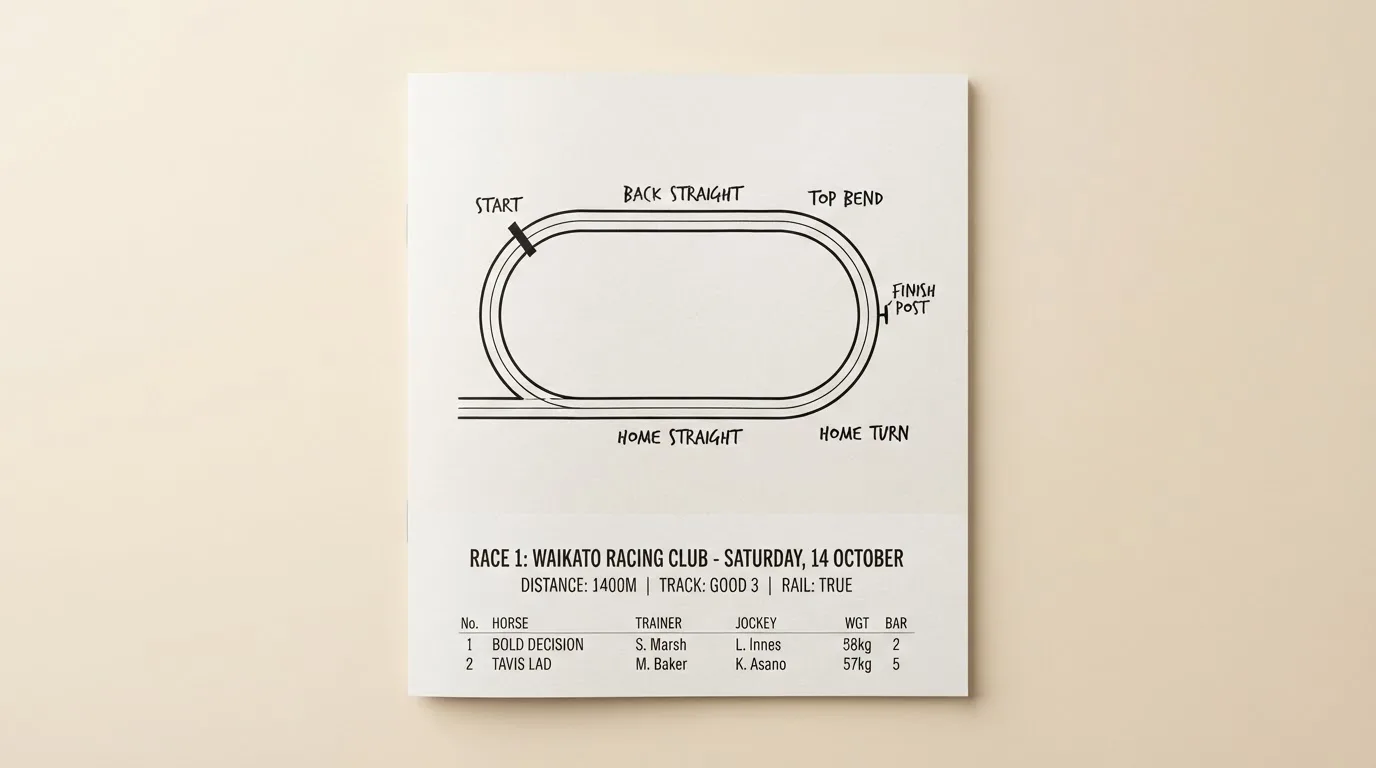
The rest of this page walks through the legal frame, the responsible gambling tools, the product (bet types, odds, mobile and live), the operators, and how to think about a bet from the price back to the payout.
What the law says, and what it does not
The Racing Industry Act 2020 established TAB NZ as the national betting operator for racing and sports. The Racing Industry Amendment Act 2025 tightened that position by inserting section 74AAA: no person other than TAB NZ may offer racing betting, sports betting or other racing or sports betting to a person in New Zealand, regardless of where the offeror is resident or incorporated. The amendment came into force on 28 June 2025 and the Department of Internal Affairs told providers serving New Zealand to withdraw with immediate effect.
The law does several things in plain terms. It puts the legal risk on the operator offering the bet, not on the punter: section 19(4) of the Gambling Act 2003 (inserted in 2025) makes clear that an individual cannot be convicted for placing a bet with an offshore operator in breach of section 74AAA. No source sets out a player penalty, and writing that offshore betting is illegal for the player is wrong. It also does not block the websites themselves. New Zealand has no ISP-level block of bookmaker domains. A punter who wants to reach an offshore site can do so; the operator is the one the law targets.
What is not in the law is just as important. There is no New Zealand equivalent of a UK-style maximum stake. There is no statutory deposit ceiling, no per-bet cap and no published requirement on payment methods. TAB NZ sets its own deposit and stake limits in its terms. The same applies to bonuses: no rule in New Zealand sets a maximum bonus size or a wagering multiple, so what a TAB NZ bonus bet actually costs comes only from TAB NZ’s own published terms.
The online casino space is a separate statute. The Online Casino Gambling Act 2026 licenses online casino gambling only — it does not license sports betting, and TAB NZ’s successful application for a casino licence does not extend the betting monopoly. Greyhound racing is closing in stages from 1 August 2026, and from that date offshore operators may not take bets on greyhound races either; the racing codes that remain legal to bet on through TAB NZ are thoroughbred and harness.
Tax for the punter
Inland Revenue’s published position is that recreational gambling winnings are generally not taxable, and prize money from TAB horse, dog and trotting races is not taxable. A person who bets as a business is a different case, and the general advice is to consult Inland Revenue or an accountant. The operator side is also worth a line: TAB NZ pays the Problem Gambling Levy (0.74%, in force 1 July 2025 to 30 June 2028) and offshore operators supplying New Zealand residents pay online gambling duty (12% of profits from 1 July 2024, 16% from 1 January 2027). A duty being payable does not make an offer lawful in New Zealand — tax compliance is a separate question from section 74AAA compliance — so a “licensed and taxed” line on an offshore bookmaker’s footer is not a shield.
Where the regulator stands on advertising
The Advertising Standards Authority’s Gambling Advertising Code applies to betting advertisements in New Zealand. Ads must not target children (under 14) or young people (14 to under 18), judged by context, appeal and expected audience — 25% or more of an audience counts as significant where accurate data exists — and must not encourage harm or be misleading, with terms available. Because only TAB NZ may offer betting here, the Department of Internal Affairs reads the prohibition as covering the promotion of another operator’s bets to New Zealand audiences, which is why an offshore brand reaching a New Zealand punter through paid search is in a grey area the ASA and DIA both have views on. For the punter, the consequence is that no reputable New Zealand media outlet carries a TAB NZ or Betcha promo code — there is no promo code to print, and this page does not name one.
Responsible gambling in a closed market
A closed market simplifies the safer-gambling conversation in one specific way: there is only one operator to ask about, and that operator’s tools are public.
TAB NZ’s app lists deposit limits, time-outs and self-exclusion. An exclusion at TAB NZ covers both of its brands — TAB and Betcha — so a punter who asks to be excluded is excluded from both fronts, not just the one they bet on. The free New Zealand Gambling Helpline is 0800 654 655, with a text line on 8006, and Safer Gambling Aotearoa is the public-facing service the helpline sits inside. TAB NZ contributes to the Problem Gambling Levy, which funds treatment and harm-minimisation services.
For a punter using an offshore bookmaker, none of these protections follow. The Department of Internal Affairs has said plainly that offshore operators may be in jurisdictions with minimal consumer safeguards, may not return unspent credits, and may not pay out large wins. That is the regulator’s own framing, not a marketing line, and it is the most honest summary of the trade-off a New Zealand punter makes when they open an account outside TAB NZ.
There is no single national online-betting exclusion register in New Zealand. The register the Online Casino Gambling Act 2026 introduces covers online casinos only, and there is no current law that forces offshore sportsbooks to honour a New Zealand self-exclusion. A punter who excludes at TAB NZ is excluded at TAB NZ; the same punter, on a different device, on an offshore bookmaker, has no equivalent safety net unless they take the personal step of closing the offshore account themselves.
The age line is clear: 18 for betting at TAB NZ (the App Store rating is 17+ but the operator’s own terms say 18, and betting under 18 is an offence under section 89 of the Racing Industry Act 2020). The land-based casino age is 20, and the two must never be conflated.
Bonuses and free bets: what TAB NZ actually offers
The honest way to read the New Zealand bonus picture is that it is small, well-defined, and not the reason to pick a bookmaker.
TAB NZ runs “bonus bet” promotions; the size, the qualifying bet, the minimum odds and the expiry all sit in the operator’s own terms, which change by campaign. Because the law does not cap bonus size or set a wagering multiple in New Zealand, every bonus bet’s real cost is what TAB NZ’s own page on that promotion says it is. The general point — applicable to almost every bonus bet in any market — is that the marketing line (“$50 bonus bet”) rarely equals the cash a punter can keep. A bonus bet is paid out as winnings only, not stake plus winnings, so a $50 bonus bet at odds of 4.00 returns $150, not $200, and the headline number is $50 only in the sense that the stake was free.
The two practical frames that decide whether a TAB NZ bonus bet is worth taking are: the qualifying deposit or qualifying bet that unlocks it, and the expiry. A bonus bet that needs a $20 qualifying bet on a New Zealand metro meeting and expires in seven days is workable for a punter who bets on metro meetings anyway. A bonus bet that needs a $200 qualifying multi at minimum odds of 3.00 and expires in 48 hours is a different cost, and a punter who chases it by betting on a meeting they will not otherwise have looked at pays a hidden entry fee.
The reason this section is short is that there is no offshore bonus worth comparing on its own terms. An offshore bookmaker’s headline “100% up to $200” is paid in bonus money, not withdrawable cash, and the rollover, the minimum odds, the eligible markets and the time limit all sit in the operator’s terms. A punter who has not read the terms has not seen the offer.
The matched-betting footnote
Matched betting — using a free bet at one bookmaker and laying the other side at an exchange to lock in a small locked-in return — is a strategy that has its own subreddit, its own calculators and its own niche vocabulary. In New Zealand it has very little to work with. There is no licensed New Zealand betting exchange, the only legal bookmaker is TAB NZ, and TAB NZ does not run the kind of free-bet volume that a matched-betting system needs to be sustainable. A punter who wants to use a matched-betting calculator on a TAB NZ bonus bet will find the calculations work but the inputs dry up. The strategy exists, the conditions to run it in New Zealand mostly do not.
Mobile, app and the on-course experience
The TAB NZ app is called “TAB – Racing & Sports Betting” and is published in the New Zealand App Store under the seller name New Zealand Racing Board; the app was first released on 8 September 2014, so it is a mature product, not a startup. It covers horse and harness racing, rugby union and rugby league, and a wide range of other sports, both pre-match and live. The app’s 17+ App Store age rating sits beside the operator’s own 18+ rule, and a punter under 18 must not be on it at all.
The product feature set inside the app is worth a sentence each. Trackside live race streaming runs inside the app with in-app betting — a punter watches a New Zealand or Australian meeting and bets from the same screen. Racing form is built in, alongside Blackbook (a personal horse-following tool) and Jockey Challenge. The wallet is simplified: deposits and withdrawals through a small set of options, and the same wallet powers both TAB and Betcha, so the two brands draw on the same balance.
Betcha is published on the New Zealand App Store by Entain New Zealand Limited and was first released on 6 August 2024. It is the younger, more product-led brand, and its positioning is the more app-native experience: the front of the bet slip, the more curated racing card, the kind of UI a punter who came to betting through a sportsbook app expects. Entain is the technology partner, not a separate operator, and the bets Betcha takes settle into the TAB NZ pool.
For a punter who has not used either, the practical split is straightforward. TAB is the brand with the long history, the retail outlets, the tote and the same look it has had for years. Betcha is the brand with the newer product feel and the sportsbook-app conventions. They take the same bets, settle the same way, and exclude the same punter if exclusion is asked for. The choice is mostly about which interface a punter wants to spend an hour in.
For the offshore comparison, the practical point is that every offshore bookmaker in the list below also has an app, several of them are well-rated in the App Stores, and the app experience alone is not a reason to pick an offshore brand over a local one. The reason a New Zealand punter might prefer an offshore bookmaker’s app is a feature the local market does not offer — the same-game multi builder, the deeper esports menu, the cash-out on a market TAB NZ does not price — and that trade-off has to be made knowingly.
Live betting and in-play on horse racing
Live betting on horse racing is not the same product as live betting on football. A football match has ninety minutes of measurable state (score, shots, possession) that the in-play market can re-price continuously. A horse race has roughly ninety seconds of state and then a result. The in-play product on racing is a thin one in most markets, and New Zealand is no exception.
What TAB NZ’s apps list as live betting on racing is mostly pre-race markets that stay open into the final minute, plus the ability to bet between races on certain futures. That is not the same as betting on a race while it is being run, and a punter who has used an offshore bookmaker’s in-play on football and is expecting the same depth on racing will not find it.
The more important live product for a racing punter is the streaming one. TAB NZ’s Trackside product streams New Zealand and Australian meetings inside the app, and the bet slip is a tap away. A punter who wants to watch a meeting and bet between races gets a single-screen experience; a punter who wants the same at an offshore bookmaker often has to keep the streaming tab open in a browser and the bet slip in another tab, with the two not aware of each other.
Cash-out on racing is also worth a sentence. TAB NZ’s published rules describe a cash-out feature on selected bet types; the price offered is the bookmaker’s price and the punter who takes it is taking a smaller certain amount instead of waiting for the larger uncertain one. On a multi, cash-out locks in a fraction of the final payout as the legs come in. The trade-off is the same as in any market: certainty now, or a chance at a bigger payout later, and the bookmaker’s cash-out price already includes a margin wider than the pre-race price.
Predictions, form and the limits of strategy
The single hardest thing to write about horse racing is the prediction, and the reason is the same in every market: no published system beats the published bookmaker margin in the long run. A punter who reads the form, follows a stable, watches a track, picks a betting strategy (each-way, staking plan, value-hunting) and applies it consistently can do better than a punter who picks by name. The same punter is not, on average, going to outpace the bookmaker margin over thousands of bets, because the margin is built into every price.
What a New Zealand punter can reasonably do is use TAB NZ’s product features to lower the cost of being wrong. The form guide, the Blackbook tool, the Jockey Challenge and the racing calendar are all tools that reduce the gap between a casual pick and an informed one. A staking plan (a fixed unit of the bank per bet, or a percentage of the bank) limits the damage a bad run does. A market plan (each-way on handicaps, quinella and trifecta on small fields, multi-leg multis only when each leg has independent value) limits the damage of any single bet type.
What a New Zealand punter must avoid is buying a tipster. The Australian tipster market is large, the New Zealand one is smaller, and the published record-keeping in both is thin. A tipster who claims a strike rate, a return on investment or a “best bet of the day” without publishing every pick — wins, losses, scratches, non-runners — is selling a story, not a track record. The same rule applies to the affiliate page that names a “best horse to bet on for the Melbourne Cup” without saying who runs the model. The punter who follows it pays a hidden fee for a tip that does not come with verifiable performance.
A simple test helps. A punter who has a system must be able to write down, for the last 200 bets, the pick, the stake, the odds, the result, the net return and the running P&L. A system that survives that test is real. A system that survives only the curated set of wins the tipster publishes is not.
Bet types, odds, and how a price is built
The TAB NZ betting rules define a long list of bet types for racing, and a shorter but wider list for sports. The racing vocabulary a New Zealand punter meets is:
- Win — the horse finishes first.
- Place — the horse finishes in the places (typically first, second or third; the number of places paid depends on the field size and the race type).
- Each way — two bets, a win bet and a place bet, so the stake is doubled. A $10 each-way bet costs $20.
- Quinella — the punter picks the first two in any order.
- Exacta — the punter picks the first two in the right order.
- Trifecta — the punter picks the first three in the right order.
- First4 — the punter picks the first four in the right order.
- Double — two named races, both must win.
- Treble — three named races, all must win.
- Daily Double / Running Double — two races on the same card, the second leg decided by the first.
- Quaddie — pick the winner of four nominated races on a card.
- Big6 — pick the winner of six nominated races.
- Multis and Same Game Multis — a multi bet whose legs come from one event (a Same Game Multi) or several.
The each-way bet deserves a closer look because it is the bet that surprises new punters. An each-way bet is two bets. A $5 each-way bet costs $10, not $5. If the horse wins, both the win part and the place part pay. If the horse places (but does not win), only the place part pays. The place terms — what fraction of the win odds the place part pays, and how many places are paid — depend on the race type and the field size. The standard UK place terms (handicaps with 16+ runners: 1/4 odds for 4 places; 12–15 runners: 1/4 for 3 places; 8–11 runners: 1/5 for 3 places; 5–7 runners: 1/4 for 2 places; fewer than 5 runners: win only) are a useful reference even though New Zealand’s specific place terms are set by TAB NZ’s own rules for each meeting. The same logic applies in any market: the place part of an each-way bet pays less than the win part, and the punter’s job is to know how much less before placing.
A worked example, using the UK each-way terms as a clean illustration: a $10 each-way bet on a 10/1 horse at 1/4 place terms with 3 places paid costs $20, returns $110 on the win part and $35 on the place part, $145 total if it wins. The same bet at 1/5 place terms returns $110 on the win part and $25 on the place part, $135 total. The difference between 1/4 and 1/5 is $10 on a single bet, and it scales with the size of the stake and the number of each-way bets the punter places.
How odds work, in practice
A decimal odds price of 3.00 means a $10 stake returns $30 ($10 stake plus $20 profit). A decimal odds price of 1.50 means a $10 stake returns $15 ($10 stake plus $5 profit). A decimal odds price of 2.10 — the kind of short price a favourite in a two-horse race might go off at — means a $10 stake returns $21.
The book’s margin sits inside those numbers. A “fair” two-way market (one with no margin) at decimal odds of 1.91 / 1.91 has a payout share of 1 ÷ (1/1.91 + 1/1.91) = 1 ÷ 1.047 = 95.5%, and a margin of 4.5%. A real bookmaker is not going to offer 1.91 / 1.91. A real bookmaker is going to offer something like 1.85 / 1.90 (or, more honestly, 1.90 / 1.90 on a clean two-way market), and the difference is the margin the bookmaker keeps on every dollar bet on that market.
The illustration is a clean two-way market at decimal odds of 1.90 / 1.90 — an example, not a quoted TAB NZ price. At 1.90 / 1.90, the payout share is 1 ÷ (1/1.90 + 1/1.90) = 1 ÷ 1.0526 = 95.0%, and the margin is 5.0%. That is the band a real bookmaker’s clean two-way market lives in: somewhere between 2% and 8% depending on the sport, the market and how the bookmaker wants to position the price. The honest way to read it is that for every $100 bet on this market across both outcomes, the bookmaker expects to keep about $5, and a punter who bets on this market at random is paying that $5 on top of the true cost of the bet.
A useful rule for a punter: the lower the margin, the better the price. A two-way market at 1.95 / 1.95 has a margin of about 2.5% and a payout share of about 97.5%. The same outcome at 1.80 / 1.80 has a margin of about 10% and a payout share of about 90%. The price looks similar on a casual read; the long-run cost is not.
The “odds format” choice — TAB NZ’s app and most offshore books show decimal, but some books show fractional, American or other formats — does not change the price. The same 3.00 decimal is the same 2/1 fractional is the same +200 American. A punter who wants to compare prices across books must pick one format and stick to it.
Horse racing: the sport and the meetings
Horse racing in New Zealand runs on three codes: thoroughbred, harness (trots) and, until 31 July 2026, greyhound. The greyhound code is closing in stages from 1 August 2026, and from that date offshore operators may not take bets on greyhound races either. The two codes that remain are thoroughbred flat and jump racing, and harness racing.
The sport itself splits into flat racing and jump racing. Flat racing is run directly between two points around a straight or oval track; jump racing — steeplechasing and hurdling — is called National Hunt racing in Great Britain and Ireland. Flat races range from 440 yards (about 400 metres) to more than four miles (about 6.4 kilometres), with five to twelve furlongs (about 1.0 to 2.4 kilometres) the most common distances. The races a New Zealand punter meets most often sit in that band.
Within flat and jump racing, the race type matters because it changes the place terms and the field size. A handicap race assigns each horse a different weight to carry based on its ability, with the better horses carrying more weight; a conditions race gives horses the same weight, with allowances for younger and female horses. A maiden is a race for horses that have not won; a group race is a high-class race with weight-for-age or weight-for-sex conditions. The punter’s job in the form guide is to know which type of race they are looking at, because the place terms and the market depth both change with the type.
The high-profile meetings a New Zealand punter names are New Zealand-based (the major metropolitan meetings, the carnival races), Australian-based (the Melbourne Cup is the headline event for the spring, and the broader Melbourne, Sydney and Adelaide carnivals sit alongside it) and a small set of international meetings (the British classics — the 2000 Guineas, the Derby, the St Leger, which together form the British Triple Crown — Royal Ascot, the Breeders’ Cup, the Japan Cup, the Dubai World Cup). TAB NZ prices a wide range of international meetings; an offshore bookmaker will price a different range, and the meetings TAB NZ does not cover are sometimes the only place an offshore bookmaker adds value.
What the bookmaker’s app shows on a typical day
A punter who opens TAB NZ’s app on a Saturday morning in the New Zealand racing season sees a list of today’s meetings, the race times, the fields, the form, the odds for each horse in the win and place markets, and the exotic markets (quinella, exacta, trifecta, First4) on each race. The bet slip sits on the right (or the bottom on a phone), the multi-leg tab is one tap away, the live streaming tab is one tap away, and the form for each runner is one tap away. The product is dense, and the parts a punter uses most are the parts the page must cover first.
How a bet actually works, from selection to settlement
A bet’s life is shorter than a punter new to racing often expects. The sequence:
- Selection. A punter picks a horse (or horses, for an exotic), confirms the bet type, and the price displayed at the moment of the pick is the price the bet is struck at, subject to the bookmaker’s rules on price changes.
- Strike. The bet is confirmed; the stake is debited from the wallet; the bet appears in the open-bets list.
- Race. The race runs; the result is final once the judge calls it (a photo finish may take several minutes).
- Settlement. TAB NZ settles the bet into the wallet; win and place bets are settled individually; each-way bets are settled into both parts; multi-leg bets settle as each leg runs; an all-up multi rolls forward unless the punter has asked for it to stop.
- Withdrawal. A punter withdraws the wallet balance through one of the operator’s published withdrawal methods, subject to the operator’s verification and processing times.
The middle of that sequence is the part a punter must understand, because it is where the bookmaker’s rules are exercised. A scratched horse (one withdrawn before the race) usually results in the stake being refunded; a dead heat (two horses crossing the line together) usually results in the stake being divided; a protest (a placement challenged after the race) usually delays settlement until the stewards rule. None of these are exotic edge cases for a punter who bets on racing regularly; they are the normal texture of the product.
The verification step is worth a separate note. TAB NZ requires a verified New Zealand address and ID to open an account, and a withdrawal above a certain threshold may trigger a further identity check. The offshore bookmakers in the comparison below each set their own verification thresholds; a punter who plans to withdraw a large balance from an offshore bookmaker must expect a KYC (know-your-customer) check, and the check can take several business days. The punter who has not kept the same name, address and payment method consistent from deposit to withdrawal is the punter who waits the longest.
The ten brands in this comparison
The two groups below are not equivalent, and the table at the end of this section makes the difference visible. TAB and Betcha are the two online brands of TAB NZ, the only operator lawfully offering racing and sports betting to people in New Zealand since 28 June 2025. The other eight are international bookmakers that do not hold a New Zealand licence, do not offer New Zealand harm-minimisation tools, and cannot be reached by the Department of Internal Affairs in the same way TAB NZ can. This page describes all ten on the same criteria, because a punter comparing options must see what each one actually offers and what each one actually costs — including the legal cost of using an offshore brand in New Zealand.
| Brand | New Zealand status | What the operator’s own terms say on New Zealand and racing |
|---|---|---|
| TAB | TAB NZ brand, the only provider lawfully offering racing and sports betting to people in New Zealand | Fixed-odds and tote betting on thoroughbred, harness and (until 31 July 2026) greyhound racing; full New Zealand and Australian meeting coverage; international meetings; Trackside streaming in-app; safer-gambling tools (deposit limits, time-outs, self-exclusion across both brands); 18+ |
| Betcha | TAB NZ brand, the only provider lawfully offering racing and sports betting to people in New Zealand | Same TAB NZ betting rules and product as TAB; app-first brand published by Entain New Zealand Limited, first released 6 August 2024; same wallet, same exclusion, same racing coverage |
| Rooster.bet | Not licensed in New Zealand | Sportsbook with Live, Sports Promotions, Results, Schedule, E-sports and Predictions sections; odds in six formats; racing is not the focus of the site |
| Golden Panda | Not licensed in New Zealand | Sports, esports, virtual sports, casino, live casino, crash games, rewards, cashback, VIP Club, Golden Goals and Prediction Markets under one account; racing coverage not established |
| BetNinja | Not licensed in New Zealand | Casino welcome of EUR 1,000 bonus plus 100 free spins; sports offer of a 100% match up to EUR 100 on the first deposit; racing coverage not established |
| BetAlright | Not licensed in New Zealand | Sportsbook on football, tennis, table tennis, basketball, ice hockey, American football and baseball; Live Betting and Virtual Sports sections; racing coverage not established |
| FunBet | Not licensed in New Zealand | Sportsbook on football, ice hockey, American football, basketball, volleyball, tennis, rugby and baseball; live betting; bookmaker described as open 24/7; racing coverage not established |
| Spinbara | Not licensed in New Zealand | First-deposit bonus of 100% up to EUR 100; sport crypto welcome bonus of 100% up to 200 USDT; casino welcome of 100% up to EUR 500 plus 200 free spins; racing coverage not established |
| 22Bet | Not licensed in New Zealand | Over 30 market types per event including 1X2, Double Chance, totals, both teams to score, correct score and HT-FT plus tennis game, set and handicap markets; racing coverage not established on the English-language product |
| Telbet | Not licensed in New Zealand | Crypto casino and sportsbook; welcome offer of 200% up to 1 BTC plus 50 free spins and a 5 USDT free bet on the Russian-language site; racing coverage not established |
The table is honest about what is not known. For most of the offshore brands, the depth of their racing product, the place terms on each-way bets, the cash-out availability on racing and the in-play product on racing are not described in the operators’ own terms in a way this page can confirm. A punter who is serious about horse racing and is considering an offshore bookmaker must check the brand’s own racing page before depositing, because the difference between a bookmaker that runs a deep racing product and a bookmaker that runs football, tennis and a thin racing sidebar is large, and the marketing page does not always show it.
TAB
TAB is the heritage name. The retail outlets, the tote, the on-course presence and the long-running platform at tab.co.nz all sit under this brand. The product is wide — every New Zealand thoroughbred and harness meeting, the major Australian carnivals, a deep set of international meetings, the standard set of TAB NZ bet types (win, place, each way, quinella, exacta, trifecta, First4, double, treble, daily double, running double, quaddie, Big6, multis and same-game multis), the Trackside streaming product inside the app, and the safer-gambling tools.
The verdict on TAB is that it is the only option a New Zealand punter has with a local harm-minimisation framework, and that fact alone is the headline. The product on racing is dense, the streaming is integrated, the form is built in, and the price is the price the New Zealand market clears at. A punter who is happy to bet inside the closed market and wants the full New Zealand and Australian racing product will not feel the constraint.
Betcha
Betcha is the same operator with a newer product feel. The app-first positioning, the more curated racing card, the more sportsbook-app-like bet slip all sit under this brand. The published terms are the TAB NZ terms, the wallet is the TAB NZ wallet, the safer-gambling tools are the TAB NZ tools, and the exclusion is the TAB NZ exclusion. The product set inside the app is the same as TAB’s: racing, sports, multis, live streaming, form, Blackbook, Jockey Challenge.
The verdict on Betcha is that it suits a punter who came to betting through a sportsbook app and wants the same product feel on racing. A punter who has used TAB for years and likes the legacy product has no reason to move; a punter who is new to TAB NZ and is choosing between the two front doors must pick the one whose interface they prefer, as the betting and the protection are identical.
Rooster.bet
Rooster.bet is a sportsbook with a Tobique Gaming Commission e-gaming licence (No. 0000002), holder Novatrix SRL. It is not licensed in New Zealand, the licence gives no right to take bets from people in New Zealand, and the Department of Internal Affairs’ framing of offshore operators (minimal consumer safeguards, no guarantee of unspent-credit return, no guarantee of large-win payout) applies. The product on the home page is a sportsbook with Live, Sports Promotions, Results, Schedule, E-sports and Predictions sections and odds in six formats. Racing is not the focus of the site.
The verdict on Rooster.bet is that it is a bookmaker for a punter whose interest is football, esports and a wide range of sports formats, and who is comfortable with the offshore trade-off. A punter whose main interest is horse racing will not find a deep racing product here, and the lack of a New Zealand harm-minimisation framework is the cost of the broader sports catalogue.
Golden Panda
Golden Panda is a sportsbook and casino under one account. The home page lists a sportsbook, esports, virtual sports, casino, live casino, crash games, rewards, cashback, a VIP Club, Golden Goals and Prediction Markets. The brand names no licence that applies in New Zealand, and the same offshore trade-off applies.
The verdict on Golden Panda is that it is a multi-product brand for a punter who wants sports, casino, virtuals and prediction markets in one wallet. The product set is broad, the racing depth is not established, and the New Zealand trade-off is the same as for any other offshore brand on this list.
BetNinja
BetNinja runs a casino welcome of EUR 1,000 bonus plus 100 free spins and a sports offer of a 100% match up to EUR 100 on the first deposit. The licence is from the Union of the Comoros, which gives no right to take bets from people in New Zealand, and the same offshore trade-off applies. The product set is casino and sports.
The verdict on BetNinja is that the headline bonus is the marketing draw, the rollover and the eligible markets sit in the operator’s own terms, and a punter who has not read the terms has not seen the offer. Racing depth is absent here.
BetAlright
BetAlright’s sportsbook covers football, tennis, table tennis, basketball, ice hockey, American football and baseball, with Live Betting and Virtual Sports sections. The brand names no licence that applies in New Zealand, and the offshore trade-off applies. Racing is not the focus of the product set.
The verdict on BetAlright is that it is a football-first bookmaker with a wider set of US sports, a live betting section and virtuals. A punter whose interest is horse racing is not the target market.
FunBet
FunBet’s sportsbook covers football, ice hockey, American football, basketball, volleyball, tennis, rugby and baseball, with live betting and a bookmaker described as open 24/7. The brand names no licence that applies in New Zealand. The product set is multi-sport.
The verdict on FunBet is similar to BetAlright’s: a sportsbook with a wide sports catalogue and a live product, not a racing-first bookmaker. A New Zealand punter who wants the international meetings, the form, the streaming and the local protection will not find it here.
Spinbara
Spinbara runs a first-deposit bonus of 100% up to EUR 100 and a sport crypto welcome bonus of 100% up to 200 USDT on its English site, alongside a casino welcome of 100% up to EUR 500 plus 200 free spins. The product set is sports and casino.
The verdict on Spinbara is that the headline bonuses (cash and crypto) are the marketing draw, the crypto bonus in particular suits a punter who wants to deposit in USDT, and the same rollover-and-eligible-markets caveat applies. Racing depth is missing, and the offshore trade-off remains the standard for brands in this group.
22Bet
22Bet is the most established brand in the offshore group, with a Curaçao licence (8048/JAZ) held by TechSolutions Group N.V. and a published product set of over 30 market types per event, including 1X2, Double Chance, totals, both teams to score, correct score and HT-FT on football, plus game, set and handicap markets on tennis. The product is deep on football and tennis; the racing product on the English-language site is not established in a way this page can confirm.
The verdict on 22Bet is that it is a deep-market bookmaker for a punter whose primary interest is football and tennis, not a racing-first bookmaker. A New Zealand punter who wants the international racing meetings, the local protection and the integrated form and streaming will look elsewhere.
Telbet
Telbet is a crypto casino and sportsbook with a welcome offer of 200% up to 1 BTC plus 50 free spins and a 5 USDT free bet on its Russian-language site. The product set is crypto-native sports and casino.
The verdict on Telbet is that it is a brand for a punter who wants to deposit, bet and withdraw in crypto and is comfortable with the offshore trade-off. A New Zealand punter who wants racing depth is not the target market, and the Russian-language free-bet reference is a reminder that the bonus landscape at offshore brands is jurisdiction-specific.
Choosing between TAB NZ, Betcha and an offshore bookmaker
The narrow framing — TAB and Betcha, or an offshore brand — is the only framing that maps to the actual legal situation.
For a New Zealand punter who wants the full New Zealand and Australian racing product, the integrated form, the in-app streaming, the local harm-minimisation tools, the same-wallet convenience across TAB and Betcha, and the regulator’s oversight, the choice is between TAB and Betcha, and the choice between them is product-feel rather than product-substance. They take the same bets, settle the same way, exclude the same punter and run on the same wallet.
For a New Zealand punter who wants a specific feature TAB NZ does not offer — a deeper esports menu, a same-game multi on a sport TAB NZ does not price, a cash-out on a market TAB NZ does not cash out, a crypto deposit rail, a particular bonus campaign — the choice is one of the offshore brands, and the trade-off is the one the Department of Internal Affairs has named: no New Zealand harm-minimisation framework, no local complaints route, no regulator who can pull the brand into line, and the operator’s own terms are the only terms the punter has. The right way to think about the trade-off is that an offshore bookmaker is a different product — a different product with a different cost, and the cost is paid in the protection the punter gives up.
A punter who wants both the local protection and the offshore feature set has one honest path: TAB NZ or Betcha for the bets that are local, the local product, the local protection; an offshore bookmaker for the bets that are not. Splitting the bankroll across the two is the practical way to take the upside of each without paying the full cost of either.
Frequently asked questions
How do I bet on horse races in New Zealand?
A punter opens an account with TAB NZ (either TAB or Betcha), verifies a New Zealand address and ID, deposits through one of TAB NZ’s published methods, picks a race from the racing card, selects a bet type (win, place, each way, quinella, exacta, trifecta, First4, a multi), confirms the stake and strikes the bet. The bet settles into the wallet when the race is decided and the runner is called.
How does horse betting work?
A horse bet is a contract between the punter and the bookmaker that pays a fixed amount if the horse finishes in the position the bet requires (first for a win, in the places for a place, in the right order for an exacta or trifecta). The bet type determines what counts as a winning outcome and what the punter is paid. An each-way bet is two bets (a win bet and a place bet) and the stake is doubled.
How do odds work in horse racing betting?
Decimal odds state the total return per $1 staked. A price of 3.00 returns $30 on a $10 stake ($20 profit plus the $10 stake back). A price of 1.50 returns $15 on a $10 stake ($5 profit plus the $10 stake back). The shorter the price, the more likely the bookmaker thinks the horse is to win, and the smaller the profit on a winning bet. The bookmaker’s margin sits inside every price, and a market with lower margins is a cheaper market to bet on.
Which bookmaker may lawfully take sports and racing bets in New Zealand?
Since 28 June 2025, when section 74AAA of the Racing Industry Act 2020 took effect, only TAB NZ may offer racing and sports betting to a person in New Zealand, regardless of where the bookmaker is registered. TAB NZ runs two online brands: TAB and Betcha. There is no licence to apply for and no licence register for bookmakers, because there is only one lawful provider.
How is the return on a bet worked out from the stake and the odds?
The return is the stake multiplied by the decimal odds. A $10 stake at odds of 4.00 returns $40 ($30 profit plus the $10 stake back). The net profit is the stake multiplied by (odds minus 1): a $10 stake at odds of 4.00 produces a net profit of $30. For a multi, the odds of each leg multiply together into a single price, and the return is the stake multiplied by the multiplied odds.
What is the bookmaker’s margin and how can it be seen in the odds?
The bookmaker’s margin is the share of every dollar bet on a market that the bookmaker expects to keep. It is calculated from the prices on all outcomes of the market: the payout share is 1 divided by the sum of (1 divided by each price), and the margin is 1 minus the payout share. A clean two-way market at decimal odds of 1.90 / 1.90 has a payout share of 95.0% and a margin of 5.0%. The same outcome at 1.95 / 1.95 has a margin of about 2.5%; the same outcome at 1.80 / 1.80 has a margin of about 10%. The lower the margin, the cheaper the market is to bet on.
Racing – footytipsnz.com
Content created by the «footytipsnz.com» team
