
UFC Betting in New Zealand 2026: Where to Wager and What the Law Actually Allows
 Available in US
Data current as of 31 October 2026, checked against the Department of Internal Affairs register, the Racing Industry Act 2020 (as amended in 2025) and the published terms of TAB NZ, Betcha and the offshore brands named below.
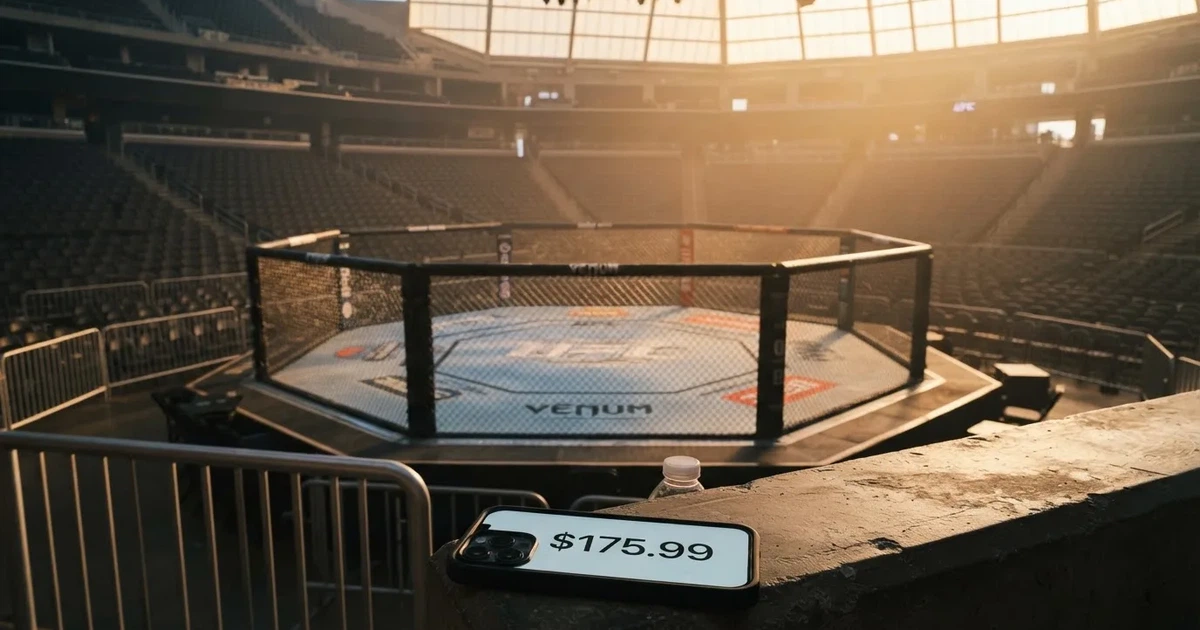
The short version of UFC betting in New Zealand is also the awkward one. Since the Racing Industry Amendment Act 2025 came into force on 28 June 2025, no provider other than TAB NZ may offer racing or sports betting to a person in New Zealand — which is the awkward part, because the UFC is the kind of event a New Zealand punter can watch on a Sunday morning and decide they want a flutter on before lunch. They can. They just cannot do it through anyone except TAB NZ and its sister brand Betcha. Every offshore sportsbook a New Zealand player has heard of — the ones with the glossiest apps and the longest sign-up promos — is offering UFC markets to people in New Zealand without a New Zealand licence. The Department of Internal Affairs told those providers to withdraw with immediate effect; whether they did is a separate question from whether they may lawfully do so, and the answer to the second one is no.
That leaves the UFC fan in New Zealand with a smaller choice than the UFC fan in Australia or the UK, and a clearer one. This page is built around what that choice looks like in 2026: the apps that can lawfully take UFC bets in New Zealand, the markets those apps show, how the odds are priced, what a margin does to a price, and what every other brand on the betting market looks like when held against the legal frame. The angle throughout is choice — which paths exist, who each one suits, and what each one actually costs.
Mobile Apps and the UFC Betting Experience in New Zealand
The two lawful apps in New Zealand come from the same operator. TAB NZ runs TAB and Betcha as online sister brands, both developed under a 25-year partnership with Entain signed in 2023, and both sit behind the same KYC, the same wallet logic and the same harm-minimisation tools. From a UFC punter’s seat they feel like different apps built for slightly different habits.

The TAB NZ app has been on the New Zealand App Store since 8 September 2014, published by New Zealand Racing Board. It carries horse, harness and greyhound racing, rugby union, rugby league and the wider sports book, with pre-match and live markets, deposit limits, time-outs and self-exclusion built in. The App Store rating is 17+, while the betting age is 18 — a defensible wedge between an app-store policy (which rates content) and the gambling age (which is set by section 89 of the Racing Industry Act 2020). A 17-year-old can read the listing but cannot place a bet. Inside the app, Trackside streams live racing with in-app wagering, the form tools and the Blackbook and Jockey Challenge sit next to the sports menu, and the wallet is “simplified” — Entain’s word for fewer taps between deposit and betslip. UFC fights sit inside the Sports tab; the markets shown are the same Win / Method of Victory / Total Rounds shape most offshore books use, with a Same Game Multi builder for cards that stack multiple bouts on one ticket.
Betcha is the newer of the two, released on 6 August 2024 and published by Entain New Zealand Limited. The pitch is a sports-first, racing-light app: a cleaner sportsbook view, fewer racing codes crowding the homepage, and the same fixed-odds markets underneath. UFC cards on Betcha are organised by event, with the headline bout pinned at the top of the screen and the undercard below. It is the app to reach for if the punter’s week is built around a UFC pay-per-view and the racing form is decoration.
A third option, the TAB NZ mobile site, is what falls out when the app store blocks a device or when the punter prefers a browser tab. The sports book is the same catalogue; the live odds refresh on the same cadence; the bet slip behaves the same way. What it loses is the fingerprint login and the push notifications a UFC fight card earns — a quiet form of friction worth weighing if the punter bets in-app while watching a broadcast and on the browser between events.
The risk profile of these three routes is identical. TAB and Betcha share the same wallet, the same deposit ceiling and the same self-exclusion. An exclusion applied on TAB applies on Betcha; a deposit limit set on one is read on the other. That is the upside of the monopoly: there is no second set of harm-minimisation tools to forget about.
A practical caveat. The offshore apps a UFC punter may have on their phone from a trip or a previous address — the same brands the rest of this page reviews — are still in the app stores. None of them may lawfully take UFC bets from someone inside New Zealand, and the offshore licence they do hold (Curaçao, Anjouan, Tobique, Comoros, in the various cases below) does not change the legal position. The DIA warned those providers to withdraw with immediate effect when section 74AAA came in. The way to read an offshore app installed on a New Zealand handset is as a piece of software that can be opened; whether a New Zealand bet can be placed through it is a question the operator, not the punter, has to answer.
UFC Betting Predictions, Strategy and Where Tipsters Actually Get Paid
The UFC is a sport in which the betting public loses more than it wins. The exact figure varies by bookmaker and by card, but the structural reason is hard to argue with: the UFC is short-form, high-variance and information-asymmetric. A 25-minute fight can turn on a single head kick, the public has no privileged data on a fighter’s training camp, and a card can swing from “sharp money on the favourite” to “live dog steam” inside a round. Tipsters who promise an edge sell certainty that does not exist in this market.

That said, there is a difference between a prediction that names a winner and a strategy that decides how much to risk. A New Zealand punter betting on the UFC through TAB NZ can borrow three habits from the sharper end of the market without importing any tipster.
The first is unit sizing. A unit is a fixed percentage of a starting bankroll — 1% is the conventional size, 2% the aggressive end — and every UFC bet is sized in units, never in dollars pulled out of thin air. The mechanical advantage is that a bad card does not blow the bank and a good card does not trick the punter into over-betting the next one. The habit takes ten seconds to install and does most of the work a tipster claims to do.
The second is line shopping. TAB NZ is the only lawful sportsbook in New Zealand, so the comparison happens between fixed-odds and pool (tote) on the same app, between the TAB and Betcha prices on the same bout, and against the punter’s own last-taken price on the same fighter in a previous fight. A price improvement of five points on a $50 wager is $2.50, which is the same number as a winning pick at long odds on a losing record. The edge is in the discipline, not in any one tip.
The third is round and method. The UFC pays out on Method of Victory and on Total Rounds Over/Under, and both markets have prices that move sharply with news — a champion shifting camp, an undercard fighter missing weight, a five-round main event replacing a three-round co-main. The punter who follows the news cycle gets a faster read on the price than the punter who only follows the card. That is the only form of “prediction edge” that survives the absence of UFC insider data: information that is public, applied before the book adjusts.
What this section is not is a tip sheet. No page in this market can tell a New Zealand punter who will win UFC 334 at Madison Square Garden or UFC 335 at T-Mobile Arena. The structure of the page is to equip them, which is a different thing.
UFC Bet Types, Odds and What a Price Actually Says
The UFC markets a New Zealand punter sees on TAB NZ or Betcha are the same shape as the markets on any sportsbook, just narrower. The headline market is the Moneyline — the outright winner. The next layer is Method of Victory (KO/TKO, Submission, Decision), which pays more because it asks the punter to be right about how, not just who. Total Rounds Over/Under sits beneath that, with the line set by the scheduled bout length. Three-round fights price the line at 1.5 or 2.5 rounds; five-round main events and title fights price it at 2.5 or 4.5. Then there is the Same Game Multi — combining several legs from one card into one betslip — and the broader Multi, which folds several fights into one ticket.
UFC odds in New Zealand are published in decimal form by convention. A price of 2.10 means a $10 stake returns $21 ($10 stake, $11 profit). A price of 1.50 returns $15 on the same stake. The shorter the price, the heavier the favourite; the longer the price, the bigger the underdog. Decimal odds make the math simpler than fractional odds, and they also make the margin of the book visible, which the section below turns into.
There are two ways a price can be wrong for the punter even when it is right about who wins. The first is timing: a price taken early is the bookmaker’s read on the card; a price taken late is the market’s read after sharper money has moved it. The second is the margin built into every price. A bookmaker does not post “true” odds on each fighter; it posts odds that guarantee it a return regardless of the outcome. The difference between the two is the margin, and the next section is about how that difference is built.
A practical note on UFC markets that look exotic. Method of Victory, Going the Distance, Fight of the Night performance bonuses and similar novelty lines appear on offshore sportsbooks more freely than on TAB NZ, because the lawful New Zealand bookmaker publishes only the markets its terms define. If a punter sees a UFC market on a TAB NZ app, it is in the official catalogue; if they do not, it does not exist through a lawful route. The novelty line is a way the offshore book differentiates itself from TAB NZ; it is also a way the punter pays more margin for the privilege.
UFC Fixtures, Tournaments and the Card a New Zealand Punter Sees
The UFC schedule in 2026 runs through numbered events on a roughly weekly cadence, with pay-per-view cards at the top and Fight Night cards underneath. The sport is owned and operated by TKO Group Holdings, with Dana White as president since 2001; the first event was held on 12 November 1993 in Denver, Colorado, and the promotion has held over 750 events across its history. Eight men’s divisions and three women’s divisions structure the title picture, and each title fight is scheduled for up to five rounds while non-title main events and undercard bouts are scheduled for three.
The upcoming cards a New Zealand punter sees on the TAB NZ app are listed by event number, venue and date. UFC 334 is scheduled for 14 November 2026 at Madison Square Garden, with Gane facing Hokit; UFC 335 follows on 12 December 2026 at T-Mobile Arena, with Oliveira against Lopes. Both are five-round main events, which means Total Rounds Over/Under will price at 2.5 or 4.5 rather than 1.5 or 2.5. Each round is a maximum of five minutes, with one minute’s rest between rounds, and a bout can end by submission, knockout, technical knockout, judges’ decision (unanimous, majority, split or technical), disqualification or no contest.
How a UFC fight is scored matters for the betting on it. Three judges score each round on the ten-point must system — the round winner receives 10 points, the loser 9 or fewer — and a 10-8 round is the typical reading of a dominant frame. A bout that goes to decision is the punter betting on a fighter’s ability to win rounds over 15 or 25 minutes, not just survive them; a fighter with a high takedown rate and low finishing rate is a Decision bet, not a KO bet, and the market rewards that distinction in price.
The mechanics matter for one specific case. If a UFC title fight ends in a draw, the defending champion retains the title. A Draw on the Method of Victory market is the only outcome on which the punter can collect on a champion who fights to a stalemate — and it prices accordingly long, because the path to a draw is narrow and the punter is hedging on a fighter the champion can beat on points but cannot put away.
UFC Betting Sites: How the New Zealand Lineup Actually Stacks Up
The table below lists every bookmaker a New Zealand punter is likely to meet, with its New Zealand status and what its own terms say on UFC betting. The first two rows are the lawful providers; the rest are offshore brands that may not lawfully take bets from people in New Zealand, included here so a punter who has heard of them knows where they sit. The table is a snapshot, not a ranking. A lawful provider is not “better” than an unlicensed one on the merits of the offer — it is in a different legal category, and that category is the first column.
The columns are the matters a UFC punter weighs before opening an account. New Zealand status tells the punter whether they may lawfully place a bet through the brand from inside New Zealand. The UFC markets column tells them how much of the UFC card the bookmaker prices. The withdrawal and customer-protection column tells them how the brand handles the upside (large win) and the downside (dispute). None of these columns is a recommendation.
| Brand | New Zealand status | UFC markets on offer | Customer-protection stance (own terms) |
|---|---|---|---|
| TAB | TAB NZ brand — lawful under section 74AAA | Moneyline, Method of Victory, Total Rounds, Same Game Multi, Multi | NZ harm-minimisation tools, NZ complaints framework, NZ tax treatment |
| Betcha | TAB NZ brand — lawful under section 74AAA | Moneyline, Method of Victory, Total Rounds, Same Game Multi, Multi | NZ harm-minimisation tools, NZ complaints framework, NZ tax treatment |
| Rabona | Not licensed in New Zealand | Full UFC card, over 30 market types per event | Curaçao licence, no NZ complaints route |
| RoyalistPlay | Not licensed in New Zealand | Full UFC card with live betting, e-sports and Predictions sections | Tobique e-gaming licence, no NZ complaints route |
| BillyBets | Not licensed in New Zealand | UFC under combat sports, with casino under one account | No NZ-applicable licence named |
| Winz.io | Not licensed in New Zealand | UFC markets via separate Sportsbook T&C and Bonus Terms | Anjouan and Tobique licences, no NZ complaints route |
| 22Bet | Not licensed in New Zealand | UFC with over 30 market types per event, Asian lines | Curaçao licence (8048/JAZ), no NZ complaints route |
| Sportaza | Not licensed in New Zealand | UFC with cash-out, Bet Builder, Asian lines, minute-range markets | Anjouan licence, no NZ complaints route |
| Thunderpick | Not licensed in New Zealand | UFC alongside esports-first catalogue, cash-out feature | Curaçao licence, no NZ complaints route |
| BetNinja | Not licensed in New Zealand | UFC markets bundled with casino welcome | Comoros licence, no NZ complaints route |
The reason the table reads the way it does is the law, not the brands. The first two rows are lawful because the law allows only them to be lawful; the next eight are present because New Zealand players meet them, and a comparison that left them out is not a comparison. Each of the offshore rows is happy to accept a New Zealand punter’s deposit and place their UFC bet, and each is acting unlawfully under section 74AAA. The punter is not the one section 74AAA targets — section 19(4) of the Gambling Act 2003 (inserted in 2025) says an individual may not be convicted for placing a bet with an offshore operator in breach of section 74AAA — but the offshore book has no New Zealand complaints route, no New Zealand harm-minimisation regime, and no obligation to return an unspent balance or pay out a large win. The Department of Internal Affairs warns of exactly those risks.
The UFC markets column hides a more pointed difference. TAB NZ and Betcha show the standard UFC menu; the offshore books show more markets, often at sharper prices, sometimes with novelty lines (Going the Distance, Performance of the Night, Round Group Betting). A punter who values the breadth of the menu and does not mind the legal frame will find an offshore book with more to offer. A punter who buys the New Zealand protections and accepts the narrower menu will find TAB NZ and Betcha sufficient for a UFC card.
A practical sequencing note. A New Zealand punter who wants a UFC bet this weekend has a one-step path: open the TAB NZ or Betcha app, fund the wallet, browse the next card, place the bet. A New Zealand punter who wants a UFC bet through an offshore book has a longer path with three friction points at minimum — confirming the offshore book still serves New Zealand (some have throttled geo-targeted signups), confirming the deposit method works from a New Zealand bank, and confirming the withdrawal path before placing a single wager. The friction is real and it is the kind of friction that does not show up in a sign-up bonus comparison.
UFC Betting in New Zealand: The Core Picture
The UFC is a fight sport, structured around title fights, ranked contenders and ranked prospects, with each fighter moving up or down the rankings on a roughly fight-by-fight basis. The first UFC event was held on 12 November 1993 in Denver, Colorado; the promotion is owned and operated by TKO Group Holdings, with Dana White as president since 2001. By 2026 the UFC had held over 750 events across eight men’s divisions and three women’s divisions, with a fight card typically anchored by a pay-per-view main event and surrounded by undercard bouts streamed on ESPN platforms and other broadcast partners.
A UFC bout is a sequence of rounds. Each round is a maximum of five minutes, with one minute of rest between rounds. Championship fights and non-title main events are scheduled for five rounds; all other bouts are scheduled for three. A bout can be won by submission, knockout, technical knockout, judges’ decision (unanimous, majority, split or technical) or disqualification; a bout can also be ruled a no contest. If a UFC title fight ends in a draw, the defending champion retains the title — a rule the Method of Victory market prices into the Draw line.
Scoring is by three judges using the ten-point must system. The winner of each round receives 10 points; the loser receives 9 or fewer. A 10-8 round is the typical reading for a dominant round, and judges’ scorecards after three rounds determine a unanimous, majority or split decision. The mechanic is the reason a fighter with high takedown accuracy and low finishing rate prices shorter on Decision than on KO/TKO — and the reason a punt on a Decision requires the punter to bet the fighter wins rounds, not just survives them.
The UFC the New Zealand punter sees is a subset of the global UFC. TAB NZ and Betcha list the headline cards and the bigger Fight Night events; the smaller Fight Night cards and the regional events are thinner on the lawful apps. The same card that headlines on an offshore book may price only the main event and the co-main on TAB NZ, with the rest of the card market-less. That is the menu constraint the law creates, and it is the menu constraint the next section addresses in the legal register.
The Legal Frame Around UFC Betting in New Zealand
The law that governs UFC betting in New Zealand in 2026 is the Racing Industry Act 2020, as amended by the Racing Industry Amendment Act 2025. Section 74AAA of the Act, in force since 28 June 2025, says no person other than TAB NZ may offer racing betting, sports betting or other racing or sports betting to a person in New Zealand, regardless of where that person is resident or incorporated. The Gambling Act 2003 (as amended in 2025) inserts section 19(4), which says an individual may not be convicted for placing a bet with an offshore betting operator in breach of section 74AAA. Read together, the two provisions put the legal liability on the operator, not on the player.
The regulator is the Department of Internal Affairs, which monitors compliance with the betting prohibition under section 92A of the Racing Industry Act 2020. The Department told unlicensed providers to withdraw with immediate effect when the change took effect. There is no licence register for bookmakers, because there is only one lawful operator — TAB NZ — and the law does not allow another to apply. The Online Casino Gambling Act 2026, which licenses online casino gambling, does not extend the monopoly; TAB New Zealand winning the right to apply for a casino licence does not give the casino licence to take UFC bets.
TAB NZ runs the TAB business under a 25-year agreement with Entain, signed in 2023. The deal gives Entain a 50/50 share of gross profits, with at least $150m a year going to TAB NZ for the first five years and Entain pledging a one-off $100m payment to the racing sector. Betcha is the second online brand of TAB NZ, run by Entain New Zealand Limited and released on 6 August 2024. TAB and Betcha are not rivals; they are one operator under two brands.
The player side is more textured. The age for betting on TAB NZ is 18 — a section 89 offence to bet under 18 — which differs from the land-based casino age of 20. TAB NZ accounts require a verified New Zealand address and ID; the offshore books ask for neither. TAB NZ offers deposit limits, time-outs and self-exclusion in its apps, and an exclusion applies across both TAB and Betcha; the offshore books offer what their own terms define, and what their own regulator defines is in jurisdictions with minimal consumer safeguards, in the DIA’s wording.
The tax frame is split between the player and the operator. For the player, Inland Revenue guidance says recreational gambling winnings are generally not taxable, and prize money from TAB horse, dog and trotting races is not taxable. A person who bets as a business is a different case; the page is general information, not tax advice. For the operator, TAB NZ pays the Problem Gambling Levy of 0.74% (in force from 1 July 2025 to 30 June 2028), and overseas operators supplying New Zealand residents pay an online gambling duty — 12% of profits since 1 July 2024, rising to 16% from 1 January 2027. The point-of-consumption charge on offshore racing and sports bets ceased on 30 June 2026.
A separate closing rule: greyhound racing is closing in stages from 1 August 2026. From that date offshore operators may not take bets on greyhound races either. The rule sits adjacent to the UFC rule rather than inside it, because the UFC is not a greyhound code, but it does mean a New Zealand punter betting on UFC through an offshore book cannot hedge greyhound exposure with the same offshore book from August 2026 onwards.
The advertising frame is the Advertising Standards Authority’s Gambling Advertising Code. Ads for betting must not target children (under 14) or young people (14 to under 18), judged by context, appeal and expected audience (where accurate audience data exists, a 25% or higher young-person share is significant). Ads must not encourage harm and must be truthful with terms available. There is no New Zealand equivalent of the UK “whistle-to-whistle” ban, and the page does not invite a reader to sign up with an offshore brand — that is the editorial position the law shapes.
Responsible Gambling Around UFC Betting in New Zealand
The harm-minimisation tools on the lawful New Zealand apps are the simplest part of the picture. TAB NZ and Betcha offer deposit limits, time-outs and self-exclusion in-app; an exclusion applied on one brand applies across both, and the same wallet logic governs both. The tools are not optional — they are part of the app the punter downloads — but they are not aggressive either; the punter who wants a tighter deposit ceiling than the default has to set it.
Outside the apps, the free Gambling Helpline at 0800 654 655 and the text line at 8006 are listed by TAB NZ as the points of contact for gambling harm in New Zealand. Safer Gambling Aotearoa is the body coordinating the sector’s harm response. The Problem Gambling Levy of 0.74%, paid by TAB NZ, funds the broader harm-minimisation system.
A word on what the law does not do. There is no single national online-betting exclusion register for New Zealand; the register the Online Casino Gambling Act 2026 will require is for online casinos, not sports betting. A punter who excludes themselves on TAB NZ is excluded from TAB NZ; a punter who opens an offshore book account in their own name is not excluded there by the TAB NZ exclusion. The tool is at the brand, not at the country.
A word on what the offshore brands do. The DIA warns that overseas operators may be in jurisdictions with minimal consumer safeguards, may not return unspent credits and may not pay out large wins. The eight non-TAB brands in the table above are each named in research with a non-NZ licence (Curaçao, Anjouan, Tobique, Comoros) and each carries the DIA warning by definition. The punter who bets offshore accepts those terms.
TAB — UFC Betting on the Lawful New Zealand Sportsbook
TAB NZ runs the only lawful New Zealand sportsbook in 2026. TAB is its legacy brand, published by New Zealand Racing Board on the New Zealand App Store since 8 September 2014, carrying horse, harness and greyhound racing, rugby union, rugby league and the wider sports catalogue. UFC fights sit inside the Sports tab with the standard menu: Moneyline, Method of Victory, Total Rounds, Same Game Multi, Multi. The betslip is the same one the punter uses for racing, with decimal odds, fixed-odds and pool (tote) side by side.
The protective frame around TAB is the protective frame around TAB NZ. Deposit limits, time-outs and self-exclusion in-app, with the exclusion reading across TAB and Betcha; harm-minimisation funding through the Problem Gambling Levy; NZ complaints framework; NZ tax treatment for recreational winnings. The TAB app is what the punter downloads who wants a UFC bet in New Zealand and wants the law on their side.
The narrowness of the UFC menu is the trade-off. TAB NZ publishes only the markets its terms define, and the wider novelty lines (Going the Distance, Round Group Betting, Performance of the Night) are thinner than what an offshore book shows. A punter whose UFC interest runs to a single Moneyline on the main event will not feel the gap. A punter whose UFC interest runs to a six-leg Same Game Multi on the undercard will feel it on the first card they cannot price.
The app-store age rating is 17+, while the betting age is 18. The wedge is a quirk of the App Store’s content rating rather than a loophole; the punter who is 17 can read the listing, the punter who is 17 cannot place a bet, and the betting age is set by section 89 of the Racing Industry Act 2020. Trackside streams live racing with in-app betting; the same live-streaming feature is not present on the UFC side of the app, because the UFC’s broadcast rights are held by ESPN and other partners. A punter who wants the fight on screen and the betslip on the phone opens both apps side by side.
TAB is the default UFC bookmaker in New Zealand in 2026. The case for it is the case for any lawful monopoly: the law, the regulator and the harm-minimisation regime are all on the New Zealand side of the bet. The case against it is the menu — the menu an offshore book prices wider, at the cost of the regulatory frame the offshore book does not offer. For a punter whose UFC betting is the main event only, that trade-off is a small price.
Betcha — UFC Betting on the Newer TAB NZ Brand
Betcha is the newer of the two TAB NZ online brands, published on the New Zealand App Store by Entain New Zealand Limited and first released on 6 August 2024. The pitch is a sports-first, racing-light app, with the UFC catalogue anchored by the next card and the undercard underneath. The Moneyline, Method of Victory, Total Rounds and Multi lines are the same as on TAB; the difference is in the framing of the app and the recency of the design.
The legal frame is identical to TAB. Betcha is a TAB NZ brand, the same operator under the Entain 25-year partnership signed in 2023, with the same wallet, the same deposit ceiling, the same harm-minimisation tools and the same cross-brand self-exclusion. A punter who excludes themselves on TAB is excluded on Betcha; a punter who sets a deposit limit on Betcha has it read on TAB. The unified regime is the upside of the monopoly.
The narrower menu is the same narrowness. UFC markets are the standard menu and the Same Game Multi builder is the multi-builder; the longer-tail novelty lines are not where the lawful New Zealand sportsbook earns its edge. A punter who chooses Betcha over TAB is choosing the newer interface, the sports-first homepage and the racing-light framing — and is choosing the same catalogue underneath.
The app is what a punter downloads who has heard of Betcha specifically, who wants the racing form pushed to the side and who places the UFC bet first. The bettor for whom racing is the main event and UFC is the side interest is better served on TAB, which treats racing as the primary surface.
Betcha is the second lawful UFC bookmaker in New Zealand. The case for it is the interface and the recency; the case against it is the menu, which mirrors TAB. For a punter whose UFC betting is the main event and whose appetite is for a cleaner sportsbook view, the trade-off is worth the install.
Rabona — UFC Markets, Curaçao Licence, No New Zealand Route
Rabona launched on 23 December 2019 as the sixth online sportsbook of the Soft2Bet group. Its sportsbook lists over 30 market types per event — 1X2, Double Chance, totals, both teams to score, correct score, HT-FT — and UFC cards price the full menu from Moneyline down. The Curaçao licence under which Rabona operates does not permit it to take bets from New Zealand-based punters. Section 74AAA of the Racing Industry Act 2020 controls this activity, and the licence is irrelevant to that statutory ban.
The DIA warning applies. The Department warns that overseas operators may be in jurisdictions with minimal consumer safeguards, may not return unspent credits and may not pay out large wins. Rabona, like the rest of the offshore set, carries the warning by definition. The punter who opens a Rabona account from inside New Zealand is opening an account the law does not protect.
The UFC menu is the case for the brand on the merits. Rabona prices the full card, with markets an offshore-only punter builds a Same Game Multi out of and that a lawful-only punter does not see. The case against is the legal frame and the absence of a New Zealand complaints route.
Rabona is the offshore UFC book for a punter who is not in New Zealand at the time of the bet. For a punter who is in New Zealand, the brand is the menu and nothing else.
RoyalistPlay — UFC Markets, Tobique Licence, No New Zealand Route
RoyalistPlay’s sportsbook lists live betting, sports promotions, results and a schedule, with football, basketball, tennis, handball, ice hockey, volleyball and table tennis among the top sports, plus separate e-sports and Predictions sections. UFC markets sit inside the combat-sports set the brand publishes. The Tobique Gaming Commission e-gaming licence (No. 0000002) held by Novatrix SRL under which RoyalistPlay operates lacks authority to accept bets from punters in New Zealand.
The DIA warning applies on the same terms as the rest of the offshore set. The Tobique licence is the licence of an e-gaming regulator outside New Zealand; the New Zealand Gambling Commission and the Department of Internal Affairs are the only regulators that apply in New Zealand, and section 74AAA confines lawful betting to TAB NZ. RoyalistPlay, like the other offshore brands, is acting unlawfully in offering UFC bets to people in New Zealand; the player carries no liability under section 19(4), but the operator carries the prohibition.
RoyalistPlay is a foreign operator lacking a New Zealand licence. Menu and regulatory protections are distinct, and local players must weigh these priorities. This platform accepts bets from outside New Zealand’s regulatory scope. RoyalistPlay operates from abroad without a local licence.
BillyBets — UFC Markets Under One Account With Casino, No New Zealand Route
BillyBets runs a casino and a sportsbook under one account, with the sportsbook covering football, tennis, table tennis, basketball, ice hockey, American football, baseball, combat sports, esports, virtual sports and live betting. UFC cards sit under combat sports. The brand names no licence that applies in New Zealand; the absence of a New Zealand-applicable licence is the controlling fact under section 74AAA.
The DIA warning applies. The single-account structure is a feature for the punter who wants casino games and UFC bets under one login; the absence of a local complaints route is the cost. A punter opening a BillyBets account from inside New Zealand uses an account with no local regulatory oversight. Such operators are not authorised to accept bets from New Zealand residents.
BillyBets is an international operator with no New Zealand licence. Its menu and regulatory safeguards function as distinct alternatives for the user. BillyBets functions beyond New Zealand’s regulatory boundaries.
Winz.io — UFC Markets With a Separate Sportsbook T&C, No New Zealand Route
Winz.io runs a sports betting bonus promotion with separate Sportsbook T&C, Sports Rules and Bonus Terms and Conditions pages. UFC markets are priced under the Sportsbook section, with the same Moneyline / Method / Total Rounds menu other offshore books publish. The Anjouan and Tobique licences held by Novatrix SRL under which Winz.io operates do not authorise it to accept bets from New Zealand.
The DIA warning applies here too. A separate T&C structure allows a sharper punter to review terms before betting, but the lack of a New Zealand complaints route remains. Winz.io provides services beyond the scope of New Zealand regulations, and this service is not for residents of New Zealand.
Winz.io is an international operator without a New Zealand licence. Bonus offers and regulatory safeguards are separate considerations. Winz.io provides services beyond the reach of local regulation. Winz.io is not licensed locally.
22Bet — UFC Markets With Over 30 Market Types Per Event, No New Zealand Route
22Bet offers over 30 market types per event — 1X2, Double Chance, totals, both teams to score, correct score, HT-FT — plus tennis game, set and handicap markets, and the UFC catalogue mirrors that breadth with the standard menu plus a wider set of totals, method and round markets. The Curaçao licence (8048/JAZ) under which 22Bet operates, with TechSolutions Group N.V.
The DIA warning applies. A broad market catalogue appeals to a punter wanting to build a complex UFC betslip, but this lacks New Zealand-standard consumer protections. 22Bet lacks New Zealand-standard consumer protections and operates without local authorisation.
The case for 22Bet on the merits is the breadth of the catalogue. The case against is the legal frame.
Sportaza — UFC Markets With Cash-Out, Bet Builder and Asian Lines, No New Zealand Route
Sportaza offers cash out before an event or market is finalised, Bet Builder (with a void rule that voids the whole betslip if one selection is void), multiples, Asian lines and interval markets in 1, 5, 10 or 15 minute ranges. UFC markets sit inside the broader catalogue. The Anjouan licence (ALSI-202606064-FI2) under which Sportaza operates is not a valid basis for accepting bets from punters in New Zealand.
The DIA warning applies. Cash-out and Bet Builder features assist in managing a UFC betslip mid-fight, but lack New Zealand protections. Sportaza operates outside the New Zealand legal frame.
The case for Sportaza is the in-play management surface. Sportaza is an offshore operator without a New Zealand licence. The in-play surface and regulatory protections are substitutes.
Thunderpick — UFC Markets Alongside an Esports-First Catalogue, No New Zealand Route
Thunderpick is esports-first, covering CS2, League of Legends, Dota 2 and Valorant, and its sportsbook offers a cash-out feature and markets from the Champions League to the NFL. UFC markets sit alongside the broader sports catalogue, with the standard menu and the cash-out surface. The Curaçao licence (OGL/2024/677/0722) held by Paloma Media B.V. under which Thunderpick operates is invalid for accepting bets from punters in New Zealand.
The DIA warning applies. An esports-first catalogue appeals to a punter splitting time between UFC and CS2, but lacks local oversight. Thunderpick operates outside the New Zealand legal frame.
The case for Thunderpick is the esports-first catalogue and cross-sport cash-out. Thunderpick is an offshore operator without a New Zealand licence. The cross-sport catalogue and regulatory protections are substitutes.
BetNinja — UFC Markets Bundled With a Casino Welcome, No New Zealand Route
BetNinja advertises a casino welcome of EUR 1,000 bonus and 100 free spins, alongside a sports offer of a 100% match up to EUR 100 on the first deposit. UFC markets sit inside the sports catalogue. The licence from the Union of the Comoros held by BetNinja does not permit it to accept bets from residents of New Zealand.
The DIA warning applies. A dual welcome is a feature for a punter wanting both products under one account, but the lack of New Zealand complaints resolution remains. BetNinja operates outside the New Zealand legal frame.
The case for BetNinja is the dual welcome. BetNinja is an offshore operator without a New Zealand licence. The welcome structure and regulatory protections are substitutes.
What a UFC Bookmaker’s Margin Looks Like in the Odds
Every UFC price a punter sees is built around a margin. The margin is the cut the bookmaker keeps of every unit bet on a market, and the size of the margin is the difference between the “true” odds on each fighter and the odds the bookmaker publishes. The math is straightforward.
Take an illustrative two-way UFC market priced at decimal odds 1.90 on each fighter. The implied probability of each outcome, ignoring margin, is 1 ÷ 1.90 = 0.526, or 52.6%. Two outcomes at 52.6% sum to 105.3%, which means the bookmaker is taking 5.3% of every dollar bet on this market as margin. The “true” odds, with the margin stripped out, price each fighter at 2.11 (1 ÷ 0.474), and the punter’s edge on the published price is whatever sits between the published 1.90 and the true 2.11.
A margin of around 5% is a typical reading of a major-market UFC moneyline at a sharp book; offshore books in this set routinely price UFC moneylines with margins in the 5-7% range, and a Same Game Multi leg adds margin on top of margin — each leg of a multi has its own built-in cut, and the multi prices the cumulative margin across all of them. A punter who bets the main event Moneyline pays one margin. A punter who builds a five-leg Same Game Multi pays five margins compounded.
The practical reading is this. A UFC bettor who bets the main event only and reads the prices on TAB NZ and Betcha pays the standard margin on a single line. A UFC bettor who builds a Same Game Multi on the undercard pays more margin for the privilege of the multi structure, regardless of which app they use. The offshore books show more markets; they charge more margin on the markets they show, and they do not compensate the punter for the absence of a New Zealand complaints route.
The margin is also why line shopping matters within New Zealand. TAB NZ prices fixed-odds and pool (tote) side by side; the punter who reads the fixed-odds price and the tote dividend on the same fighter is reading the two prices against each other. The fixed-odds price has a margin built in; the tote dividend has the operator’s take and the pool take, which is a different kind of margin. A punter who reads both before placing a bet is reading the cost of each option, which is what the margin is for.
Frequently Asked Questions About UFC Betting in New Zealand
Can UFC fighters bet on fights?
Athletes contracted to the UFC are prohibited by the promotion’s policies from betting on UFC bouts, on other MMA bouts, and on any sport in which they are competing. The UFC’s conduct rules apply to fighters and corners, and state athletic commissions regulate the conduct of licensees. The punter question is a different one — the prohibition is on the participants, not on the public — but it is the prohibition that shapes the integrity questions a UFC bookmaker handles behind the scenes.
Can UFC fighters bet on other fighters?
Fighters are also restricted from betting on the fights of other UFC athletes, on the fights of athletes in other MMA promotions, and on sports in which they are directly involved. The rule covers conflicts of interest and information asymmetries that an inside participant is able to exploit. A fighter who bets on a fellow athlete’s bout breaches the same policy that bars betting on one’s own fights.
How does a New Zealand punter bet on the UFC?
Open the TAB NZ or Betcha app, complete identity verification with a New Zealand address and ID, fund the wallet, browse the next UFC card, and place the bet. The lawful route is the only route with a New Zealand regulatory framework around it. Offshore books are accessible from a New Zealand internet connection but operate without a New Zealand licence; section 74AAA is the law that confines lawful betting to TAB NZ, and section 19(4) is the provision that protects the player from conviction while putting the liability on the operator.
Which bookmaker may lawfully take sports and racing bets in New Zealand?
TAB NZ, through its two online brands TAB and Betcha, is the only provider lawfully offering racing and sports betting to people in New Zealand under section 74AAA of the Racing Industry Act 2020 (in force since 28 June 2025). The Department of Internal Affairs told unlicensed providers to withdraw with immediate effect when the change took effect, and there is no licence register for bookmakers because there is only one lawful provider.
How is the return on a UFC bet worked out from the stake and the odds?
For a single bet, return equals stake multiplied by decimal odds. A $20 stake at odds of 2.50 returns $50 ($20 stake, $30 profit). For a multi bet, the odds of the legs multiply into one price; a two-leg multi at 2.00 and 3.00 prices the combined bet at 6.00, and a $10 stake returns $60. The stake is returned on top of the profit on a winning bet; on a Same Game Multi the same rule applies, with each leg contributing its own decimal price to the combined ticket.
What is the bookmaker’s margin and how does it show in the odds?
The margin is the cut the bookmaker keeps of every unit bet on a market. On a two-way UFC market priced at 1.90 / 1.90, the implied probabilities sum to 105.3%, and the 5.3% excess is the margin. The published odds are the true odds adjusted upward to guarantee the bookmaker a return regardless of the outcome. A lower margin means a sharper book from the punter’s perspective; the typical UFC moneyline margin at a sharp book sits around 5%, with Same Game Multi legs carrying higher margins compounded across legs.
Tennis, golf & more – footytipsnz.com
Content created by the «footytipsnz.com» team
