
Where Kiwis can bet on boxing — and how the prices really work
 Available in US
Last updated as of 31 October 2026 against the licensing rules and operator terms on TAB NZ’s monopoly framework under the Racing Industry Act 2020, in force since 28 June 2025.
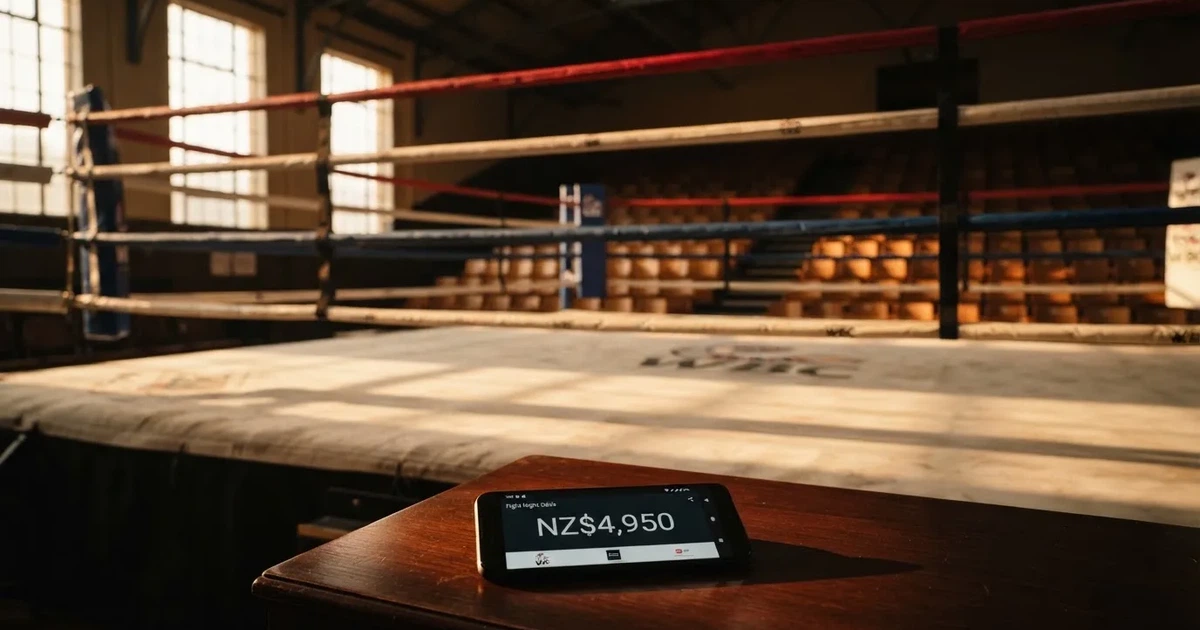
Boxing sits in a strange corner of the New Zealand betting market. It is one of the few sports where a single $10 wager can return $40 on a heavy favourite or barely cover a TAB coffee on a 12-round undercard. New Zealanders who fancy a punt on a world title fight have essentially one lawful way to do it: through TAB NZ, the country’s statutory racing and sports betting operator, online through the TAB and Betcha brands. The offshore bookmakers a New Zealand reader sees on global lists are not licensed to take bets from people in this country, and the law now treats that side of the market as unlawful for the operator, not for the punter. With the choice that narrow, what shapes the experience is the structure of the odds themselves, the menu of bet types on offer, and the bonus bets promotion terms attached to whichever card the reader holds. This guide walks through what boxing betting in New Zealand looks like, who can take the bet, and what the numbers on the slip actually mean when the bell rings.
Boxing betting offers and bonus bets worth chasing — and the ones to leave alone
Bookmaker offers are the part of the market where the marketing language runs hottest and the small print does the heaviest work. Boxing betting bonuses in New Zealand reduce to whatever TAB NZ runs on its platform: bonus bets promotions tied to racing carnivals and headline fights, boosted odds on selected markets, and loyalty mechanics built around how much a punter wagers over a month. The same shape appears at offshore brands — RTbet, BigClash, LegendPlay, Alawin, BillyBets, Spinbara, Rabona, Thunderpick — but the legal frame under section 74AAA of the Racing Industry Act 2020 means that nothing a New Zealand reader can do at those brands is a lawful wagering transaction for them, and no New Zealand complaints route is available if a bonus is short-paid or a withdrawal stalls.

What every “boxing welcome bonus” looks like in dollar terms: the headline is a percentage match on a deposit, with a cap in dollars, then a wagering requirement attached to the bonus. Read the welcome bonus as a marketing number first. The number a New Zealand punter ought to care about is the wagering multiplier — usually between five and ten — and the minimum odds each leg of the rollover must clear. A 100% deposit match up to NZ$200 with an 8x turnover on the bonus at minimum odds of 1.50 sounds generous on the ad; the maths says a punter has to place $1,600 of qualifying bets, and every bet below 1.50 in the decimal board voids progress on that bonus. Bonus bets themselves are rarely paid out as cash on a win: the stake is typically returned as another bonus bet, and a maximum win cap is the rule, not the exception, at offshore brands.
A separate class of offer is the boosted odds promotion. TAB NZ boosts particular fights around major cards — a heavy favourite in a world title bout might go from 1.16 to 1.30 for the duration of a card. The original stake is returned as cash at most sportsbooks; a “boosted” payout can be subject to a maximum stake limit, often capped low, so the winnings ceiling is fixed. Boosted odds are the fairest offers on the menu because the winnings track the original stake, unlike a free bet whose stake disappears. Acca insurance — a stake back as a bonus if one leg of a multi loses — is a separate offer again; it is rarely available on boxing markets, which tend to be settled as single markets rather than accas at TAB NZ.
Loyalty and reload bonuses are where the experienced punter will look hardest. A reload bonus on a second or third deposit usually carries a smaller percentage but a lower wagering multiplier, and at offshore brands the VIP ladder rewards higher-volume play with personalised offers, faster withdrawals, and a dedicated account manager. BillyBets structures its loyalty around a coin shop; punters earn coins by depositing and wagering and exchange them for free bets and free spins. Spinbara runs a sport crypto welcome bonus of 100% up to 200 USDT alongside a casino welcome bonus of 100% up to NZ$500 plus 200 free spins — a layered package where the finer the granularity, the more it pays to read the contribution table before committing.
The clear-eyed summary: the size of the offer is rarely the deciding factor; the multiplier, the minimum odds rule, and the time limit on clearing the bonus decide whether an offer actually banks more than it costs. Boxing markets are not heavy-volume by nature — most cards settle over a weekend — so a bonus with a 30-day clearing window is workable for an active punter, while a 7-day window makes the same bonus a debt.
What to chase and what to walk past
A short list of the kind of offers worth a closer look on TAB NZ: boosted odds on the win market for high-profile title fights, bonus bet refunds as cash on multi losses, and same-game multis for head-to-head boxing matches with a method-of-victory leg layered on. The offers to leave alone are the ones whose headline percentage hides a 40x turnover with a 14-day expiry and minimum odds of 2.00 per leg. Boxing markets at TAB NZ are competitive; the bonus does not need to do much heavy lifting.

Boxing betting tips, predictions and forecast: how punters read a fight
Any search for boxing betting tips or boxing predictions returns a flood of “tips” sites, tipsters, and social channels claiming form, value picks, and outright winners. The hard truth of betting on boxing tips is that no published list of tips outperforms the closing line of the market on a sustained basis, and the closing line at a sharp bookmaker is the most efficient estimate of a fight’s true probability available. Boxing tips can be useful as a second opinion on the betting odds and a check on the punter’s own reading of the fight, never as a substitute for it.
The information that actually moves a boxing price into shape is widely available: the Tale of the Tape for each fighter, the recent fight record, the knockout ratio, the reach and the stance, the corner’s record, and the level of opposition faced. Add the judges’ scorecards history when a fighter has gone the distance repeatedly — judges’ tendencies matter more in a decision than a stoppage — and the ring rust stat for fighters returning after a long layoff. None of these is proprietary data; all are on the form guides TAB NZ carries inside its app and on a dozen free boxing sites. The punter’s job is to weight them, not to discover them.
Forecast boxing betting uses the same logic as the others. The “forecast” market on TAB NZ’s app is principally a racing product — picking the first two finishers in order — but the wider term “forecast” in the boxing pool of search results covers outright winner markets and method-of-victory markets. The boxing-specific markets worth taking seriously are the method of victory (KO/TKO, decision, draw), the round the fight ends in (group betting by round band), and the total rounds over/under. Each of these markets has a different margin because each has a different number of outcomes, and the wider the runner set, the more the bookmaker takes.
The model that works on boxing is straightforward. Open at the price TAB NZ publishes on the day the card is announced. Mark every movement in the price — a drop from 2.20 to 1.90 in a week usually means sharp money, not random noise. Compare against the closing line. Compare across offshore brands if the punter is reading those lists for reference: a substantial disagreement between TAB NZ’s price and the offshore consensus on the undercard signals value, not certainty. The line at TAB NZ on a Paul Rahubu-style underdog is not always wrong; it is, though, the line that sets the conversation.
The trap to avoid is reading the form guide as a prediction. A fighter who has won ten fights on the spin has not, in any statistical sense, a 100% chance of winning the eleventh. The Talofa of boxing betting is mistaking what has happened for what will happen; the closing line already prices that mistake out of the market.
A short checklist for reading a card before betting in 2026
Check the undercard first. The main event price is too sharp to find edge in for an everyday punter; the undercard fights are where the price is least efficient and the form guide matters most. Watch the weigh-in. A fighter who struggles to make weight is a fatigued fighter in the late rounds, and a fatigued fighter extends or loses on the cards. Read the judges. Some cards go to the hometown decision; others go to the visiting fighter with the cleaner technique. If both apply, the decision market tightens and the method-of-victory market widens. Pick the bet where the punter’s edge is largest; do not pick the market that pays the longest price.
Betting odds in boxing, bet types and a boxing betting calculator
How boxing odds work is a question almost every punter asks at some stage. Decimal odds tell the whole story in one number: the decimal price includes the stake. A $10 bet at 2.40 returns $24 if it wins — the original stake plus $14 of profit. The American moneyline is a separate way of expressing the same number, with a minus sign for the favourite (the amount to stake to win $100) and a plus sign for the outsider (the amount won per $100 staked). New Zealand punters betting at TAB NZ will only ever see the decimal form; offshore brands usually show both. Fractional odds are the British format — 5/2 means a $2 stake returns $7 in total — and the maths of converting between decimal and fractional is simple: decimal minus 1 written as a fraction over 1, so 2.40 in decimal is 7/5 in fractional.
The boxing betting odds markets that pay most attention to are not just the win market. A serious boxing card supports a full menu: fight winner, draw (priced at high odds because draws are rare), method of victory (KO/TKO, decision, or draw), round groupings (in rounds 1-3, 4-6, 7-9, 10-12, or goes the distance), total rounds over/under (the line typically set around 8.5 or 9.5), fight to start round X (a yes/no on whether the bell rings for the start of round X), and either fighter to win by KO as a single combined market. The wider the market list at TAB NZ, the smaller the average margin on each market, because TAB NZ tightens prices on its busiest events.
The boxing bet types settle in straightforward ways, with a few quirks. A fight is officially over when the referee signals it. A bet on a fighter to win in round 4 loses if the bout is called in round 3 even by a single second, and wins if called in round 4 regardless of the second; the round bands typically run between the bell for one round and the bell for the next, so a fourth-round TKO at 2:59 is on the third-round market. A bet on “decision” wins only if the fight goes to the scorecards; a technical decision counts as a decision at TAB NZ, while a technical draw is a draw at TAB NZ and a draw on the betting market. A disqualification counts as a KO win for the fighter who did not foul, and as a loss for the fouling fighter. No contest fights void bets unless explicitly settled otherwise; punters see their stake returned.
A boxing betting calculator does the maths the punter does not want to do mentally. On a multi bet of three legs, the prices multiply into one combined price. A $10 stake at 2.40, 1.80 and 3.00 returns $10 × 2.40 × 1.80 × 3.00 = $129.60 — $119.60 of profit on the $10 outlay. The catch is that each leg must win, and the wider the price run on a leg, the smaller the effective edge. A leg at 4.50 carries a margin of around 11% on its own; multiply that through three legs and the effective margin on the multi is significantly higher. Multi bets are a tax on optimism for most punters, even when the early price is genuine.
The other arithmetic worth doing is the implied probability of any given price. A decimal price of 2.00 is implied 50%, 1.50 is 66.7%, 4.00 is 25%. Adding up the implied probabilities on every runner in a market gives the overround — the total implied probability above 100% is the bookmaker’s margin in percentage terms. If the runners in a two-way market price at 1.90 / 1.90, the implied probabilities add to 105.3%, the overround is 5.3%, and the bookmaker takes 5.3% of every dollar staked on average across outcomes. This is the small charge every punter pays to place a bet; it is the single number that explains why long-shot betting is rarely profitable.
A worked example on the math
Stake NZ$100 on a heavy favourite priced at 1.20 to win by decision, and a method-of-victory leg. The single price is 1.20: a winning return of $120 — the $100 stake plus $20 of profit. Layer a method-of-victory pick onto a separate bet of NZ$20 on a decision at 1.80; the winning return is NZ$36. Two small bets, two small wins, two losing legs the punter did not need. Boxing markets settle quickly, and the punter who picks two small markets beats the punter who loads the first bet into one large multi.
Boxing fixtures, tournaments and the bets worth a closer look
The best boxing betting opportunities are nearly always on the cards that the wider market has not yet priced perfectly. World title fights at heavyweight attract the sharpest money and the tightest prices; a title fight between two well-known fighters settles inside the closing price of the market, and the value has already gone. The best boxing betting sites in the offshore sense are the brands that post the sharpest lines and offer the most method-of-victory markets; for the New Zealand market, TAB NZ is the only lawful option, so the live menu of bets is whatever TAB NZ publishes on the day.
Best boxing bets for an everyday punter sit in the undercard. A heavy favourite at 1.10 is a poor bet at any price; the punter takes too little return for the risk of a freak knockout, and the margin on the favourite end is wider than the headline price suggests. An even-money underdog at 2.00 in a fight where the favourite has not been stretched in years is the kind of bet the smart money lands on, because the market has weighted past records too strongly and the line will tighten as the bell approaches. Best online boxing betting sites for reference in the offshore sense carry bigger bonus offers but tighter markets on the deeper fights; the punter reading those lists for value is reading a market that does not legally transact for them in New Zealand.
The best boxing mma betting cross-market — boxing versus MMA — is a separate consideration. TAB NZ carries MMA/UFC markets extensively, and the boxing bettor who also follows MMA finds the in-play schedule denser across combat sports than across any other category. The best boxing day bets phrase a reader sees refers to the Boxing Day public holiday and the racing and sports meeting around it, not to combat sports specifically: the fixtures on Boxing Day at TAB NZ are dominated by horse racing and a smaller cricket schedule. The best football bets boxing day phrasing in the broader search pool covers the same holiday frame; for the boxing punter, the football collateral markets are not the heart of the menu.
Tournaments and sanctioning body cards run on a structured calendar. The WBA, WBC, IBF and WBO sanction the world championships in professional boxing; sanctioning body interim titles and “regular” world titles sit below the unified world championship in any given weight class. The world title bouts are scheduled roughly every six to eight weeks per organisation, with unified and undisputed bouts less frequent. The cards the New Zealand punter sees most reliably on TAB NZ are the headline fights on the European and US schedules — typically a Saturday or Sunday morning New Zealand time, ahead of the Australian Saturday afternoon card.
Amateur boxing is a different category. Olympic, World Championship and Commonwealth Games titles sit below the professional structure, and amateur bouts run on a points-based scoring system with shorter rounds and lighter gloves. TAB NZ’s boxing markets are predominantly professional; amateur cards appear in season around major championships, and the markets are narrower. The punters who follow amateur boxing extensively tend to read the judging trends at major tournaments and back countries with disciplined scoring corner managers; this is a more specialist punt than a fight-by-fight approach.
Building a calendar the punter can actually use
Watch the announcements. A world title fight is typically announced six to ten weeks out; the prices open on TAB NZ within days of the official announcement and move sharply from there. Choose fights on the next four to six weekends, not months away. The longer the horizon, the more line moves and the less the punter’s edge counts. Pick one card a weekend at most, and pick the undercard bout where the value is widest. Slow, deliberate cards beat rushed multi bets every time.
The ten platforms New Zealand readers see on a boxing list — and what each one actually offers
The boxing betting market a New Zealand reader meets is structurally unusual. TAB NZ holds the statutory monopoly on racing and sports betting under section 74AAA of the Racing Industry Act 2020, in force since 28 June 2025. TAB NZ operates two online brands — the long-established TAB platform and its newer sister Betcha, both run by Entain NZ under a 25-year partnership signed in 2023. Every other brand a New Zealand reader sees — RTbet, BigClash, LegendPlay, Alawin, BillyBets, Spinbara, Rabona, Thunderpick — is not licensed to take bets from people in New Zealand. The list below puts the two lawful operators first and groups the offshore brands together as a reference comparison. The two groups are never merged and never treated as rivals.
The lone lawful route for betting on boxing in New Zealand is TAB NZ, through the TAB and Betcha brands. The offshore brands serve international markets and accept New Zealand residents at their own legal risk; the law targets the operator, with the Department of Internal Affairs telling overseas providers to withdraw with immediate effect. New Zealand players find them through global lists and review sites; what follows is how each platform operates on its own terms, not a recommendation that any of the offshore brands is the place for a New Zealand punter to wager.
| Brand | Status in New Zealand | Boxing markets and offer structure on the platform |
|---|---|---|
| TAB | TAB NZ brand — the only lawful option | Fixed-odds win/draw, method of victory, round groupings, total rounds; bonus bets and boosted odds on headline fights |
| Betcha | TAB NZ brand — the only lawful option | Same suite as TAB on racing and combat sports; bonus bets, multi builders, Boosted Odds and Copy Bets mechanics |
| RTbet | Not licensed in New Zealand | Football, tennis, basketball, ice hockey, American football, baseball with live betting and virtual sports; combat sports listed on the sportsbook |
| BigClash | Not licensed in New Zealand | International and local leagues, virtual sports and esports betting on FPS and MOBA titles; cashback and reload bonuses on sports |
| LegendPlay | Not licensed in New Zealand | Sports, Live Betting and Virtual Sports sections with football, tennis, basketball, ice hockey; combat sports listed |
| Alawin | Not licensed in New Zealand | Football, tennis, table tennis, basketball, ice hockey, American football, baseball with Live Betting, Virtual Sports and esports |
| BillyBets | Not licensed in New Zealand | Casino and sportsbook on one account, combat sports listed; cashback and reload bonuses on sports, coin-shop loyalty, five-level VIP programme |
| Spinbara | Not licensed in New Zealand | Crypto welcome bonus structure on sport alongside casino bonus; combat sports on the main sportsbook |
| Rabona | Not licensed in New Zealand | Soft2Bet sportsbook launched 2019; combat sports on the standard market menu with boosted odds and acca mechanics |
| Thunderpick | Not licensed in New Zealand | Esports-first sportsbook with cash-out and combat sports markets from Champions League to NFL |
TAB — the lawful platform with a full boxing menu
TAB NZ is the holder of the statutory monopoly on racing and sports betting in New Zealand. The TAB platform runs the older of the two online brands, published on the New Zealand App Store as “TAB – Racing & Sports Betting” under the seller name New Zealand Racing Board, with the app first released on 8 September 2014. TAB carries horse and harness racing, rugby union and rugby league, and other sports, with pre-match and live markets on offer and Trackside live race streaming in the app. The App Store rating is 17+; the terms require customers to be 18 or over to bet, in line with section 89 of the Racing Industry Act 2020.
The boxing product at TAB NZ is fixed-odds by default, with Win, Place and Each Way on racing and a sports-betting product that runs through the standard win market plus method of victory, round groupings and total rounds on the bigger cards. TAB NZ’s safer gambling tools include deposit limits, time-outs and self-exclusion in the app, and the platform lists the Gambling Helpline (0800 654 655) and the text line 8006 on its responsible-gambling pages. Account opening requires a verified New Zealand address and ID, which puts a hard floor on the kind of account fraud offshore operators see frequently. The right reader for TAB is a New Zealand punter who wants a lawful platform with New Zealand harm-minimisation tools and a regulator-overseen complaints framework. The bonus bets and boosted odds TAB NZ runs are modest against offshore marketing numbers, but they clear in New Zealand conditions without the legal risk of an offshore wager.
Betcha — the second TAB NZ brand, run by Entain NZ
Betcha is one of two online brands under TAB NZ, the other being TAB itself, run by Entain New Zealand Limited under a 25-year partnership signed in 2023 that gives Entain a 50/50 share of gross profits, with at least NZ$150m a year going to TAB NZ for the first five years, and Entain pledged a one-off NZ$100m payment to the racing sector. The Betcha app was first released on 6 August 2024, published on the NZ App Store under the seller name Entain New Zealand Limited. The product covers horse, greyhound and harness racing plus rugby, NRL, MMA/UFC, NBA, NFL, tennis, cricket, football, motorsports and esports.
Betcha is the younger, more app-native brand of the TAB NZ group. Boxing markets are available through the same Betcha product as TAB NZ’s racing and sports offering; the menu includes win market, method of victory and round groupings on the bigger cards, with multi builders and Boosted Odds mechanics on highlighted fights. Account opening is identical to TAB, with a verified New Zealand address and ID. The right reader for Betcha is the New Zealand punter who prefers the newer app interface and the Betcha-specific UX over the established TAB experience, and the platform offers the same harm-minimisation tools as its sister brand under the same TAB NZ umbrella. A self-exclusion on TAB extends across Betcha and vice versa — one exclusion, both brands.
The eight offshore brands — what each one offers in its own right
The eight offshore brands a New Zealand reader meets through global lists are not licensed to take bets from people in New Zealand. The Department of Internal Affairs told overseas providers to withdraw with immediate effect. None of these brands has a New Zealand complaints route, and no New Zealand harm-minimisation framework reaches their accounts. The reviews below describe each brand on its own terms for the reader who wants to know what the global market looks like, and they name the limitations for a New Zealand account holder explicitly.
RTbet — a multi-sport bookmaker with virtuals
RTbet is a multi-sport bookmaker that covers football, tennis, table tennis, basketball, ice hockey, American football and baseball, with live betting and virtual sports. The sportsbook menu is the standard offshore layout with pre-match markets, in-play markets and a virtuals section. Combat sports are available through the wider sportsbook menu on the larger cards. The platform operates under a Curaçao licence; for a New Zealand reader, that licence gives no right to take bets in New Zealand. The right reader for RTbet is a non-New Zealand resident looking for a multi-sport bookmaker with virtuals and live markets. A New Zealand reader opens an account at RTbet in breach of New Zealand law on the operator side; the punter themselves is not exposed to a criminal penalty for placing a single bet, but no New Zealand regulatory protection is available.
BigClash — esports and sportsbook under one roof
BigClash offers pre-match and live sports betting across international and local leagues, plus virtual sports and esports betting on FPS and MOBA titles. The platform runs cashback and reload bonuses on sports under its standard promotional structure. BigClash holds a Curaçao licence (8048/JAZ), which has no application in New Zealand. The right reader for BigClash is an esports-heavy punter who also places sportsbook bets and prefers a single wallet for both. For New Zealand readers the same legal position as RTbet applies — the operator cannot lawfully accept bets from people in New Zealand, and New Zealand harm-minimisation tools do not apply on this platform.
LegendPlay — sportsbook with three core verticals
LegendPlay’s sportsbook is structured around Sports, Live Betting and Virtual Sports sections, with football, tennis, basketball and ice hockey listed on the front-page menu. The platform holds an Anjouan Gaming Authority licence, which does not cover betting from people in New Zealand. The right reader for LegendPlay is a punter who values a clean three-vertical sportsbook layout and is happy with the Anjouan licence on the offshore side. Combat sports are available on the broader sportsbook menu; the platform does not publish specific boxing market depth the way the leading combat-sports-first brands do.
Alawin — a multi-sport bookmaker with esports attached
Alawin’s sportsbook covers football, tennis, table tennis, basketball, ice hockey, American football and baseball, with Live Betting, Virtual Sports and esports also offered. The platform does not name a licence that applies in New Zealand; whatever offshore licence Alawin holds, it has no application to bets from New Zealand residents. The right reader for Alawin is a punter looking for a wide multi-sport menu with esports and virtuals attached. The boxing menu at Alawin sits inside the wider sportsbook and is not the focus of the platform — punters looking for a deep boxing market with method-of-victory pricing might weigh that against the wider offering.
BillyBets — coin-shop loyalty and a five-level VIP ladder
BillyBets runs a casino and a sportsbook under one account, and the sportsbook covers football, tennis, table tennis, basketball, ice hockey, American football, baseball, combat sports, esports, virtual sports and live betting. The platform includes cashback and reload bonuses on sports, and a coin shop where coins earned through depositing and betting can be exchanged for free bets and free spins. The VIP programme has five levels. BillyBets names no licence that applies in New Zealand. The right reader for BillyBets is a punter who likes a structured loyalty ladder and uses one account for casino and sportsbook play. The combat sports menu is wider than at most of the offshore brands on this list, but the legal position for a New Zealand reader remains identical — no licensed bookmaker accepts bets from New Zealand residents except TAB NZ.
Spinbara — split welcome structure and crypto bonus on sport
Spinbara is a casino and sportsbook that advertises a first-deposit casino welcome bonus of 100% up to NZ$500 plus 200 free spins, alongside a sport crypto welcome bonus of 100% up to 200 USDT. The platform does not name a licence applicable in New Zealand. The right reader for Spinbara is a punter who wants to split play between casino and sportsbook with a parallel crypto deposit bonus and is comfortable with the split-promotion structure. New Zealand readers face the same legal position as at every other offshore brand on this list.
Rabona — a Soft2Bet sportsbook with a longer trading history
Rabona launched on 23 December 2019 as the sixth online sportsbook of the Soft2Bet group, giving the platform a longer trading history than most of the offshore names on this list. The sportsbook runs the standard Soft2Bet market menu with boosted odds and acca mechanics. Rabona holds a Curaçao licence, which does not apply in New Zealand. The right reader for Rabona is a punter who values a longer-established brand under a known operator group; in New Zealand the operator cannot lawfully accept bets from residents, and no New Zealand regulatory protection applies.
Thunderpick — esports-first with a developed sportsbook
Thunderpick is esports-first, covering CS2, League of Legends, Dota 2 and Valorant, and its sportsbook offers a cash-out feature and markets from the Champions League to the NFL. The platform holds a Curaçao licence (OGL/2024/677/0722), held by Paloma Media B.V. — again, no application in New Zealand. The right reader for Thunderpick is a punter who wants esports depth with a real sportsbook attached and prefers a platform with cash-out on the wider market menu. New Zealand readers face the same legal position.
Boxing in New Zealand: a quick primer on the sport behind the prices
A boxing betting New Zealand punter needs a working knowledge of the sport to read a price. Professional bouts run 10 to 12 rounds as the standard, with four-round fights the common structure for newer fighters working up the card. Each round lasts three minutes, with a one-minute rest between rounds. World title bouts are scheduled for 12 rounds; undercard fights vary from four to ten rounds depending on the fighters’ experience and ranking.
A boxing bout ends in one of four ways. Knockout (KO) is the full stoppage where a fighter cannot continue. Technical knockout (TKO) is the corner, doctor or referee stoppage; the bet settles as a TKO win for the fighter who was ahead at the stoppage. Decision covers the judges’ scorecards after a full bout; a unanimous decision, a split decision and a majority decision all settle as a decision win on the betting market. Disqualification covers fouls; a DQ costs the fouling fighter and credits the fighter who did not foul. A technical decision is called when a fight is stopped by an accidental head clash before a certain number of rounds and goes to the scorecards; at TAB NZ a technical decision settles on the decision market. Technical draw is rare but exists in the rules; it settles on the draw market. No contest is what a fight becomes when the rules are too broken to score; bets are voided and stakes returned in most cases.
Draws happen rarely in professional boxing — at roughly 1-2% of decisions over the long term — and the draw market prices accordingly at high odds. A heavy favourite at 1.20 has a draw market around 20.0 or longer; the punter who routinely backs draws is paying for the privilege of catching one of the rarer outcomes in boxing. Method of victory prices reflect the historical record: a stoppage favourite typically prices shorter on KO/TKO than on the win market alone, because the market believes the favourite will stop the bout rather than go the distance. Total rounds lines tend to sit around 8.5 or 9.5, with the over the favoured side when the favourite has a knockout record; the line moves sharply with the form book.
The sanctioning bodies matter for title fights. The WBA, WBC, IBF and WBO each sanction a world champion in every weight class; “regular” and “interim” titles sit below the unified and undisputed lines. A “super” title sits above the regular line in some organisations. The market takes a view on the politics of the bodies — a mandatory challenger is the fighter the champion must face or vacate — and the lines shift around announcements.
The ranking ladder runs roughly: world champion, mandatory challenger, top-15 contender, regional belt (e.g. NABF, EBU), and domestic title. An undefeated prospect with ten fights against journeymen sits below a fighter ranked in the top 15 of a sanctioning body even if their record looks similar on paper. TAB NZ’s boxing markets price the rankings into the win market and the method-of-victory market; an out-of-the-blue title shot for a regional fighter is a sign the bookmakers have already priced the long odds.
What the form guide actually tells the punter
The Tale of the Tape — height, reach, stance, weight, age, record, last six fights — is the place to start. Reach matters most in a striking sport; a fighter with a four-inch reach advantage can box on the outside and keep the shorter fighter at distance. Stance matters: a southpaw facing an orthodox fighter forces the orthodox fighter to fight off the back foot. Record by stoppage matters: a 20-fight record of which 18 are by stoppage is a signal the fighter finishes. Recent record matters more than career record; a fighter who has been stopped twice in their last five fights is more stoppable than their overall record suggests. Age curves matter: a heavyweight in their late thirties is past the peak; a welterweight in their early thirties is still in prime. Ring rust hurts most in title fights; six months off is fine, twelve months off shows.
The legal frame for boxing betting in New Zealand in 2026
The legal frame for betting on boxing in New Zealand is the Racing Industry Act 2020, as amended. Section 92A of the original Act prohibited the offering of racing or sports betting by anyone other than TAB NZ. The Racing Industry Amendment Act 2025 inserted section 74AAA — no person other than TAB NZ may offer racing betting, sports betting or other racing or sports betting to a person in New Zealand, regardless of where that person is resident or incorporated — and the change took effect on 28 June 2025. The Department of Internal Affairs is the regulator and told overseas providers to withdraw with immediate effect. There is no licence register for betting in New Zealand, because there is only one lawful provider. TAB NZ holds the monopoly; Betcha is the second online brand of TAB NZ, run by Entain NZ under a 25-year partnership signed in 2023 that gives Entain a 50/50 share of gross profits, with at least NZ$150m a year going to TAB NZ for the first five years.
What may be bet on is racing and sports betting through TAB NZ. TAB NZ takes fixed-odds and tote (pool) bets on horse racing, harness racing and greyhound racing, and sports betting on a wide menu including rugby, rugby league, MMA/UFC, NBA, NFL, cricket, tennis, football, motorsports and combat sports. Boxing sits inside the sports-betting menu on the larger cards. Live betting is listed in the TAB NZ app and Betcha app. There is no statutory per-bet cap on TAB NZ markets; limits are operator-level and published in the terms. Greyhound racing is closing in stages from 1 August 2026, and from that date offshore operators may not take bets on greyhound races either.
What this means for an offshore operator serving a New Zealand customer: the operator is breaking New Zealand law. The penalty for breaching section 74AAA is not stated in the section, and no prosecution of an offshore bookmaker has been published. New Zealand does not block bookmaker sites, so a customer can reach the site; the law puts liability on the offshore operator, not the customer. Section 19(4) of the Gambling Act 2003 (inserted in 2025) says an individual may not be convicted for placing a bet with an offshore betting operator in breach of section 74AAA. No published penalty applies to the player. What does apply is the operational risk: the offshore operator may be in a jurisdiction with minimal consumer safeguards, may not return unspent credits, may not pay out large wins and provides no New Zealand complaints route.
TAB NZ’s two online brands (TAB and Betcha) run under the same harm-minimisation framework. Account opening requires a verified New Zealand address and ID. The age for betting on TAB NZ is 18, in line with section 89 of the Racing Industry Act 2020 (land-based casino age is 20 — they are separate). Deposit limits, time-outs and self-exclusion are available inside both apps, and an exclusion applies across both brands. TAB NZ pays a Problem Gambling Levy of 0.74%, in force from 1 July 2025 to 30 June 2028. The free Gambling Helpline is 0800 654 655, with the text line 8006 and Safer Gambling Aotearoa as the related services.
What the offshore brands operate under — and why it does not transfer
The eight offshore brands listed above operate under licences from Curaçao, Anjouan and similar jurisdictions. None of these licences entitles the holder to take bets from people in New Zealand; the licensing authority is overseas, the regulator is overseas, the complaints process is overseas, and the harm-minimisation framework is overseas. The player protection a New Zealand punter gets at TAB NZ — verified ID, regulated marketing, self-exclusion across brands, the New Zealand complaints framework, the Problem Gambling Levy funding for harm-minimisation services — does not apply at any offshore brand. DIA’s warning is clear: overseas operators may be in jurisdictions with minimal consumer safeguards, may not return unspent credits and may not pay out large wins. The point-of-consumption charge on offshore racing and sports bets ceased on 30 June 2026, but the underlying rule against taking such bets remains.
The Online Casino Gambling Act 2026 licenses online casino gambling only and does not license sports betting; TAB New Zealand winning the right to apply for a casino licence does not extend the betting monopoly. The new online casino law treats virtual sports as casino gambling, leaving the legality of esports betting under the Racing Industry Act unresolved.
Player protection and the tax side
For the player, Inland Revenue guidance says recreational gambling winnings are generally not taxable, and prize money from TAB horse, dog and trotting races is not taxable. A person who bets as a business is a different case — that is general information, not tax advice, and a punt on boxing is recreational by default. On the operator side, TAB NZ pays the Problem Gambling Levy of 0.74%. Overseas operators supplying New Zealand residents pay online gambling duty (12% of profits since 1 July 2024, rising to 16% from 1 January 2027), but a duty being payable does not make an offer lawful; the duty exists because Parliament anticipated the offshore market might persist for a time. Tax payment does not equal a licence; the duty on the offshore operator is a separate question from whether the offer is lawful for a New Zealand punter.
The Advertising Standards Authority’s Gambling Advertising Code applies to betting advertisements in New Zealand: ads must not target children (under 14) or young people (14 to under 18), judged by context, appeal and expected audience (a 25% or more share of the expected audience counts as significant where accurate data exists); must not encourage harm; and must be truthful with terms available. TAB NZ’s bonus bets promotions fall within this framework. No New Zealand equivalent of a “whistle-to-whistle” ban for betting was found; the Advertising Standards Authority reviews gambling ads case by case against the Code.
Responsible gambling on boxing bets
Boxing markets are settled quickly, and the temptation to chase losses on a losing undercard is the most common pattern in problem-gambling casework. The responsible-gambling framework on TAB NZ and Betcha — the only lawful platforms for boxing bets in New Zealand — covers deposit limits, time-outs and self-exclusion inside both apps. The deposit limit is set inside the app, takes effect immediately, and can only be raised after a cool-down period; the time-out is a 24-hour to six-week break on the account; the self-exclusion is a six-month minimum and applies across both TAB and Betcha brands. A punter who sets a limit and finds it breached is in problem-gambling territory and ought to consider the formal self-exclusion option.
The free Gambling Helpline (0800 654 655, text 8006) is staffed by counsellors experienced with betting harm, runs 24/7, and provides confidential advice for the punter or a family member. Safer Gambling Aotearoa is the broader harm-prevention service funded by the Problem Gambling Levy (0.74% on TAB NZ operator revenue, in force from 1 July 2025 to 30 June 2028). TAB NZ’s safer gambling tools sit inside both apps; the offshore brands operate under their own harm-minimisation regimes and do not offer the New Zealand-specific framework.
What to do if a punter finds themselves chasing losses on boxing markets: set a deposit limit at the next session, take a 24-hour cool-off, and call the helpline if the impulse recurs. The helpline is free, the call is confidential, and the counsellors see boxing betting problems regularly — not just casino gambling. Problem gambling on boxing is statistically less common than on sports accumulator betting or slot machines, but the harm pattern is the same.
Banking and account integrity
TAB NZ accounts require a verified New Zealand address and ID for opening. The verification gate excludes underage punters and reduces fraud. The offshore brands carry their own KYC requirements, with the depth varying significantly — some brands verify email only on signup and document only at withdrawal, others run source-of-funds checks at higher thresholds. A New Zealand punter who has opened an offshore account in the past and found a delayed withdrawal is dealing with a brand whose complaints route is overseas and whose harm-minimisation framework is overseas; the practical recourse is to close the account and move play to TAB NZ or Betcha.
The bookmaker’s margin on boxing markets — the arithmetic every punter ought to run
The bookmaker’s margin on boxing is the small charge every punter pays on every bet. It is the amount above 100% that the implied probabilities add up to across all runners in a market, and it is the bookmaker’s expected take on the market — what the bookmaker keeps on average across all the bets placed, before the bookmaker’s own costs. Boxing margins run wider than football margins because boxing markets have fewer runners and a higher overround to begin with; a football 1X2 market with three runners can run a margin of around 5-6%, while a two-way boxing market with a strong favourite and a long outsider can run a margin closer to 8-10%.
The arithmetic on a two-way market with both runners priced at 1.90 in decimal odds: implied probabilities are 1/1.90 = 52.63% on each side, summing to 105.26% across the two runners. The overround is 105.26% minus 100% = 5.26%, and the bookmaker keeps 5.26% of every dollar staked on average across the two outcomes. This is the payout share — the proportion of every dollar staked that is returned to winning punters, here 94.74%. The same calculation at TAB NZ on a 2.50/1.55 market gives a higher overround; an even-money fight at 1.95/1.95 is closer to 5% but rarely that tight on boxing markets.
The margin on boxing is wider than the headline price suggests because the methods-of-victory market adds outcomes. A three-way market (win, draw, method-of-victory specific) can push the overround above 8% on smaller cards. The method-of-victory market alone, with its multiple outcomes (KO/TKO, decision, draw, possibly round groupings), can carry an overround above 10%. The bookmaker’s edge compounds with the multipler on the multi bet — multiply three legs at 1.80 each and the effective overround on the multi is significantly higher than the overround on any single leg.
What the margin means in dollar terms. A punter who wagers NZ$1,000 across a season on a market with a 7% margin loses, on average, NZ$70 before any skill edge is added back. A punter who finds genuine edge — bets placed only when the punter’s true probability exceeds the implied probability — adds that edge back to the expected return. The closing line at a sharp bookmaker has already priced out the edge for most readers; the punter’s edge is on cards where the price is least efficient, typically the undercard. The unkind truth at the heart of bookmaking: a punter’s edge on most fights is small, and the bookmaker’s edge on every bet is built in.
The prescribed calculation for this page: an illustrative two-way market at 1.90 / 1.90 implies a margin of around 5% on average across the two outcomes, so a punter who places NZ$1,000 across the two outcomes on a fair fight between even-money fighters loses, in expectation, around NZ$50 before any skill edge is added back. Margin on boxing runs in a band of roughly 5% to 10% depending on the market — tighter on the headline fights, wider on the undercard and the method-of-victory markets. The figure is illustrative and derived from the formula; no specific market at TAB NZ is being priced here.
What’s next for boxing betting in New Zealand
The TAB NZ monopoly is now four years into its current shape, and the platform has invested steadily in app functionality and live markets. The boxing menu will continue to follow the global schedule — fights on European and US cards that fit the New Zealand Saturday — and the bigger undercards will support method-of-victory and round-grouping markets. The Betcha app, with its Entain NZ backing, has the product depth to add more in-play markets if the regulatory space opens up; that space is currently defined by TAB NZ’s monopoly.
The Online Casino Gambling Act 2026 will roll out a licensing regime for online casinos, with TAB NZ’s local arm in a strong position for the casino licence. The new regime does not extend the TAB NZ betting monopoly and does not legalise offshore sports betting; offshore operators taking sports bets from New Zealand residents remain unlawful on the operator side. The greyhound racing closure from 1 August 2026 narrows the racing market but does not change the sports-betting framework; combat sports and boxing in particular sit inside the statutory definition of sports betting and remain a TAB NZ-only offering.
The online gambling duty on offshore operators serving New Zealand residents rises from 12% to 16% on 1 January 2027; this is a tax change, not a legal change. The duty is paid by the operator; it does not legalise the offer. A New Zealand punter can expect the offshore marketing to continue, with the offshore brands offering bonus bets and aggressive welcome packages in a market where they cannot lawfully accept New Zealand customers.
The closing note on boxing betting in New Zealand: TAB NZ is the lawful option, with the regulator-overseen framework, the verified-account safeguards, the self-exclusion across both brands, and the Problem Gambling Levy funding the helpline. The offshore brands offer broader product, larger bonuses, and crypto-friendly payment rails at the cost of legal protection and New Zealand harm-minimisation tools. For a New Zealand punter who values a regulated market, TAB NZ and Betcha are the only responsible choice; offshore wagering carries risk the New Zealand framework does not reach. For a punter reading global lists for reference, the comparison above shows what each brand offers on its own terms — and where each one fails the basic test of taking bets lawfully from people in this country.
Frequently asked questions
How boxing betting odds work?
Decimal odds include the stake: a NZ$10 bet at 2.40 returns NZ$24 if it wins — NZ$10 of stake plus NZ$14 of profit. American and fractional formats appear at offshore brands but TAB NZ and Betcha run decimal only.
How do bets work in boxing?
A boxing bet settles when the referee signals the result. KO/TKO covers referee, doctor or corner stoppage; decision covers the judges’ scorecards; disqualification credits the fighter who did not foul; no contest voids the bet.
How does betting on boxing work?
Open a verified account at TAB NZ or Betcha, browse the boxing menu — win, draw, method of victory, round groupings, total rounds — pick a market, stake a sum, and the bet settles when the fight result is called.
Which bookmaker may lawfully take sports and racing bets in New Zealand?
TAB NZ, through its two online brands TAB and Betcha, is the only operator lawfully allowed to take sports and racing bets from people in New Zealand under section 74AAA of the Racing Industry Act 2020, in force since 28 June 2025.
How is the return on a bet worked out from the stake and the odds?
Multiply the stake by the decimal odds: NZ$10 at 3.50 returns NZ$35 — NZ$10 of stake plus NZ$25 of profit. For a multi bet, multiply the odds of each leg together and then multiply the stake by the combined price.
Tennis, golf & more – footytipsnz.com
Content created by the «footytipsnz.com» team
