
Virtual sports betting in New Zealand: the legal floor, the licensed operator, and what the odds actually cost
 Available in US
As of 31 October 2026, the answers were checked against the Department of Internal Affairs (DIA) register of statements and the Racing Industry Act 2020 as amended in 2025.
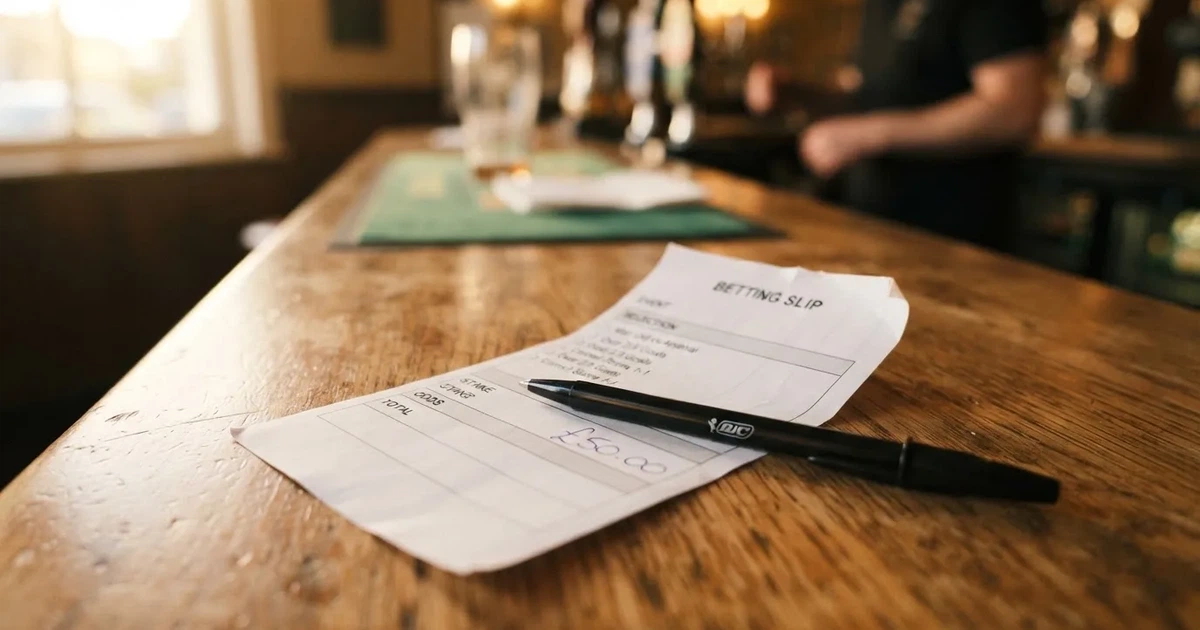
Pick the right starting point before anything else. New Zealand’s betting floor is unusually clean to describe and unusually hard to use: there is one legal way in, several ways out, and a new statute that has reshuffled where computer-simulated sport sits. The job below is to walk the floor in that order: who may lawfully take a bet from a person in New Zealand; what “virtual” actually means under the 2026 statute; how odds, margins and bet types work; how a punter keeps the spend under control; and how the ten operators a New Zealand reader meets stack up against that frame.
The shortlist: ten names ranked against the New Zealand rule
Ten brands sit on this page, none of them in a vacuum. Only the first two are lawful in New Zealand; the other eight are offshore brands a New Zealand punter can still reach through a search result. They are listed so a comparison can be made, not so a reader can sign up to one of them.

TAB — the only retail and online racing and sports operator licensed for New Zealand. TAB is the long-established brand of TAB NZ. The Racing Industry Act 2020 as amended in 2025 made TAB NZ the sole provider of racing and sports betting to people in New Zealand (section 74AAA), and TAB is one of its two online faces. A punter who wants to bet on real horse races, Super Rugby, the All Blacks or the Black Caps does so here, with New Zealand harm-minimisation tools and a New Zealand complaints route.
Betcha — TAB NZ’s online-only sister, leaning into community and boosted odds. Betcha is the second online brand under TAB NZ and is run by Entain under a long-term partnership. It carries the same monopoly status and the same enforcement reach. Its differentiator is a Toolbox with regular odds boosts and bet insurance, a Bet Social feed where punters chat and follow tipsters, and a Playbook of tips and match analysis.
Spinbara — a Curaçao-licensed casino-first site with a sportsbook bolted on. Spinbara’s own English homepage advertises a first-deposit match on its sportsbook. None of that licence status puts it inside New Zealand’s section 74AAA frame. The brand is offshore; a New Zealand punter’s recourse against a dispute is whatever the Curaçao licence and the operator’s own terms provide.
FunBet — a multi-sport sportsbook with the usual 24/7 live menu. FunBet covers football, ice hockey, American football, basketball, volleyball, tennis, rugby and baseball, with a live bookmaker tab. It does not publish a New Zealand licence; the section 74AAA position is identical to Spinbara’s.
Alawin — a sportsbook whose terms explicitly describe cash-out mechanics. Alawin publishes terms that explain when cash out is and is not available (it is “not guaranteed”, and it does not apply to free bets or risk-free bets, in the brand’s own wording). The framing is transparent; the legal position in New Zealand is not different from the rest of this list.
Rooster — an offshore brand on the Tobique Gaming Commission e-gaming licence. Rooster identifies its operator as Novatrix SRL, a Costa Rica-registered company. Its publishing licence (Tobique No. 0000002) is not a New Zealand licence.
RoyalistPlay — same operator group as Rooster, same Tobique licensing footprint. RoyalistPlay names the same Novatrix operator and the same Tobique e-gaming licence number. A New Zealand reader who sees both brands on a comparison site ought to know they are run from the same company file.
Glorion — an offshore brand with the standard 18+ age check, no stated New Zealand licence. Glorion’s about page describes its support channels and an 18-only customer base. Its New Zealand status follows the rule above: it does not name a New Zealand licence because none applies.
RTbet — a Curaçao-licensed sportsbook where cash-out terms are spelled out. RTbet’s terms give one of the clearest plain-English explanations of when cash-out does and does not apply (the amount is fixed when accepted; the feature is “not always available”). A Curaçao licence still leaves the New Zealand position unchanged.
BillyBets — a sportsbook that openly displays its three odds formats and runs a coin-shop loyalty loop. BillyBets shows Decimal (2.00), American (+100) and Fractional (1/1) on its betting slip. It also publishes reload and cashback offers for sport, plus a coin-shop promo layer where coins earned through deposits and play are swapped for free bets and free spins. None of that changes the section 74AAA position in New Zealand.
| Brand | New Zealand status | What its own terms say about the key’s subject |
|---|---|---|
| TAB | Licensed TAB NZ brand | One of two online brands of TAB NZ, the only licensed racing and sports betting operator for people in New Zealand since 28 June 2025; safer gambling tools — deposit limits, time-outs, self-exclusion — in app |
| Betcha | Licensed TAB NZ brand | Second online brand of TAB NZ; daily Toolbox with odds boosts and bet insurance; Bet Social feed and Playbook analysis for punters |
| Spinbara | Not licensed in New Zealand | First-deposit match and crypto welcome bonus on the sportsbook, stated on its own English site; no New Zealand licence named |
| FunBet | Not licensed in New Zealand | Sportsbook covers football, ice hockey, basketball and rugby alongside live betting; markets open around the clock |
| Alawin | Not licensed in New Zealand | Cash out (full and partial) in terms; not guaranteed; excludes free bets and risk-free bets |
| Rooster | Not licensed in New Zealand | Operator named as Costa Rica-registered Novatrix SRL on a Tobique Gaming Commission e-gaming licence |
| RoyalistPlay | Not licensed in New Zealand | Same Novatrix operator and Tobique e-gaming licence as Rooster |
| Glorion | Not licensed in New Zealand | 18+ age check and standard support channels; no New Zealand licence named |
| RTbet | Not licensed in New Zealand | Cash-out terms in plain English; fixed-amount-on-acceptance rule; no guarantee it is offered |
| BillyBets | Not licensed in New Zealand | Three odds formats on slip; reloads and sports cashback in own terms; coin-shop promo layer exchanging coins for free bets |
The table is honest about which of the ten are real choices in New Zealand and which are reference points. A punter looking for a New Zealand-regulated account has two names to choose from, and a punter looking for an offshore market to compare to the local one has eight. The rest of the page explains what those choices actually cost.
Fundamentals: what “virtual sport” means and where it now sits under New Zealand law
The first step is to put the word in its place. A virtual sport is a computer-simulated event — a football match, a horse race, a tennis tie-break — whose result is produced by a random-number generator driven by a sports model. There is no real fixture, no real athlete, no real pitch. The product looks like sport, runs on a short loop, settles fast, and shows its outcomes either on screen or in pre-recorded clips. From a betting-product point of view it sits between a slot machine (random outcome, instant settle) and a real sport (multiple markets, head-to-head lines, handicap, totals).

The second step is to put the product in its legal place, because that has shifted in New Zealand. The Online Casino Gambling Act 2026 defines online casino gambling, and that definition expressly captures betting on a computer-simulated sporting event. So a virtual horse race offered over the internet is, under the 2026 law, online casino gambling — not sports betting, and not racing betting. TAB NZ’s monopoly under section 74AAA of the Racing Industry Act 2020 covers real-event racing and sports betting. Whether TAB NZ’s own virtual products (if it offers them) are treated as part of the TAB betting monopoly, as online casino gambling under the 2026 statute, or as a hybrid is not yet established by any published ruling; the page does not pick a side where the rules have not been written down.
That uncertainty has two practical consequences for a punter. First, a “virtual sports” tab on a New Zealand-licensed brand will be a different product under a different licence regime to the racing and sports menus a punter is used to. Second, a virtual horse race on an offshore site is regulated, if at all, by the licence the offshore site publishes — Curaçao, Tobique, Anjouan — not by the Department of Internal Affairs. The New Zealand harm-minimisation framework (the helpline, the self-exclusion regime, the levy, the ASA advertising code) does not run over an offshore brand with the same reach it runs over TAB NZ.
Third, the simulation matters in itself. Because the outcome is generated rather than competed, every event is a sample from a known distribution. That is what makes virtual markets feel like sports betting products (lots of markets, prices in decimals, head-to-head, totals, handicap) while behaving like a slot machine (short turnaround, no form to study, no team news). The odds reflect that. They look like the odds on a Premier League match and they sit close to a slot’s payout share — the marketing word “best odds” is to be checked against the implied margin.
The fourth piece of the foundation is what sits underneath New Zealand betting as a whole. TAB NZ is the racing and sports monopoly for people in New Zealand. The Racing Industry Amendment Act 2025 inserted section 74AAA to lock that in, and it took effect on 28 June 2025. The Department of Internal Affairs told providers serving New Zealand to withdraw with immediate effect on that date. The Offshore racing and sports point-of-consumption charge ended on 30 June 2026. Greyhound racing is closing in stages from 1 August 2026, and offshore operators may not take bets on greyhound racing from that date either. All of that is the floor; the rest of the page uses it to anchor the choices above.
Legality and jurisdiction: who may lawfully take a bet from a person in New Zealand
The law is unusually clear by international comparison. Section 74AAA of the Racing Industry Act 2020 says that no person other than TAB NZ may offer racing betting, sports betting or other racing or sports betting to a person in New Zealand, regardless of where that person is resident or incorporated. The change came in by amendment in 2025 and took effect on 28 June 2025. There is no licence route for another bookmaker, because the law does not allow another to apply; there is no register of licensed bookmakers, because there is only one lawful provider.
TAB NZ operates two online brands: TAB and Betcha. The Racing Industry Act 2020 appoints TAB New Zealand as the monopoly holder; TAB and Betcha are both online faces of that same legal entity. They are not rivals. The two brand names do not change who is licensed, who enforces the rules, or where a complaint goes. Entain runs the TAB business day-to-day under a 25-year agreement signed in 2023 — that agreement gives Entain a 50/50 share of gross profits and commits at least $150m a year to TAB NZ for the first five years, plus a one-off $100m payment to the racing sector. The financial plumbing behind the brand is a partnership; the legal plumbing is one entity.
The Department of Internal Affairs (DIA) is the gambling regulator under the Gambling Act 2003 and monitors compliance with section 74AAA. The Department told unlicensed providers to cease serving New Zealand with immediate effect when the change took effect. The Department does not geo-block offshore sites, and the penalty for breaching section 74AAA is not stated in the section itself; no prosecution of an offshore bookmaker has been published. The law puts liability on the offshore operator. From a player’s view, section 19(4) of the Gambling Act 2003 (inserted in 2025) makes it clear an individual cannot be convicted for placing a bet with an offshore operator in breach of section 74AAA; no published penalty for a player exists, so neither “illegal” nor “legal for the player” is a claim that can be honestly made.
The Offshore bookmakers a New Zealand punter meets on a comparison page are not legal in New Zealand. Naming them as “licensed” or “approved” anywhere on this page will mis-state the law. A Tobique e-gaming licence, a Curaçao licence, or any other offshore licence does not give that brand the right to take a sports or racing bet from a person in New Zealand. The licence it does have governs its own jurisdiction, with its own complaints route and its own dispute resolution.
A short note on the casino question. TAB New Zealand secured the right to apply for a casino licence under the Online Casino Gambling Act 2026. That right does not extend the betting monopoly; the betting monopoly stands under section 74AAA of the Racing Industry Act 2020. A casino product is licensed and run on a casino regime, not on the sports-betting regime that runs TAB and Betcha.
Responsible gambling: the tools, the helplines, and the limits a punter can set
The responsible-gambling floor on a New Zealand-licensed TAB NZ account is wider than what a punter gets on an offshore brand. TAB NZ’s app lists deposit limits, time-outs and self-exclusion as built-in tools; an exclusion applies across both online brands because both belong to the same operator. Self-exclusion is the strongest tool, and the lever punter actually have to pull is the one on their own account — there is no separate national betting-exclusion register, because the regime has only one licensed bookmaker.
The age line is a hard 18, set by the Racing Industry Act 2020 (section 89 makes it an offence to bet under 18). That is younger than the 20-year threshold at land-based casinos in New Zealand; the two are different permits and the two thresholds ought never be merged in a reader’s head. TAB NZ accounts require a verified New Zealand address and identity at sign-up, which is the practical gate that keeps the 18 line working.
The Problem Gambling Levy paid by TAB NZ funds harm-minimisation work; it sits at 0.74% in force from 1 July 2025 to 30 June 2028. The free Gambling Helpline (0800 654 655, text 8006) and Safer Gambling Aotearoa are the public front door for anyone whose betting has stopped being fun — both are free, both are New Zealand-based, both can be reached from either TAB brand. The DIA warning that overseas operators may be in jurisdictions with minimal consumer safeguards, may not return unspent credits and may not pay out large wins is worth repeating every time an offshore site is described, because the warning is the only safeguard that exists on a non-TAB account.
What follows is a practical order for a punter who wants to set up a TAB NZ account responsibly. First, set a deposit limit before the first deposit — it is harder to lower a limit than to set one. Second, choose a stake per bet that lets the bankroll last long enough that variance does not finish the account before the habit has settled. Third, use time-outs on weeks with a lot of live sport on the calendar; one month of every quarter is a workable rhythm for many punters. Fourth, treat any self-exclusion as a hard stop, not a soft one — call the helpline alongside it, because the helpline is the place to plan what happens after the exclusion ends. Fifth, check the Betcha bet history alongside the TAB one if both are used, because the same operator runs both and the spend shows up on either ledger.
Predictions, system bets and the limits of forecasting virtual sport
Virtual sport undoes most of the strategies a punter develops for real sport. The reasoning is straightforward. A Premier League match is decided by form, tactics, injuries, weather, refereeing, and the home crowd; a virtual football match is decided by a random-number generator driven by a model the punter cannot inspect. Form does not exist. Injuries do not exist. Tactical preparation does not exist. A betting system is a method for finding mispriced outcomes, and the price on a virtual event is set to a margin the operator chooses; it is rarely mispriced, because it is computed by the same engine that draws the event.
That does not make every virtual market the same. Two things still vary: which markets the operator offers (more or fewer markets per event changes how the line is built) and how the odds move if the operator offers in-running prices on a virtual loop (most do not). The punter who does best on virtual markets treats them as a price-comparison product rather than a forecasting one: pick markets where the overround is tight, avoid markets where one side is strongly juiced, and accept that the variance is the casino’s variance, not the football season’s.
The same caution applies to systems. A matched-betting ladder works on real sport because the back and lay prices are independent enough to lock in a profit; on a virtual event both legs are sourced from the same operator, so the “lock” is built into the odds and the ladder no longer ladders. A staking system (level stakes, Fibonacci, percentage bankroll) is still a tool, but the punter is using it to manage variance rather than find an edge. The framing is honest when the punter calls it that.
Two practical limits follow. First, a virtual football betting system sold as “winning” or “guaranteed” is a marketing product, not a forecasting model — no published peer-reviewed model produces a long-run edge on a simulated event whose parameters the punter cannot read. Second, a virtual football betting strategy that relies on past results from the same virtual feed is reading patterns into a sample from a generator that resets each event independently. The soundest analytical position a punter can take on a virtual match is to bet less than on a real match, treat the stake as entertainment spend, and let the math of odds and margins do the work. That math is the next section.
Bet types, odds and how to read a virtual football slip
The bet types on a virtual slip mirror a real-match slip because the products have been built to feel familiar. A punter sees Win, Place, Each Way, head-to-head (sometimes called Match Result), Over/Under (totals), handicap, Both Teams To Score, and a Same-Game Multi where the legs all come from one event. Racing markets add Quinella, Exacta, Trifecta, First Four, Quaddie, Big6, Running Double and the like — the same tote vocabulary a TAB NZ punter already knows from real racing, brought across to the simulation.
How much a winning bet pays back is a single calculation. If a stake of $10 sits on a head-to-head at decimal odds of 2.10, the return if the selection wins is $10 × 2.10 = $21.00; the net profit above the $10 stake is $11.00. Combination bets multiply the decimal odds of the legs into one price, so a three-leg multi at 1.80, 2.20 and 1.95 returns $10 × (1.80 × 2.20 × 1.95) = $77.22 for a $10 stake; profit is $67.22 above the stake. The legs do not need to be on the same sport — a multi can mix a virtual football match, a real TAB race and a Super Rugby handicap.
The other quantity that lives inside every price is the bookmaker’s margin. The cleanest way to see it is on a two-way market with decimal odds of 1.90 on both sides: the implied probabilities are 1 ÷ 1.90 = 0.5263 (52.63%) each, the two add up to 105.26%, and the 5.26% over 100% is the margin that pays for the operator. In words, the bookmaker keeps about 5 cents of every dollar staked across this market on average. A 5% margin is a serviceable benchmark for a major real-sport market; virtual markets and exotic markets commonly run wider. A 1X2 soccer market with prices 1.85 / 3.40 / 4.20 carries a similar built-in margin; the implied probabilities are 54.05% + 29.41% + 23.81% = 107.27%, a 7.27% margin. The headline price on a single outcome tells the reader less than the full grid.
The reason this matters for a virtual punter is that the headline “best odds” claim is usually about one side of one market, while the underround the operator has set on the whole market is the larger number. A 2.00 on the headline pick looks generous; if the other side is 1.70 and the draw is 4.50 on the 1X2, the bookmaker’s cut is closer to 7% than to the 0% implied by a $2.00 read on its own. Read the full market, not the top line.
A worked range sits here as a band rather than as a point, because both the inputs and the result will move. An illustrative two-way market at 1.90 / 1.90 implies a margin of about 5.26%; a tighter grid of 1.95 / 1.95 will imply about 2.56%; a juicier grid of 1.85 / 1.85 will imply about 8.11%. The numbers move with the operators, the sport, and the moment before kick-off; the band (roughly 2.5% to 8% on competitive virtual markets) is the practical shape of a virtual sports margin, not a single figure. Inside that band, the cheaper the head-to-head, the more of the take is coming from the long-shot side of the book; the more even the prices look, the less margin the operator is taking overall.
There are two pitfalls a punter ought to keep in mind. The first is that live betting on a virtual event is a marketing slogan more often than a real product — most virtuals settle and reset on a tight loop, so an “in-running” market is usually a market on the next event rather than a market on the same event. The second is that boosted odds and “best odds guaranteed” claims on virtuals tend to attach to a single outcome of a single event rather than to the market as a whole; the margin lives in the rest of the slip.
Markets, bet types, and the realities of settling in a simulation
Three working rules help a punter place virtual bets with eyes open. First, prefer markets where the line is whole — head-to-head, double chance, Over/Under 2.5 — over exotic markets where one side sits strongly juiced; the tighter markets carry less margin and settle on cleaner rules. Second, treat a stake on a virtual event as entertainment spend, not as a forecast, and size it accordingly. Third, read the operator’s settlement rules; a virtual football match with no extra time or no own-goal rule can change which bets on a real-match grid resolve, and reading the rules in advance keeps the punter out of arguments at settle time.
A note on multi bets, because they are everywhere on a virtual feed. A multi pays well when it lands because the legs compound, but the same compounding applies to the margin on each leg: ten legs at 1.90 / 1.90 multiply to a combined price of about 513 to 1, while the implied probability of all ten landing under that margin is far smaller than the headline price implies. A multi is a high-variance bet; small stakes match the product. A Same-Game Multi is a similar product on a single event — typically 3-6 markets within one virtual match — with the same caveats, plus a void-leg rule that voids the whole slip if one selection is declared void by the operator.
The last word on bet types and odds is the word the marketing always spends: “free bet”. A free bet is a stake credit the operator credits to a punter’s account; the stake is usually not returned with a winning free bet, so the value of a $10 free bet at odds of 3.00 will be what the $10 will net beyond itself — in the section above’s terms, $20 × (3.00 − 1) ÷ 3.00 = $13.33 of expected value across many such bets, before the operator’s margin. A punter reading a “free bet” headline ought to look at the wagering terms attached and at the minimum odds a qualifying bet must sit at before counting the offer as cash. The same words (“boosted odds”, “risk-free”, “100% bonus”) describe products that are not interchangeable and that the operator’s own terms spell out in detail. Treat them as products, not as gifts.
Verdict on the shortlist: who each brand actually serves
Verdicts come with a stake in the ground: this is the segment the brand serves well in New Zealand terms, and the reader who picks it without that fit pays for it somewhere else.
TAB — right for the punter whose sport is real and whose bankroll wants a regulator behind it. TAB is the only name on this shortlist where a New Zealand punter’s bets are settled under section 74AAA’s frame, with a New Zealand complaints path, levy-funded harm minimisation, and a self-exclusion that runs across both TAB NZ brands. Its product is racing and sport on real events, plus the simulation products the law now treats as casino. The fit is excellent for racing and the headline NZ sports; less so for a punter whose main interest is the in-running markets a New Zealand monopoly may not run as deep as a global sportsbook.
Betcha — right for the TAB NZ punter who wants odds boosts and a community feed alongside the same regulated account. Betcha adds social and promotional textures to the same TAB NZ account. A punter who likes following tipsters and grabbing boosted odds on a same-game multi will get value here; a punter who wants a quieter slip will not. The Tools and Toolboxes change the feel of the betting day without changing who is licensed, who oversees the account, or where complaints go.
Spinbara — right only as a comparison reference; not a fit for a New Zealand punter. A casino-first brand with a sportsbook bolted on. The Curaçao licence governs its own jurisdiction; the New Zealand harm-minimisation regime does not extend to this account.
FunBet — right only as a comparison reference. A multi-sport sportsbook with a 24/7 live bookmaker and an obvious broad menu. The breadth of the menu is its draw; the legal status in New Zealand is the same as every other entry below the line.
Alawin — right only as a comparison reference, with a useful cash-out page. Alawin’s cash-out terms are clear and informative; the brand’s New Zealand status is unchanged.
Rooster — right only as a comparison reference. A Tobique e-gaming licence under a Costa Rica-registered company. Useful as a price reference; not a New Zealand option.
RoyalistPlay — right only as a comparison reference. Same operator footprint as Rooster, with the same Tobique licensing and the same New Zealand position.
Glorion — right only as a comparison reference. Standard 18+ age gate and offshore positioning; the legal status in New Zealand is unchanged.
RTbet — right only as a comparison reference, with useful plain-English cash-out terms. RTbet’s terms on cash-out are among the clearest in this list; the legal status in New Zealand is unchanged.
BillyBets — right only as a comparison reference, with an interesting odds-format display. Showing Decimal (2.00), American (+100) and Fractional (1/1) on the betting slip is a feature a punter can use as a price comparison; the legal status in New Zealand is unchanged.
The pattern across the eight offshore brands is by design: a New Zealand punter does not have a legal route to a regulated offshore account, and the regulator’s published risks (no local complaints, uncertain payout behaviour, no harm-minimisation framework) travel with every one of them. The right way to read the eight is as a price reference for the markets they publish, not as a destination.
Frequently asked questions
How does virtual betting work?
A virtual bet is a wager on the outcome of a computer-simulated event — a virtual horse race, a virtual football match, a virtual tennis tie-break. The result is produced by a random-number generator driven by a sports model, settles within minutes, and pays out at the decimal odds shown on the slip. Because the outcome is drawn from a fixed distribution rather than competed, there is no form to study and no team news to follow — the price is the product, and the margin inside the price is what a punter ought to examine.
How does virtual football betting work?
A virtual football match is a simulated 90-minute fixture shown as a quick render of the result, with markets structured to look like the real game: head-to-head (home/draw/away), Over/Under 2.5 goals, Both Teams To Score, handicap, and a Same-Game Multi combining several of these in one slip. Decimal odds are quoted on each market; the stake multiplies through the decimal odds to produce the return if the selection wins, and a combination bet multiplies the decimal odds of its legs into one combined price.
How to bet on virtual football and win?
Honest framing: the simulation is a random outcome the punter cannot model, so no published method reliably “wins” at virtual football. What a punter can do is pick markets where the margin is tight (close-priced head-to-head and standard Over/Under lines sit in a 2.5%-8% band depending on operator), read the full grid rather than the headline price, treat the stake as entertainment spend rather than investment, and stop chasing a result with bigger stakes after losses. Variance does the rest; bankroll management is the lever that survives variance.
Which bookmaker may lawfully take sports and racing bets in New Zealand?
Since 28 June 2025, only TAB NZ may offer racing and sports betting to a person in New Zealand (section 74AAA of the Racing Industry Act 2020, inserted by the Racing Industry Amendment Act 2025). TAB NZ operates two online brands — TAB and Betcha — and a small retail TAB network. There is no licence route for another bookmaker and no register of licensed bookmakers, because the law does not allow another to apply. The Department of Internal Affairs enforces compliance and told unlicensed providers to withdraw with immediate effect on the changeover date.
How is the return on a bet worked out from the stake and the odds?
For decimal odds, the return is stake × odds; the net profit above the stake is stake × (odds − 1). A $10 stake at decimal odds of 2.10 returns $21.00 and nets $11.00 above the stake. For a combination bet, the decimal odds of each leg multiply together into one combined price; a $10 stake on a three-leg multi at 1.80, 2.20 and 1.95 returns $10 × (1.80 × 2.20 × 1.95) = $77.22 for a net profit of $67.22 above the stake. The odds are inclusive of the stake, so a 2.00 line doubles the stake and returns nothing more; a 3.00 line triples the stake with a $20 profit on a $10 stake.
What is the bookmaker’s margin and how can it be seen in the odds?
The margin is the share of every dollar staked that the bookmaker keeps on average across a market. On a two-way market with decimal odds of 1.90 on both sides, the implied probabilities are 1 ÷ 1.90 = 52.63% each; they add to 105.26%, and the 5.26% above 100% is the margin. Tighter grids (1.95 / 1.95) carry a smaller margin; juicier grids (1.85 / 1.85) carry a larger one. The same arithmetic works on a three-way market (1X2 soccer at 1.85 / 3.40 / 4.20 sums to 107.27%, so the overround is 7.27% and the margin is 6.8%). The punter reads the full grid, not the headline price, because the margin is hidden in the sum of the prices, not in any single one of them.
Tips & strategy – footytipsnz.com
Content created by the «footytipsnz.com» team
