
MMA Betting in New Zealand 2026
 Available in US
Checked against the Department of Internal Affairs register and the Racing Industry Act 2020 (as amended), and current as of 31 October 2026.
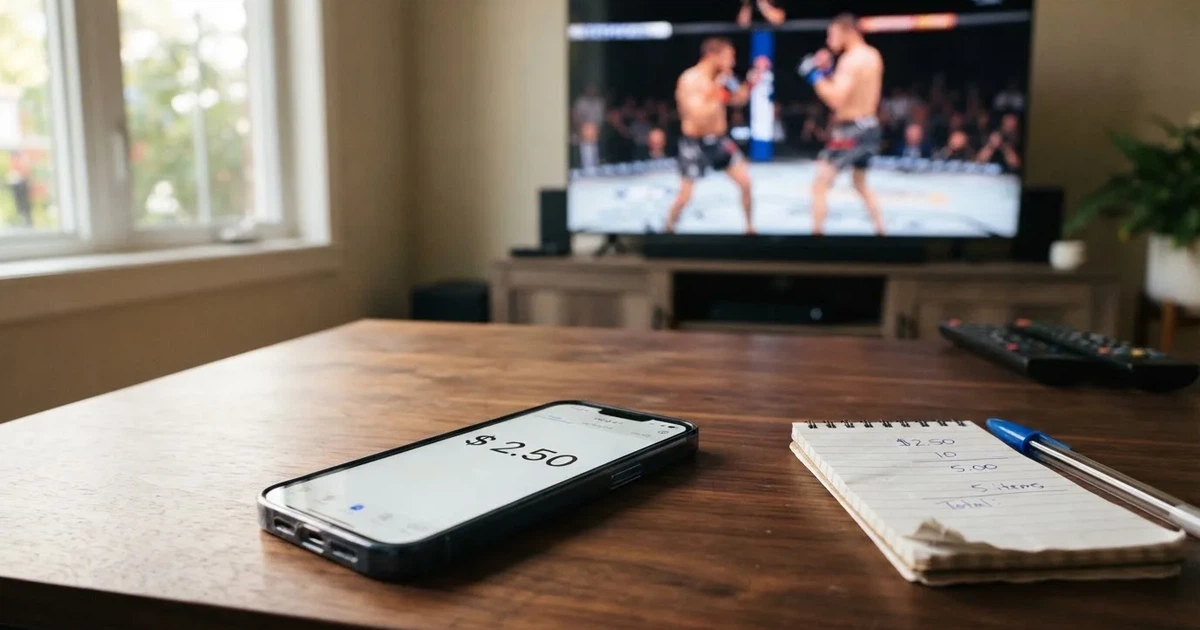
New Zealand is a closed betting market. Since the Racing Industry Amendment Act 2025 inserted section 74AAA on 28 June 2025, only TAB NZ and its sister brand Betcha may lawfully take online sports and racing bets from a person in New Zealand, regardless of where that operator is incorporated. There is no licence to apply for and no licence register for bookmakers, because there is only one lawful provider. A Kiwi punter who wants to back a UFC fight has, in the strict sense of the law, one place to do it.
The “ten operators” a typical comparison stacks up against each other look very different under that frame. Eight of the ten brands this page reviews are offshore sportsbooks that serve New Zealand traffic without a New Zealand licence. They are not recommended, not endorsed, and not equivalent to TAB NZ for the protections the Gambling Act 2003 demands. They appear because Kiwi punters meet them, and because the only honest answer to “which is the best MMA betting site” is the one that names who takes the bet, who keeps the books and what happens to a punt if something goes wrong. Read on, and the rest of this page does that.
Staying in Control: Safer Gambling Tools and What to Use
Safer gambling is the first shelf this page opens, and not because it is the friendliest. A punter with a hard ceiling on a Saturday night is in a different market from a punter chasing a multi-leg parlay into the small hours. TAB NZ and Betcha both carry the same harm-minimisation framework because they are the same operator group, and that framework is the one a New Zealand bettor can enforce.
The Tools TAB NZ Provides
The TAB NZ app lists three tools by name, and they are worth knowing before the first deposit goes through. Deposit limits cap how much money a customer can load into the wallet in a chosen period (daily, weekly or monthly). Time-outs freeze the account for a set window, from 24 hours up to several weeks, without closing it. Self-exclusion blocks the account for six months or longer, applies across both TAB and Betcha, and is the strongest lever a customer has.
The framework is in-app and self-serve, with staff able to action the same tools if a customer calls. Self-exclusion carries a cooling-off period before the account can be re-opened, which is the point of the tool: it gives the bettor time, not a one-click undo.

Where to Get Help Outside the App
The free Gambling Helpline on 0800 654 655 (and text 8006) is the round-the-clock number, run by a New Zealand provider. Safer Gambling Aotearoa sits behind it and runs a wider set of services — counselling, peer support and information for family. The Problem Gambling Levy of 0.74% of TAB NZ’s revenue funds the network. A customer worried about their own play does not have to use TAB NZ’s tools first; the helpline takes calls before a self-exclusion is in place.
The Eight Offshore Brands, in the Same Frame
A punt at an offshore book means none of the above. The Department of Internal Affairs warns that overseas operators may be in jurisdictions with minimal consumer safeguards, may not return unspent credits, and may not pay out large wins. Self-exclusion at TAB NZ does not extend to an offshore site. The same deposit cap a punter sets in the TAB app is, for that punter, the strongest tool they have — the offshore book sits outside the system. That is the structural reason this page treats safer-gambling language as the first shelf, not the last.
Crypto, Bitcoin and the Question of Anonymity
A handful of the offshore brands on this page lean hard into the crypto angle. The pitch is familiar: a wallet, a coin, a bet settled on a public ledger, no name attached. The legal frame here is the same one the rest of the page works in. A bettor in New Zealand is still betting in New Zealand, regardless of the rail the money rides in, and section 74AAA applies to the operator side, not the rail.
What Crypto Actually Changes
Crypto changes the payment rail, not the law. A bet settled in Bitcoin at an Anjouan-licensed or Curaçao-licensed book is still an offshore bet taken from a person in New Zealand by an operator with no New Zealand licence. The Department of Internal Affairs’ warning about overseas operators does not carve crypto out. The on-chain settlement is real, the on-chain record is real, and the on-chain record is also visible to anyone holding the wallet address.
How the Brands on This Page Stack Up
Of the ten operators reviewed, the ones that publish a crypto-on-ramp are the ones most prone to the marketing line. Thunderpick is the clearest cut: an esports-first book with a Curaçao licence, a stated crypto wallet and odds that move in the course of the round. The other offshore brands accept cards and bank transfers as their default rail. None of them carries a New Zealand licence. None of them is the recommended choice for a Kiwi bettor; the rail does not move that needle.
What a New Zealand Bettor Loses
TAB NZ account opening requires a verified New Zealand address and ID. That is the price of the safer-gambling framework, the self-exclusion that covers both TAB and Betcha, and the complaint route to the Department of Internal Affairs. A punt settled on-chain at an offshore book keeps the punt in the bettor’s own ledger and outside the New Zealand framework at the same time. The trade is the bettor’s to make, and the trade is not anonymous in the legal sense — it is anonymous from the New Zealand regulator, which is not the same thing.
Live Betting, In-Play Markets and Cash Out
UFC cards are the rare MMA event that runs to a fixed broadcast schedule, and live betting is the layer that lets a punter read the fight and strike while it runs. TAB NZ and the offshore books frame the same in-play markets, but they run them on different rails and on different margins.
What “In-Play” Actually Means for an MMA Card
In-play is a price that updates round by round, sometimes strike by strike. A favourite who eats a flash knockdown in round one drifts; a dog who is winning exchanges on the cage tightens. The market is the same as the pre-match one — moneyline, method of victory, over/under on total rounds — but the price moves as the fight does. The bettor’s edge, in theory, is faster information than the market. In practice, the market has a feed too.
Cash Out and When It Pays
Cash out is the bookmaker’s offer to settle a bet before the fight is over, at a price derived from the live market and the stake. A multi-leg multi at 5.00 that is sitting at 4.20 in-play is a candidate. The number is the bookmaker’s number, not a market price, and it carries the bookmaker’s margin inside it. The punter pays for the certainty twice: once in the original margin, and again in the cash-out spread.
Which of the Ten Brands Run Live Markets on the UFC
TAB NZ and Betcha both run live markets on UFC events in the New Zealand app. Thunderpick lists a cash-out feature in its sportsbook. The other offshore brands on this page offer live betting on mainstream football, basketball and tennis, with MMA coverage thinner and often limited to the main card of a numbered event. The UFC’s smaller shows — Fight Night cards, the Contender Series — are the line where the live menu thins out at offshore books and the TAB NZ app is, surprisingly, the one with the deeper card.
Predictions, Tips and the Math Behind a Bankroll
A page about MMA betting that does not name the difference between a tip and a strategy is a page that hands the reader a tip and calls it analysis. The line is worth drawing once, early.
The Shape of a Tip
A tip is a prediction dressed as a forecast. “Pick X over Y” is a sentence the reader can act on and lose money on. The tipster is paid for the sentence, not for the outcome, and the tipster’s record — when one is published — is the only signal a reader has. A tip is not a strategy because the strategy is the part that survives the loss.
What a Bankroll Is, and Why It Matters
A bankroll is the amount a bettor has set aside to bet with, separate from rent, food and the rest of the budget. The bet is sized in units of that bankroll — one unit, half a unit, two units — and the unit does not grow when the bankroll does. A bankroll of NZ$1,000 with a unit of NZ$20 is a 50-unit bankroll; a 5% edge at two units a bet is a slow grind, and that is the point. The grind is the part the tipster skips.
The Math a Punter Needs to Carry
The arithmetic a punter actually needs is short. Return on a winning bet = stake × decimal odds. Profit = stake × (decimal odds − 1). Margin is the bookmaker’s cut, baked into every price. A two-way market at 1.90 / 1.90 gives a payout share of 1 ÷ (1/1.90 + 1/1.90) = 0.526, or 52.6%, and a margin of 47.4% — almost half of every dollar the bookmaker holds. The real UFC moneyline rarely runs that wide, but the order of magnitude is the point: every price a bookmaker quotes carries a margin, and the margin is the price of doing business with the bookmaker.
What This Page Is Not
This page does not pick winners. A page that named a fighter to back on a given card is expected to be wrong half the time and a tipster the rest of the time, and a reader who acted on it is likely to be betting the page’s word with their own money. The math above is the part the punter keeps. The tips are the part the punter is expected to read past.
Bet Types, Odds and How a UFC Card Is Priced
The UFC’s sportsbook menu is narrower than football’s but wider than it looks. The bet types below are the ones a Kiwi punter meets on a typical numbered event, in roughly the order a bookmaker lists them.
The Moneyline
The simplest bet in MMA: pick the fighter. The favourite carries short odds, often 1.30 to 1.60 on a ranked fighter against an unranked one. The dog runs long, sometimes 2.50 to 4.00, and the long shots break 6.00 on a debut. A two-way fight at 1.60 / 2.40 is a payout share of 1 ÷ (1/1.60 + 1/2.40) = 0.60, margin 0.40 or 40% — a wide number for a market this small, and a signal the bookmaker is hedging for round-1 finishes on both sides.
Method of Victory
A bet on how the fight ends: knockout or technical knockout, submission, or decision. The price splits each outcome into a sub-market, and the lines rarely line up. A fighter known for early finishes will be shorter on KO/TKO than on the moneyline; a grappler shortens on submission. Decision is its own line and is where long fights live.
Over/Under on Total Rounds
A line on how long the fight goes, in rounds. The standard line is 1.5 rounds (will the fight end inside the first round and a half?) or 2.5 rounds. The line is set on the bookmaker’s read of each fighter’s finish rate and the matchup’s pace. A line of O/U 1.5 at 1.83 / 1.83 is a payout share of 54.6%, margin 45.4% — again wide, again the bookmaker’s price.
Same-Game Multi (SGM)
A multi whose legs come from one event. The price multiplies the legs, and the margin compounds. A two-leg SGM at 1.83 / 1.83 with a method-of-victory leg at 1.50 lands at roughly 5.0, but the payout share on the combined market runs well below the legs’ individual payout shares. The SGM is the bookmaker’s most profitable market, and it is also the most fun to bet on. The punter pays for the fun.
Props and Round Betting
The long tail: a bet on which round the fight ends, or that a specific fighter wins inside the distance, or that the fight goes the distance. The prices are longer and the books thinner. A punter who has a read on a matchup can find value here, and a punter who does not can find nothing.
Accumulator and Multi Bet
A multi whose legs span several events. The price multiplies; the margin compounds. A five-leg multi at average odds 1.80 has a combined price of about 18.9, but the payout share on a typical 1.80 leg is 53%, which means a payout share of roughly 4.2% on the multi. The bookmaker keeps roughly 96 cents of every dollar. A multi is a lottery ticket priced as a bet, and a punter who treats it as one has the right expectations.
Sports and Tournaments: The MMA Calendar
The MMA calendar runs heavier on UFC than on anything else, with Bellator, ONE Championship and PFL the second tier, and regional promotions (ARES, KSW, Cage Warriors) the long tail. A Kiwi punter’s exposure to a given promotion depends on the bookmaker’s menu.
The UFC and Where It Sits
The Ultimate Fighting Championship was founded on 12 November 1993, when UFC 1 was held at McNichols Sports Arena in Denver, Colorado. The organisation runs 11 weight divisions, eight men’s and three women’s, and holds a numbered event most weekends of the year, with pay-per-view cards a handful of times a year. A New Zealand punter’s UFC menu at TAB NZ covers the main card of a numbered event reliably and the prelims on a case-by-case basis.
Bellator, ONE and the Second Tier
Bellator’s calendar runs sparser under its current ownership, and the promotion has fewer ranked fighters at the top of each division. ONE Championship runs a heavy schedule in Asia, with events broadcast unevenly in New Zealand. The Professional Fighters League runs a seasonal format with a play-off and a million-dollar finale. All three are covered by TAB NZ’s app, with the depth of the menu thinner on the prelims and stronger on the title fights.
Regional MMA and the Long Tail
A regional promotion — ARES Fighting Championship in France, KSW in Poland, Cage Warriors in the UK and Ireland — runs events that may or may not appear on a New Zealand sportsbook. The TAB NZ app lists UFC, Bellator, ONE and PFL consistently; everything else is opportunistic. A punter who follows a regional fighter will likely have to back them on a card that is otherwise uninteresting, and the price will reflect the bookmaker’s uncertainty rather than the matchup’s.
Weight Classes and Why They Matter for the Bettor
Eleven divisions means the bookmaker runs a moneyline on every men’s and women’s title fight and a thinner line on the rest. A ranked-vs-unranked fight is the bread and butter of the menu; a top-five clash is the exception. The line on a ranked-vs-unranked fight is wider than the line on a top-five clash because the outcome is more predictable, and the bookmaker’s margin is wider for the same reason. The punter pays for the predictability.
The Top 10: Brands Compared
This page reviews ten brands against a single set of questions, and the answers are not interchangeable. The first two are TAB NZ’s own brands, the lawful options for a person in New Zealand. The remaining eight are offshore sportsbooks, listed for reference because Kiwi punters meet them, marked “not licensed in New Zealand” and described in their own terms.
What the Comparison Tests
The columns that follow ask, for each brand: is it a New Zealand TAB NZ brand or not licensed in New Zealand; and what does the operator’s own terms say on the subject of the key — payment methods, in-play markets, the MMA menu, the safer-gambling tools. The table is not a ranking. TAB NZ and Betcha are the lawful options; the offshore brands are not.
| Brand | New Zealand status | What the operator’s own terms state on MMA, crypto and live betting |
|---|---|---|
| TAB | TAB NZ brand — the only lawful option for a Kiwi punter | UFC, Bellator, ONE and PFL on the menu, pre-match and in-play; in-app cash-out on selected markets; no crypto rail; deposit limits, time-outs and self-exclusion in-app |
| Betcha | TAB NZ brand — the only lawful option for a Kiwi punter | Same MMA menu as TAB, branded for a younger audience; in-app cash-out; no crypto rail; safer-gambling tools the same as TAB |
| Alawin | Not licensed in New Zealand | Live betting, virtual sports and esports are listed; MMA not confirmed on the menu; standard cards and bank transfers; no New Zealand harm-minimisation framework |
| FunBet | Not licensed in New Zealand | Live betting and a 24/7 book; MMA coverage not confirmed; standard cards and bank transfers; no New Zealand harm-minimisation framework |
| LegendPlay | Not licensed in New Zealand | Sports, Live Betting and Virtual Sports sections; Anjouan-licensed; MMA coverage not confirmed; no New Zealand harm-minimisation framework |
| Thunderpick | Not licensed in New Zealand | Esports-first with a sportsbook and cash-out; Curaçao-licensed (holder Paloma Media B.V.); crypto rail; MMA coverage on selected markets |
| Rabona | Not licensed in New Zealand | Sportsbook launched 23 December 2019; Curaçao-licensed; MMA coverage on selected markets; standard cards, bank transfers and crypto options |
| RTbet | Not licensed in New Zealand | Sportsbook covers mainstream sports, live betting and virtual sports; Curaçao-licensed; MMA coverage not confirmed |
| Glorion | Not licensed in New Zealand | Pre-match and live betting, virtual sports, horse racing and esports; MMA coverage not confirmed; licence not stated |
| BetNinja | Not licensed in New Zealand | Sports welcome offer of 100% match to EUR 100; Comoros-licensed; MMA coverage not confirmed; no New Zealand harm-minimisation framework |
How to Read the Table
The first column names the brand. The second column states the legal status: TAB NZ brand or not licensed in New Zealand. The third column is what the operator’s own published terms say on the topics this page covers — MMA menu, in-play markets, cash-out, the payment rail, the licence that holds outside New Zealand. The dashes in the third column are the gaps in the public terms, not in this page. A punter who wants the answer for a specific promotion is expected to check the operator’s own menu before placing the bet.
What the Spread Tells You
The two TAB NZ brands carry the same MMA menu, the same in-play offering, the same safer-gambling tools and the same payment rails. They are the same operator, and the only reason to choose one over the other is the brand you prefer. The eight offshore brands spread on three axes: the licence they hold (Anjouan, Curaçao, the Comoros, or none stated), the depth of their MMA menu (Thunderpick the clearest cut, the others thinner), and the payment rail (cards and bank transfers as the default, with crypto at Thunderpick and Rabona). A punter who has chosen an offshore brand has also chosen the rail and the licence they want to live with.
Operator Reviews: The Ten in Detail
The reviews below describe each brand, what its terms say, and where it sits for a Kiwi punter. They are not endorsements. The first two are the lawful options. The remaining eight are offshore brands, described in their own terms, with the legal frame held in view.
TAB
TAB is the older of TAB NZ’s two online brands, run by Entain under a 25-year agreement signed in 2023 that gives Entain a 50/50 share of gross profits, with at least NZ$150m a year going to TAB NZ for the first five years and a one-off NZ$100m payment to the racing sector. The TAB app covers horse, harness and greyhound racing, rugby union and rugby league, MMA and UFC, NBA, NFL, tennis, cricket, football, motorsports and esports, pre-match and in-play, with Trackside live race streaming, in-app betting, racing form, Blackbook and Jockey Challenge tools, and a simplified wallet. The app carries a 17+ App Store age rating while the betting age is 18.
The MMA menu at TAB is the deepest of any New Zealand-facing book, with UFC numbered events, Fight Night cards, Bellator, ONE and PFL on a typical week. In-play markets run round by round on the main card of a numbered event, and cash-out is available on selected markets. The safer-gambling tools — deposit limits, time-outs and self-exclusion — are in-app and apply across both TAB and Betcha.
Verdict: the lawful option for a Kiwi punter, the deepest MMA menu, the in-app cash-out, and the only bookmaker on this list with a verified New Zealand harm-minimisation framework behind it.
Betcha
Betcha is the newer of TAB NZ’s two online brands, published on the New Zealand App Store by Entain New Zealand Limited and first released on 6 August 2024. The app covers horse, greyhound and harness racing, rugby, NRL, MMA and UFC, NBA, NFL, tennis, cricket, football, motorsports and esports, and is branded for a younger audience. The MMA menu is the same as TAB, the in-play offering is the same, and the safer-gambling framework is the same. Betcha is the second online brand of the same operator, not a rival bookmaker.
A punter who prefers the Betcha app to TAB gets the same markets, the same prices and the same tools, with a different interface and a different set of features on the racing side. The self-exclusion at Betcha extends to TAB, and the self-exclusion at TAB extends to Betcha.
Verdict: the lawful option, the same MMA menu as TAB, and the same harm-minimisation framework — pick the brand whose app you prefer.
Alawin
Alawin is an offshore sportsbook licensed outside New Zealand, with a sportsbook that lists football, tennis, table tennis, basketball, ice hockey, American football and baseball, plus live betting, virtual sports and esports. The MMA menu is not confirmed in the public terms, and the New Zealand-facing site carries no New Zealand harm-minimisation framework, no New Zealand complaint route and no verified New Zealand licence. The brand’s licence is not named in the public-facing page, and a punter in New Zealand placing a bet at Alawin is betting with an operator the Department of Internal Affairs has told to withdraw.
A Kiwi punter who has chosen Alawin has chosen a bookmaker that pays no New Zealand problem-gambling levy, offers no New Zealand self-exclusion and answers to no New Zealand regulator. The MMA coverage is unconfirmed, the live markets are mainstream-sport, and the safer-gambling tools are restricted to operator-level policies, lacking the statutory protections at TAB NZ.
Verdict: not the lawful option for a Kiwi punter; the MMA menu is unconfirmed, and the book sits outside the New Zealand harm-minimisation framework.
FunBet
FunBet is an offshore sportsbook with a sportsbook covering football, ice hockey, American football, basketball, volleyball, tennis, rugby and baseball, plus live betting and a 24/7 book. The MMA menu is not confirmed in the public terms, the licence is not stated, and this brand has no standing to offer betting services to a resident of New Zealand. The brand’s safer-gambling tools are operator-level and the complaint route sits outside the Department of Internal Affairs.
A punter who has chosen FunBet has chosen a 24/7 offshore book with mainstream-sport live coverage and an unconfirmed MMA offering. This brand operates without a New Zealand presence, providing only internal-policy safer-gambling tools.
Conclusion: This operator is not licensed to provide betting services in New Zealand; its MMA menu is unconfirmed, and the bookmaker lacks local player safeguards.
LegendPlay
LegendPlay is an offshore sportsbook with Sports, Live Betting and Virtual Sports sections, and a sportsbook that lists football, tennis, basketball and ice hockey. The MMA menu is not confirmed, the brand names an Anjouan Gaming Authority licence, and it holds no authorisation to accept bets from New Zealand residents. An Anjouan licence is no New Zealand licence, and the New Zealand harm-minimisation framework does not reach an Anjouan-licensed book.
A punter who has chosen LegendPlay has chosen a Curaçao-licensed book with mainstream-sport coverage and an unconfirmed MMA offering. This book maintains no connection to the New Zealand harm-minimisation network, relying entirely on internal management tools for safer play.
Conclusion: Anjouan-licensed providers are not authorised to accept bets from New Zealand residents, and this site provides no access to the New Zealand safer-gambling framework.
Thunderpick
Thunderpick is an esports-first book with a sportsbook that offers a cash-out feature and markets from the Champions League to the NFL, licensed in Curaçao (holder Paloma Media B.V., licence OGL/2024/677/0722). The MMA menu is on the lighter side of the book, the crypto rail is the brand’s signature payment method, and it is prohibited from targeting or serving users in New Zealand.
A Kiwi punter who has chosen Thunderpick has chosen a Curaçao-licensed book with an esports-first menu, a stated cash-out feature and a crypto rail. It maintains a distinct operational model, with player-protection measures that are managed entirely by the company itself, rather than by New Zealand regulators. The odds are dynamic, updating in the course of the round.
Verdict: not the lawful option; the cash-out feature and the crypto rail are the brand’s differentiators, and the New Zealand framework does not reach it.
Rabona
Rabona launched on 23 December 2019 as the sixth online sportsbook of the Soft2Bet group, and runs under a Curaçao licence. The sportsbook’s MMA menu is on the lighter side of the book, with mainstream-sport coverage and a stated crypto option alongside the standard cards and bank transfers. It is an offshore entity without a New Zealand-regulated safer-gambling structure.
A punter who has chosen Rabona has chosen a Curaçao-licensed book with a mainstream-sport menu and an unconfirmed MMA offering.
Conclusion: Operating without a New Zealand licence, this site maintains no local consumer protections, and its MMA offering is limited in scope.
RTbet
RTbet is an offshore sportsbook with a sportsbook covering football, tennis, table tennis, basketball, ice hockey, American football and baseball, plus live betting and virtual sports, under a Curaçao licence. The New Zealand harm-minimisation framework does not reach RTbet, and the safer-gambling tools are operator-level.
A punter who has chosen RTbet has chosen a Curaçao-licensed book with mainstream-sport coverage and an unconfirmed MMA offering. The book sits outside the New Zealand regulator’s reach.
Conclusion: This site lacks authorisation for the New Zealand market, its MMA offerings remain unverified, and it does not facilitate participation in the local harm-minimisation network.
Glorion
Glorion is an offshore sportsbook with pre-match and live betting, virtual sports, horse racing and esports, and markets grouped into popular, niche, indoor and outdoor sports, plus entertainment events such as award shows and elections. The brand names no licence in the public terms, the MMA menu is not confirmed, and it lacks the legal standing to provide betting to Kiwi customers.
Glorion is an offshore sportsbook with pre-match and live betting, virtual sports, horse racing and esports, and markets grouped into popular, niche, indoor and outdoor sports, plus entertainment events such as award shows and elections. The brand names no licence in the public terms, the MMA menu is not confirmed, and it operates outside the New Zealand regulatory environment.
Verdict: not the lawful option; the menu is broad, but the licence is unstated and the New Zealand framework does not reach the book.
BetNinja
BetNinja is an offshore sportsbook with a casino welcome of EUR 1,000 bonus and 100 free spins, and a sports welcome of 100% match up to EUR 100, under a licence from the Union of the Comoros. The MMA menu is not confirmed in the public terms, and its player safeguards are solely operator-managed.
A punter who has chosen BetNinja has chosen a Comoros-licensed book with a stated sports welcome and an unconfirmed MMA offering. The book sits outside the Department of Internal Affairs’ framework.
Verdict: not the lawful option; the sports welcome is published, the MMA menu is unconfirmed, and the Comoros licence does not bring a New Zealand protection with it.
Overview: How MMA Betting in New Zealand Actually Works
The shape of MMA betting in New Zealand is the shape of TAB NZ, because TAB NZ is the only lawful option. Everything else on this page is what a Kiwi punter meets when they leave that frame.
The Sport and Its Betting Calendar
MMA is a year-round sport with a handful of promotions carrying the load. The UFC runs most weeks of the year, with pay-per-view cards a handful of times a year, and the New Zealand audience typically follows the main card of a numbered event and a Fight Night card on a busy weekend. Bellator, ONE and PFL fill in the gaps, and the regional promotions carry the long tail. The punt on a UFC card is the bread and butter of the menu; the punt on a regional show is a specialty.
The Menu at TAB NZ
TAB NZ’s MMA menu lists the main card of every UFC numbered event, the main card of most Fight Night events, the main card of every Bellator and ONE Championship event, and a thinner line on the rest. In-play markets run round by round on the main card, with cash-out on selected markets. The MMA menu is wider than the menu of any single offshore book on this page, and the in-play offering is the same as the offshore books on a typical week.
The Payment and the Withdrawal
TAB NZ’s payment methods are operator-level: cards, bank transfers and the in-app wallet, with no crypto rail. Deposits are instant; withdrawals are processed in a stated window and paid into a New Zealand bank account. The TAB NZ app’s wallet is a simplified one, with deposit limits, time-outs and self-exclusion sitting behind the same login.
The Frame for a New Zealand Punter
A Kiwi punter who wants the lawful option has TAB NZ or Betcha, and the choice is the brand, not the bookmaker. A Kiwi punter who wants an offshore book has the eight on this list, and the choice is the licence, the rail and the menu. The Department of Internal Affairs’ warning about overseas operators is the line that divides the two, and the warning is in the published terms, not in this page.
The Legal Frame: Monopoly, Regulator and What the Law Says
The legal frame for MMA betting in New Zealand is short and unambiguous, and it is the frame the rest of this page works in. The frame is set by the Racing Industry Amendment Act 2025 and the Department of Internal Affairs’ interpretation of it.
The Monopoly
Section 74AAA of the Racing Industry Act 2020, inserted by the Racing Industry Amendment Act 2025 and in force since 28 June 2025, says no person other than TAB NZ may offer racing betting, sports betting or other racing or sports betting to a person in New Zealand, regardless of where that person is resident or incorporated. The Department of Internal Affairs told providers serving New Zealand to withdraw with immediate effect, and the change took effect on 28 June 2025. There is no licence to apply for and no licence register for bookmakers, because there is only one lawful provider.
The Regulator
The Department of Internal Affairs is the gambling regulator under the Gambling Act 2003 and monitors compliance with the betting prohibition. The Racing Integrity Board oversees the racing codes — thoroughbred, harness and greyhounds (closing from 1 August 2026) — and the Advertising Standards Authority’s Gambling Advertising Code applies to betting advertisements. None of the offshore brands on this page is supervised by any of these bodies.
The Player
Section 19(4) of the Gambling Act 2003 (inserted in 2025) says an individual may not be convicted for placing a bet with an offshore betting operator in breach of section 74AAA. The Department of Internal Affairs warns that overseas operators may be in jurisdictions with minimal consumer safeguards, may not return unspent credits and may not pay out large wins, and no source states a penalty for a player. The honest framing is the one the Department of Internal Affairs uses: TAB NZ and Betcha are the only lawful options; the offshore books are unlawful for the operator; the player is not prosecuted. This is a distinction of regulatory intent.
What May Be Bet On
Racing and sports betting from TAB NZ only, with the betting rules published in TAB NZ’s terms. Bets on politics and novelty markets are not established; the question of whether esports betting is “sports betting” under the Racing Industry Act is not established either. Virtual (computer-simulated) sport is treated by the Online Casino Gambling Act 2026 as casino gambling, and the same law does not license sports betting. A punter who wants to bet on an MMA card does so through TAB NZ’s menu, and a punter who wants to bet on something else checks TAB NZ’s published rules first.
Tax
For the player, Inland Revenue guidance says recreational gambling winnings are generally not taxable and prize money from TAB horse, dog and trotting races is not taxable. A person who bets as a business is a different case. On the operator side, TAB NZ pays the Problem Gambling Levy of 0.74%, and overseas operators supplying New Zealand residents pay online gambling duty (12% of profits since 1 July 2024, 16% from 1 January 2027). A duty being payable does not make an offer lawful, and a punter who treats tax payment as a sign of legality is reading the wrong signal.
The Bookmaker’s Margin, in One Worked Example
The margin is the part of every price a bookmaker keeps, and it is the line between the price a punter sees and the price a “fair” market is likely to carry. The arithmetic is short, and a punter who can run it once can read every price on a card.
The Two-Way Market at 1.90 / 1.90
A two-way market at 1.90 on each side is a fair illustration of how a bookmaker builds a margin into the price. The “true” odds for a coin-flip is likely to be 2.00 on each side, with no margin. The bookmaker’s 1.90 / 1.90 is the same coin-flip at a worse price, and the worse price is the bookmaker’s cut.
The arithmetic runs as follows. The payout share on a two-way market at 1.90 / 1.90 is 1 ÷ (1/1.90 + 1/1.90) = 1 ÷ 1.053 = 0.9497, or 94.97%. The bookmaker’s margin is 1 − 0.9497 = 0.0503, or 5.03%. Almost 5 cents of every dollar the bookmaker holds on this market is the bookmaker’s revenue, before costs and the problem-gambling levy.
What the Margin Means in Plain Terms
A 5% margin is the order of magnitude a serious bookmaker runs on a mainstream market. A wide MMA moneyline on a ranked-vs-unranked fight will run higher — 10%, 15%, sometimes more — and a Same-Game Multi with three legs compounds the legs’ individual margins into a combined margin well over 20%. A punter who is paying 15% on every bet is paying 15 cents of every dollar to the bookmaker before the bet is even placed. The math is the bookmaker’s edge, and the bookmaker’s edge is the reason the bookmaker is in business.
The Band, Not the Number
The 5% margin is an illustration, not a quoted price. A real UFC moneyline rarely runs that low, and a real UFC method-of-victory market rarely runs that high. The page carries the band — somewhere between a few percent on a balanced two-way market and a wide spread on a thin prop market — and the punter carries the math. Every price carries a margin, and the margin is the price of doing business with the bookmaker.
Responsible Gambling, One More Time
The safer-gambling frame is the one this page opens with, and it is the one it closes on, because it is the only part of MMA betting in New Zealand that does not change with the book or the market.
The Hard Truth About a Punter’s Edge
The bookmaker’s margin sits inside every price, and the punter’s edge, when it exists, is a slow grind against a margin the bookmaker has built. The grind is the part the marketing skips and the part the punter learns the hard way. A punter with a real edge is a punter with a verified track record, a staking plan, and a bankroll sized to absorb a losing run. A punter without those is a punter paying the margin, and the margin is the price of the bet.
The Tools, in the Order They Matter
Deposit limits are the first tool, because they cap the loss before the bet is placed. Time-outs are the second, because they freeze the account when the punter’s judgement is impaired. Self-exclusion is the third, because it is the strongest lever and the one that survives a bad night. The free Gambling Helpline on 0800 654 655 (text 8006) and Safer Gambling Aotearoa are the frame around the tools, and they take calls before a self-exclusion is in place.
The Offshore Question, One Last Time
The eight offshore brands on this page operate independently of New Zealand harm-minimisation statutes, with player-protection tools that remain strictly internal. A self-exclusion at an offshore book does not extend to TAB NZ, and a self-exclusion at TAB NZ does not extend to an offshore book. The punter who wants the strongest framework bets at TAB NZ or Betcha, and the punter who has chosen an offshore book has chosen the rail and the licence they want to live with — and the framework they have chosen to live without.
Frequently Asked Questions
How does MMA betting work?
MMA betting is a wager on a mixed martial arts bout, priced in decimal odds. The punter picks an outcome — fighter to win, method of victory, total rounds — and the bookmaker carries the price. A winning moneyline bet at 1.80 on a NZ$10 stake returns NZ$18 (NZ$10 × 1.80), of which NZ$8 is profit. The price carries the bookmaker’s margin, and the margin is the cost of doing business with the bookmaker.
How do you bet on MMA?
Place the bet through a licensed bookmaker — TAB NZ or Betcha for a person in New Zealand — and choose the market on the card. The bet types include moneyline, method of victory, over/under on total rounds, same-game multi and round betting. A Same-Game Multi multiplies the legs’ prices, and the legs must all land for the bet to win.
How do you bet on MMA fights?
Pick the fight, pick the market, set the stake. A moneyline is a single fighter; a method-of-victory bet is a fighter and a finish (KO/TKO, submission, decision); an over/under is the total rounds. The bookmaker’s app shows the menu, the price and the maximum stake, and the punter confirms the bet slip before the bet is placed.
Which bookmaker may lawfully take sports and racing bets in New Zealand?
TAB NZ and its sister brand Betcha are the only operators allowed to take online sports and racing bets from a person in New Zealand, under section 74AAA of the Racing Industry Act 2020, in force since 28 June 2025. There is no licence register for bookmakers, and the Department of Internal Affairs has told unlicensed providers to withdraw with immediate effect. The offshore books on this page are not the lawful option for a Kiwi punter.
How is the return on a bet worked out from the stake and the odds?
Return on a winning bet = stake × decimal odds. Profit = stake × (decimal odds − 1). A NZ$20 bet at 2.50 returns NZ$50, of which NZ$30 is profit. A combination bet multiplies the legs’ odds into one price, and the same rule applies. The price a bookmaker quotes carries a margin, and the margin is the part of every dollar the bookmaker keeps.
What is the bookmaker’s margin and how can it be seen in the odds?
The margin is the bookmaker’s cut of every market, baked into the price. A two-way market at 1.90 / 1.90 has a payout share of about 95% and a margin of about 5%, and the punter pays the 5% on every bet. Wider markets — Same-Game Multis, props, long-shot moneylines — carry a higher margin, sometimes 20% or more, and the punter pays the higher margin on the same bet. The margin is the price of doing business with the bookmaker.
Tennis, golf & more – footytipsnz.com
Content created by the «footytipsnz.com» team
